When Dr. Michael Lawton talks about the future of brain surgery, he doesn’t speak in hypotheticals.
He speaks from the operating room floor, where he’s clipped over 5,500 aneurysms and witnessed firsthand how technology is reshaping what it means to heal the human brain.
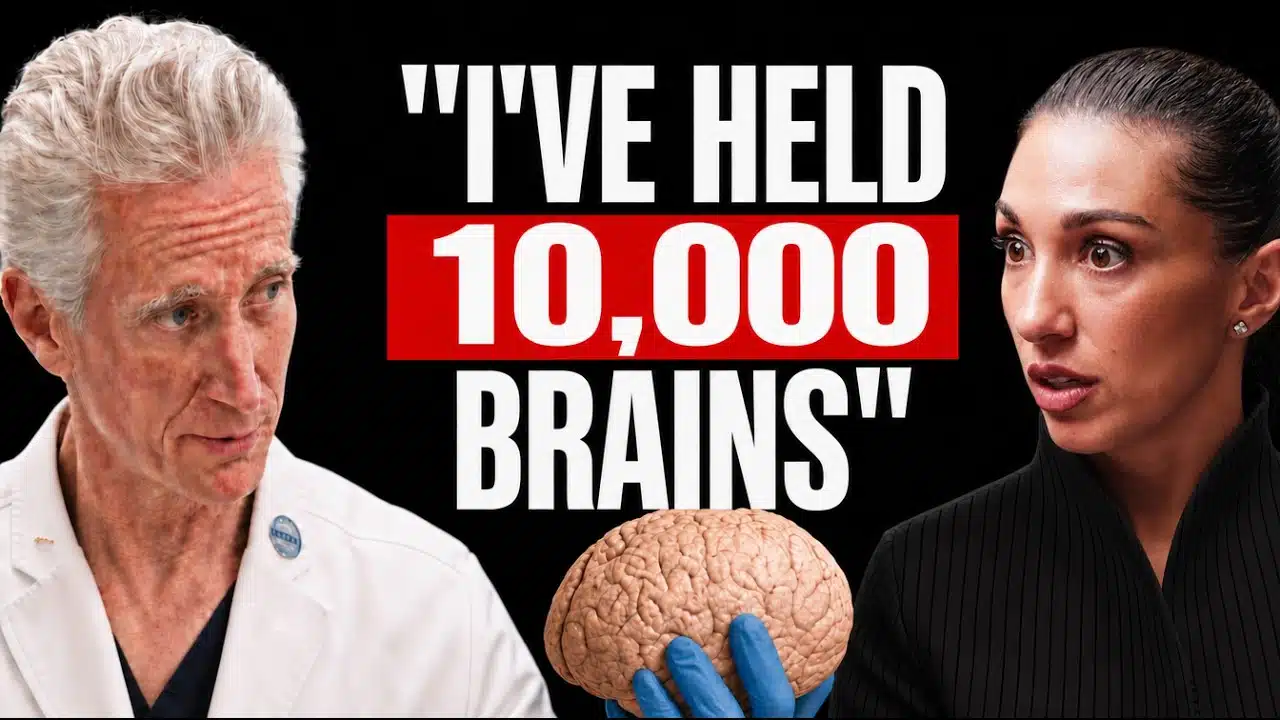
As President and CEO of Barrow Neurological Institute, one of the world’s premier neurosurgical centers, Lawton is at the intersection of human skill and robotic precision—a place where the impossible becomes routine.
In a recent conversation, he opened up about everything from brain-computer interfaces to what happens when a robot puts electrodes thinner than a human hair into your brain.
Jump to:
- The Vascular Neurosurgeon Who Takes the Cases Nobody Else Wants
- The Surgeon Athlete: Why Neurosurgery Is a Physical Event
- Robots in the Operating Room: Partner, Not Replacement
- What Brain-Computer Interfaces Actually Do (And Don’t Do)
- The Six Mysteries of the Mind
- What Neurosurgeons Know About Brain Aging
- The Future of Neurosurgery: From Depression to Alzheimer’s
- The Cases That Haunt and Inspire
- What Makes a Great Surgeon?
- A World Where Paralyzed Patients Walk Again
The Vascular Neurosurgeon Who Takes the Cases Nobody Else Wants
Lawton didn’t stumble into neurosurgery by accident, but he didn’t plan it either.
Trained as an engineer at Brown University, he nearly took a job on Wall Street before medicine pulled him in. Even then, he wanted to be a heart surgeon—until bad luck with a research opportunity redirected his path.

If you want something simple that actually works, this is one of the most effective tools I’ve used to build strength, conditioning, and endurance without needing a full gym setup.
- Full-body training with one weight using swings, squats, and presses
- Solid cast iron build that feels stable and lasts for years
- Comfortable grip that makes high-rep workouts easier to handle
I’m the guy who does the cases that nobody else wants to do.
That’s how he describes his work today. He specializes in vascular neurosurgery—treating brain aneurysms, arteriovenous malformations, and skull-base tumors that most surgeons won’t touch.
His days start at 5:30 a.m. with exercise, because he can’t count on the rest of the day. Then he rounds with residents, operates on three cases, reviews “game tape” with his team, and mentors 28 residents through some of the most complex procedures in medicine.
The Surgeon Athlete: Why Neurosurgery Is a Physical Event
Most residency programs select candidates based on grades and test scores.
Barrow looks for something else: athletic ability.
Surgery is an athletic event. You’re standing on your feet, you’re concentrating, you’re having to train for this incredibly difficult task and it’s physical.
Lawton and his team have long believed in what they call the surgeon athlete prototype. Surgery isn’t just intellectual—it’s a test of endurance, dexterity, and mental stamina under pressure.
That’s why they review surgical video at the end of every day, just like athletes watch game footage. They dissect what went right, what went wrong, and how to improve for tomorrow.
If you want something simple that actually works, this is one of the most effective tools I’ve used to build strength, conditioning, and endurance without needing a full gym setup.
- Full-body training with one weight using swings, squats, and presses
- Solid cast iron build that feels stable and lasts for years
- Comfortable grip that makes high-rep workouts easier to handle
Robots in the Operating Room: Partner, Not Replacement
Robotic surgery is no longer science fiction.
The ROSA robot, for example, implants electrodes into the brains of epilepsy patients with millimeter precision, mapping seizure activity that’s invisible on an MRI. Similar technology is used in deep brain stimulation for Parkinson’s disease.
But Lawton isn’t worried about being replaced.
There are things like building a new arterial circulation, sewing an artery together—it’s much harder to do that. That’s not close yet. I’m safe.
Robots excel at simple, repetitive, high-precision tasks. They can hit a target. They can place an electrode. But when an artery ruptures mid-surgery and blood floods the field, that’s where human judgment, intuition, and dexterity take over.
Lawton sees robotics as a partnership. The robot does what it does best, freeing him to focus on the legacy craft—the complex, high-stakes procedures that require a human touch.
What Brain-Computer Interfaces Actually Do (And Don’t Do)
Few topics generate more hype—and fear—than brain-computer interfaces.
If you want something simple that actually works, this is one of the most effective tools I’ve used to build strength, conditioning, and endurance without needing a full gym setup.
- Full-body training with one weight using swings, squats, and presses
- Solid cast iron build that feels stable and lasts for years
- Comfortable grip that makes high-rep workouts easier to handle
Lawton has worked directly with Neuralink, implanting their devices in patients like Nolan Arbaugh, the first human recipient, and Alex Conley, who controls a robotic arm with his thoughts.
Here’s what actually happens: A small device with ultra-thin electrodes (a tenth the thickness of a hair) is implanted into the motor cortex—the strip of brain tissue responsible for movement.
These electrodes are inserted robotically. The threads are so fine, you have a robot that can load these and implant them in a prescribed area that avoids the arteries.
Once in place, the electrodes detect electrical signals from individual neurons. When a paralyzed patient thinks about moving their hand, the device decodes that intention and translates it into cursor movements or robotic commands.
Over time, something remarkable happens: neuroplasticity. The brain learns the device, and the device learns the brain. What starts as deliberate thought becomes instinctual control.
The Myths People Believe About BCIs
Lawton is quick to dispel the fear that these devices can read your thoughts or manipulate your mind.
People have fears that these devices are going in and they’re reading our thoughts. That’s not true.
The data these devices collect is just a train of electrical spikes. They can decode intended movement—left, right, click—but they’re nowhere near understanding emotion, memory, or abstract thought.
If you want something simple that actually works, this is one of the most effective tools I’ve used to build strength, conditioning, and endurance without needing a full gym setup.
- Full-body training with one weight using swings, squats, and presses
- Solid cast iron build that feels stable and lasts for years
- Comfortable grip that makes high-rep workouts easier to handle
Right now, BCIs are focused on restoring motor function in paralyzed patients. Sensory prosthetics—like giving pressure feedback or restoring vision—are much harder and still experimental.
The Six Mysteries of the Mind
Lawton launched Barrow’s MindLabs to tackle six fundamental questions about the brain:
- Movement
- Emotion
- Plasticity
- Intelligence
- Memory
- Consciousness
He believes movement will be solved first—and it’s already happening with brain-computer interfaces.
Consciousness? That may never be fully understood.
Consciousness is more ambitious than memory. You may never solve that.
Lawton thinks consciousness isn’t located in brain tissue itself, but in the electrical symphony of 86 billion neurons firing in synchrony. It’s not anatomy—it’s the activity within it.
What Neurosurgeons Know About Brain Aging
Lawton can tell the age of a brain just by looking at it.
If you want something simple that actually works, this is one of the most effective tools I’ve used to build strength, conditioning, and endurance without needing a full gym setup.
- Full-body training with one weight using swings, squats, and presses
- Solid cast iron build that feels stable and lasts for years
- Comfortable grip that makes high-rep workouts easier to handle
Older brains show more atrophy—the tissue shrinks, creating more space between structures. Ironically, that makes surgery easier because there’s more room to navigate.
But you can’t see Alzheimer’s disease with the naked eye. Amyloid plaques and tau tangles are invisible without a microscope and special stains.
So what’s his advice for keeping your brain healthy?
Sleep, exercise, diet, social interaction. I think these are the key things. It’s the things that healthy living is really all about.
He doesn’t take a single supplement. He doesn’t use peptides or biohacks. He exercises religiously, eats clean, and gets seven hours of sleep every night.
He also predicts that in 20 years, alcohol will be viewed like cigarettes in the 1960s—a known neurotoxin we’re just beginning to take seriously.
The Future of Neurosurgery: From Depression to Alzheimer’s
Lawton believes the next frontier isn’t just treating tumors and aneurysms.
If you want something simple that actually works, this is one of the most effective tools I’ve used to build strength, conditioning, and endurance without needing a full gym setup.
- Full-body training with one weight using swings, squats, and presses
- Solid cast iron build that feels stable and lasts for years
- Comfortable grip that makes high-rep workouts easier to handle
It’s psychiatric disorders.
When I retire, I think we’re going to be treating depression. We’re going to be treating drug addiction. We’re going to be treating these psychiatric disorders that are not even a part of how we do neurosurgery today.
As scientists map the neural circuitry of depression, PTSD, and addiction, neurosurgeons will be able to intervene with precision—using devices, stimulation, or even light therapy.
For Alzheimer’s, researchers are experimenting with low-frequency ultrasound to open the blood-brain barrier and allow drugs to reach the brain more effectively. Others are using light therapy to target amyloid plaques directly.
The Cases That Haunt and Inspire
After 5,500 aneurysm surgeries, Lawton doesn’t have one standout case.
He has a collage.
Some of his most memorable surgeries involved hypothermic circulatory arrest—a technique borrowed from cardiac surgery where the patient’s body is cooled to 15°C, their heart is stopped, and their blood is drained to give the surgeon a bloodless field.
If you want something simple that actually works, this is one of the most effective tools I’ve used to build strength, conditioning, and endurance without needing a full gym setup.
- Full-body training with one weight using swings, squats, and presses
- Solid cast iron build that feels stable and lasts for years
- Comfortable grip that makes high-rep workouts easier to handle
You switch the pump off, you drain the blood from the body, and you can see the aneurysm shrivel like a raisin. And all of a sudden you’ve got this incredibly charged window of time to do this repair.
Those cases were harrowing, high-stakes, and unforgettable.
But so are the quieter moments—the patient who regains function, the family who gets their loved one back, the medical student who decides to become a neurosurgeon after watching Lawton work.
What Makes a Great Surgeon?
Lawton and his team once tried to define the traits of greatness in surgery.
They couldn’t crack the formula.
Some people want really badly to be great surgeons. Some people want to just have a livelihood. I think some people really are ambitious and they push themselves harder than the rest.
Mentorship matters. Training matters. Exposure to hard cases matters.
But at the end of the day, greatness comes down to grit, humility, strategic thinking, and the ability to stay calm under pressure.
If you want something simple that actually works, this is one of the most effective tools I’ve used to build strength, conditioning, and endurance without needing a full gym setup.
- Full-body training with one weight using swings, squats, and presses
- Solid cast iron build that feels stable and lasts for years
- Comfortable grip that makes high-rep workouts easier to handle
Lawton has seen surgeons take calls mid-operation about family tragedies and keep operating. He’s seen bleeding events that would destroy a lesser surgeon’s composure. He’s lived through 16-hour surgeries where every second counts.
That’s the job. And he was born for it.
A World Where Paralyzed Patients Walk Again
Is there a future where a paralyzed person walks out of the hospital? Where Alzheimer’s is treatable? Where stroke is an outpatient repair?
Absolutely. That’s what MindLabs is all about.
Lawton graduated from Brown in 1986 thinking this technology was just around the corner. It took 40 years, but it’s finally here.
Brain-computer interfaces are real. Robotic surgery is advancing. Treatments for depression, addiction, and neurodegeneration are on the horizon.
He may not live to see it all, but he knows it’s coming.
If you want something simple that actually works, this is one of the most effective tools I’ve used to build strength, conditioning, and endurance without needing a full gym setup.
- Full-body training with one weight using swings, squats, and presses
- Solid cast iron build that feels stable and lasts for years
- Comfortable grip that makes high-rep workouts easier to handle
And that’s enough.