Aging parents present universal challenges that nearly everyone faces eventually.
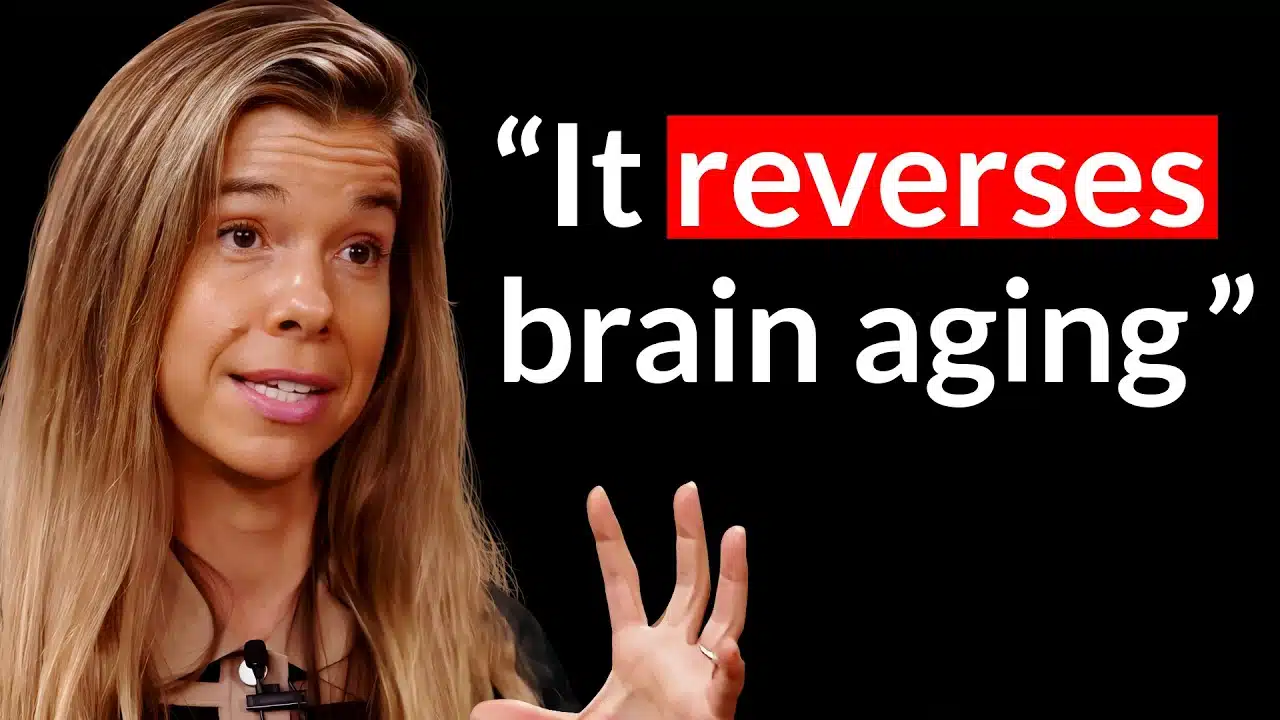
Dr. Rhonda Patrick, a renowned biomedical scientist, has navigated this journey with both her parents—and the interventions she’s used offer surprising insights backed by recent science.
Her father was diagnosed with Parkinson’s disease in 2017, while her mother deals with essential tremor and orthostatic tremor—two conditions affecting motor control.
The strategies she’s implemented aren’t extreme or expensive, yet they’ve yielded remarkable results that might change how you think about supporting brain health in older adults.
Jump to:
- The Multivitamin Comeback: Reducing Brain Aging By Years
- Vitamin D: The Deficiency Affecting 70% of Americans
- Fighting Parkinson’s: The Three-Supplement Strategy
- Sulforaphane: The Compound Patrick Wishes Her Dad Would Take
- An Unexpected Discovery: Sulforaphane and Tremors
- Practical Takeaways for Supporting Aging Parents
The Multivitamin Comeback: Reducing Brain Aging By Years
Ten years ago, a meta-analysis declared multivitamins “useless” and potentially harmful, suggesting they might accelerate cancer growth.
Science has since completely reversed course.
Three randomized controlled trials—the gold standard of research—have examined multivitamin effects on cognition in adults 65 and older. The intervention used wasn’t some boutique formulation either.
It was Centrum Silver. It was the vitamin that you would go that’s the one vitamin that’s not going to have any effect.
Yet this standard multivitamin, containing over 40 essential nutrients plus polyphenols like lutein and zeaxanthin, delivered stunning results after two years of daily use.
Global cognitive aging decreased by approximately 2 years. Even more impressive, episodic memory aging—the type involved in remembering life events—reduced by nearly 5 years.
Patrick emphasizes an important caveat: these were older adults without neurodegenerative disease.
Once you get to a pathological state, you kind of have to do more things to help improve cognition than just a multivitamin.
Both her parents now take daily multivitamins—the simplest intervention she recommends.
Vitamin D: The Deficiency Affecting 70% of Americans
Vitamin D deficiency represents low-hanging fruit for improving brain health, particularly in older populations.
Roughly 70% of Americans have insufficient vitamin D levels. Among older adults, that percentage climbs even higher.
Most people don’t spend enough time outdoors. Those who do often wear sunscreen or face age-related declines in their skin’s ability to synthesize vitamin D3 from UVB radiation.
A 70-year-old produces approximately four times less vitamin D than their 20-year-old self.
Supplementation easily corrects this deficiency, making vitamin D another non-negotiable in Patrick’s protocol for her parents.
Fighting Parkinson’s: The Three-Supplement Strategy
Patrick’s father faces unique challenges with his Parkinson’s diagnosis. Her supplement choices reflect both scientific evidence and practical compliance considerations.
My dad is one of those guys that doesn’t like to take a lot of pills. If he would take more, I would give him more.
Beyond the foundational multivitamin, she prioritized two additional supplements:
Omega-3 Fatty Acids (High DHA)
Her father takes approximately 2 grams daily of high-DHA omega-3 supplementation.
Research demonstrates that omega-3s support dopaminergic transmission—particularly relevant for Parkinson’s disease—while benefiting overall brain function. Evidence also supports their role in Alzheimer’s disease prevention.
Ubiquinol (Reduced CoQ10)
Coenzyme Q10 exists inside cells and plays crucial roles in mitochondrial health.
Depleted CoQ10 levels contribute to mitochondrial toxicity. Early studies with Parkinson’s patients show that CoQ10 supplementation provides benefits.
Her father has taken these three supplements consistently for nearly a decade. The results speak volumes.
It’s been 9 years, almost 10 years, and he’s really essentially had this Parkinson’s disease limited to one tremor in his hand.
His disease progression has been remarkably slow. While impossible to definitively attribute this to supplementation alone, both Patrick, her father, and his doctor agree he should continue the protocol.
Sulforaphane: The Compound Patrick Wishes Her Dad Would Take
If compliance weren’t an issue, Patrick would add sulforaphane to her father’s regimen immediately.
This compound forms when you consume cruciferous vegetables like broccoli and cauliflower. It doesn’t exist in the plant itself—it’s created when plant tissue breaks down during chewing or chopping.
Broccoli sprouts contain 100 times more of the active precursor (glucoraphanin) than mature broccoli. They represent the best dietary source, offering an affordable option for those who can’t afford supplements.
Patrick previously grew her own broccoli sprouts but now purchases them ready-made.
It’s work. It’s not that much work, but it is work. You have to be very fastidious about not having it contaminated.
Why Sulforaphane Matters for Brain Health
Sulforaphane ranks as the most potent dietary activator of NRF2—a transcription factor triggering stress response genes throughout the body.
These genes activate during beneficial stressors like exercise or fasting, producing what scientists call hormetic effects: small doses of stress generating disproportionately large benefits.
NRF2 activation stimulates:
- Antioxidant pathways
- Anti-inflammatory responses
- Autophagy (cellular cleanup processes)
- Glutathione production (the body’s master antioxidant)
The acute stress from sulforaphane consumption lasts briefly, yet the activated pathways continue functioning for 24 to 48 hours or longer.
Human studies confirm sulforaphane increases glutathione levels in both plasma and brain tissue—critical for preventing brain aging and addressing dysfunction from traumatic brain injury, Alzheimer’s, or Parkinson’s disease.
An Unexpected Discovery: Sulforaphane and Tremors
Patrick’s mother faces different neurological challenges: essential tremor and orthostatic tremor, both affecting motor control.
When introducing sulforaphane supplementation, Patrick deliberately avoided mentioning potential tremor benefits to bypass placebo effects.
I did tell her that we were using it to detoxify these chemicals that are associated with plastic like BPA.
This wasn’t deceptive—sulforaphane genuinely activates phase 2 detoxification enzymes. Research shows people living in polluted cities like New York or Los Angeles excrete 60% more benzene within 24 hours of taking sulforaphane.
The surprise came quickly.
Within one to two weeks, Patrick’s mother reported her tremors had improved. She requested more sulforaphane.
While anecdotal, this response suggests glutathione’s neuroprotective effects may extend beyond traditional neurodegenerative diseases.
Practical Takeaways for Supporting Aging Parents
Patrick’s evidence-based approach offers actionable guidance for anyone concerned about cognitive decline in aging parents:
- Start with a quality multivitamin (even standard Centrum Silver shows cognitive benefits)
- Add vitamin D supplementation (deficiency affects most older adults)
- Consider omega-3s with high DHA content (approximately 2 grams daily)
- Explore CoQ10 or ubiquinol (particularly for mitochondrial support)
- Investigate sulforaphane (through supplements or broccoli sprouts)
Compliance matters more than perfection. Patrick acknowledges her father won’t take numerous pills, so she focuses on what he’ll actually consume consistently.
The most sophisticated protocol means nothing if bottles sit unopened in cabinets.
For those living in polluted environments, Patrick considers sulforaphane non-negotiable given its detoxification benefits extending well beyond brain health.
Nearly a decade of slow Parkinson’s progression in her father and rapid tremor improvement in her mother suggest these interventions deserve serious consideration—not as miracles, but as evidence-based tools supporting healthy brain aging when applied consistently over time.