Building muscle isn’t just about showing up at the gym and going through the motions.
According to fitness legend Robby Robinson, most people are wasting their time because they’re missing one critical element: muscle contraction.
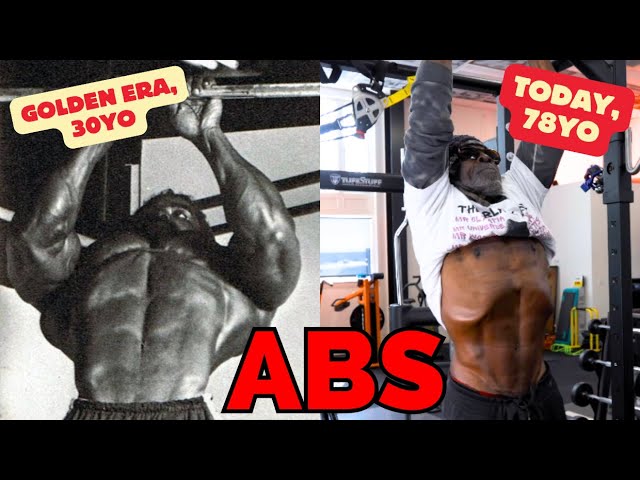
In a recent training session, Robinson broke down his philosophy on what separates effective training from empty repetitions—and why your core might be the most underutilized muscle group in your entire routine.
His approach challenges conventional gym wisdom and offers a master class in biomechanics that could transform how you train.
Jump to:
The Non-Negotiable Rule of Muscle Development
Robinson doesn’t mince words when it comes to the foundation of muscle growth.
If you don’t contract the muscle, you can’t develop the muscle.
This principle cuts through all the noise about supplements, meal timing, and training splits. Without proper muscle contraction, none of those variables matter.
He emphasizes that breathing and body positioning work together to create optimal conditions for muscle development. Miss either component, and you’re essentially spinning your wheels.
If you’re not breathing and if you’re not contracting that muscle, you can’t build muscle. It’s just a waste of time.
Robinson argues that even perfect nutrition becomes irrelevant without proper execution. You can consume optimal protein, track every macro, and time your meals precisely—but if your body isn’t positioned correctly during training, results won’t follow.
Why Robinson Created His Master Class
After witnessing thousands of gym-goers making the same mistakes repeatedly, Robinson felt compelled to teach proper technique systematically.
That’s why I created the master class, that’s why I wanted to do it—to show people the correct way to do things so you’re not wasting your time in the gym.
His teaching philosophy centers on a principle many trainers overlook: you’re not building muscle during the workout itself. The gym session creates the stimulus; muscle growth happens during recovery when your body adapts to that stress.
Understanding this distinction changes everything about how you approach each repetition, each set, and each training session.
The Core-First Training Philosophy
Robinson’s approach to training starts where most people finish—or skip entirely.
The stronger the core is, the stronger the whole body is. That’s the first thing I do when I go into a gym—I always train my abs first.
This contradicts popular gym culture, where abdominal training typically gets relegated to a quick afterthought at the end of a session. Robinson flips this script entirely.
By prioritizing core activation before other muscle groups, he creates a foundation of stability that enhances every subsequent exercise. When your core is engaged and activated, compound movements become more effective, isolation exercises hit harder, and injury risk decreases.
During his training demonstrations, observers noticed this pattern consistently—every movement initiated from the abdominal region, regardless of which muscle group was being targeted.
The Ripple Effect of Core Strength
When your core functions as a solid foundation, everything else improves measurably.
Strengthen the core, everything else is stronger.
This isn’t just theoretical. Practical observation during training reveals how core engagement transforms basic movements into comprehensive full-body exercises.
Back exercises become more effective. Shoulder presses feel more stable. Even leg training benefits from a properly braced midsection.
Technical Execution: The Details That Matter
Robinson’s demonstrations reveal meticulous attention to positioning that most trainers overlook entirely.
During pulldown movements, he emphasizes specific elbow positioning—slightly bent, pulled back and inward. This subtle adjustment changes which muscles bear the load and how effectively they contract.
Key technical points Robinson demonstrates:
- Elbow position determines muscle recruitment patterns
- Back angle affects which portion of the target muscle activates
- Breathing rhythm synchronizes with contraction phases
- Core engagement precedes every major movement
These aren’t minor tweaks—they’re fundamental differences between productive training and wasted effort.
The Vacuum Technique for Waist Control
Perhaps Robinson’s most distinctive technique involves incorporating stomach vacuums at strategic points during exercises.
You want to contract that muscle. The more you contract that muscle, the more abdominals come, the more it’s going to keep suppressing the waist.
He demonstrates adding vacuum contractions at the bottom of movements—precisely when most people relax between repetitions.
This creates continuous tension and teaches the body to maintain a tighter midsection throughout all activities, not just during dedicated ab training.
Aesthetic and Functional Benefits
Robinson explains how proper core contraction delivers both visual and performance advantages.
The waist is going to get smaller, you’re not going to have the love handles, you’re going to have muscle. That’s what you’re working for.
The vacuum technique doesn’t just build visible abdominals—it actually reduces waist circumference by strengthening the transverse abdominis, the deep core muscle responsible for pulling the midsection inward.
This creates the classic V-taper physique: smaller waist making shoulders appear broader and creating dramatic upper body proportions.
Beyond Rhythm: Integrating Multiple Elements
Robinson’s approach isn’t about isolated techniques—it’s about integration.
Breathing rhythm coordinates with movement tempo. Core contraction synchronizes with primary muscle engagement. Body positioning optimizes mechanical advantage.
When all elements align, each repetition becomes exponentially more effective than the sum of its parts.
The integrated approach includes:
- Breathing pattern: Inhale during eccentric phase, exhale during concentric contraction
- Core activation: Maintain tension throughout entire set, intensify during peak contraction
- Vacuum timing: Execute at movement bottom when muscles would otherwise relax
- Body positioning: Adjust angles to maximize target muscle recruitment
This multidimensional approach explains why Robinson’s physique remained exceptional across decades—he wasn’t just training harder, he was training smarter.
The Learning Mindset
What stands out in Robinson’s teaching approach is his continued emphasis on learning, even after decades of elite-level experience.
I love learning. That’s me too—teach me.
This mindset separates masters from mediocrity. Despite his legendary status, Robinson approaches training with curiosity rather than dogma.
For anyone serious about long-term progress, this attitude matters more than any specific technique. Bodies change, science evolves, and effective methods adapt.
Robinson’s core principles remain constant—contract the muscle, strengthen the foundation, position the body correctly—but his application continues refining based on ongoing observation and experience.
That combination of timeless principles and adaptive application creates sustainable results that compound across years rather than quick fixes that fade after weeks.