Advanced lifters know the frustration all too well—certain body parts just refuse to grow no matter how hard they push.
But what if everything you’ve been told about training for hypertrophy doesn’t actually apply to seasoned gym-goers?
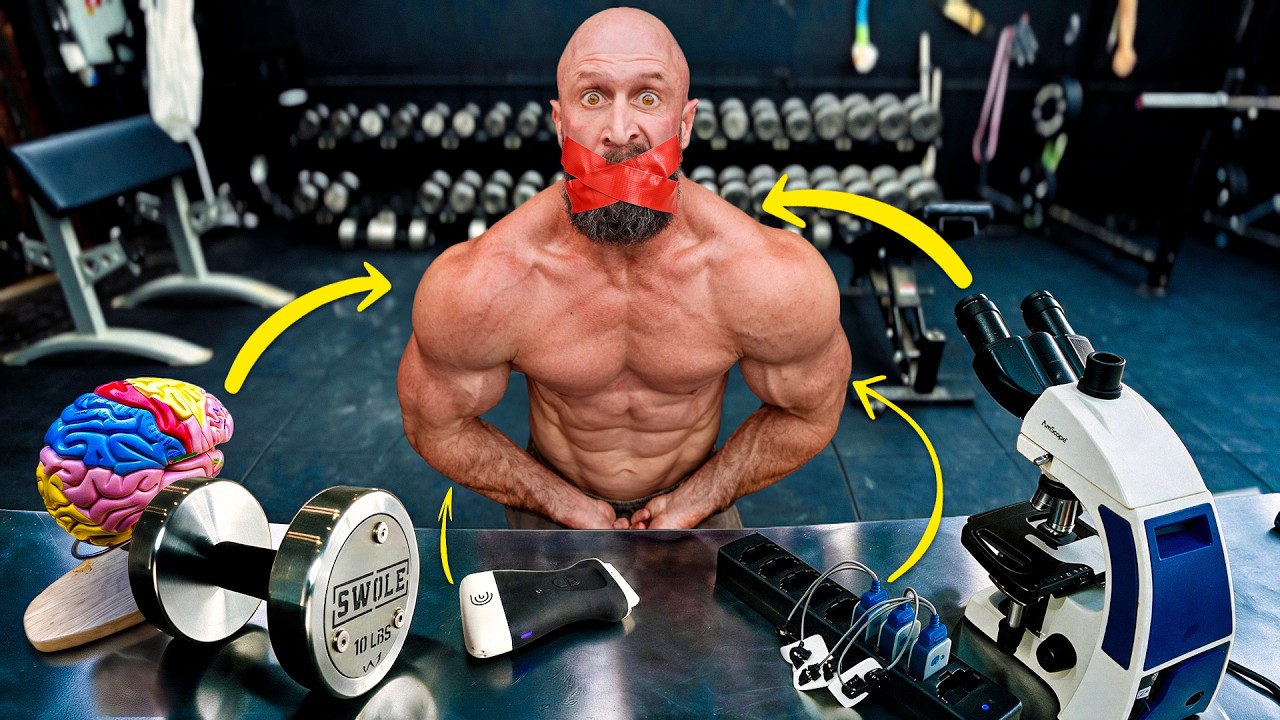
In a recent video, fitness content creator and coach Will Tennyson revealed how he completely overhauled his training approach to finally spark growth in stubborn muscle groups like calves, chest, and legs.
His methods fly in the face of conventional research—yet they’re delivering results where science-backed protocols fell short.
Jump to:
Why Standard Hypertrophy Research Fails Advanced Lifters
Tennyson kicks off with a bold critique of modern training studies. Most hypertrophy research simply doesn’t represent experienced trainees.
He breaks down the numbers bluntly: out of 407 hypertrophy studies conducted over the last decade, 97 involved untrained participants, 71 focused exclusively on women, and only 20 included what could loosely be called “advanced” trainees—defined merely as those training for three years or more.
Nobody talks about who these studies are actually done on. Of the remaining, only 20 included what could be considered advanced trainees, and even that’s a stretch.
Even worse? Only two studies used MRI imaging—the gold standard for measuring muscle growth. Most relied on ultrasound measurements, which depend heavily on operator skill and can yield inconsistent results.
For lifters who’ve been training consistently for years, applying findings from beginner-focused studies is like using a map of the wrong city. Progress stalls because the principles that work for novices don’t challenge seasoned bodies.
Embracing Extreme Intensity Techniques
Tennyson’s solution? Push beyond conventional failure with advanced intensity methods that accumulate massive fatigue and force adaptation.
His current program cycles through themed weeks, each employing different brutally effective techniques:
- Week One: Drop sets
- Week Two: Rest-pause sets
- Week Three: Cluster sets
- Week Four: All techniques combined into what he calls “an unwinnable boss fight”
These aren’t just time-saving shortcuts. When applied with true intensity, they create a stimulus extreme enough to break through adaptation plateaus that plague experienced lifters.
A Complete Shoulder Annihilation Protocol
Tennyson walks through an entire shoulder workout from his fourth week—arguably his most punishing phase. Every exercise incorporates multiple intensity techniques within a single session.
Standing Machine Side Laterals: Triple Threat Execution
He begins with standing machine side laterals, structuring them with drop sets, rest-pause, then cluster sets—all on the same movement.
His positioning matters tremendously. Rather than lifting directly to his sides, he steps back slightly so his arms work in front of his body, aligning with the scapular plane.
When you look at the actual segments of the delt, the part that actually abducts directly to the side is a little choked. Most of the line of pull is diagonal, so we’re trying to line up that with the load itself.
This small adjustment better targets the lateral deltoid fibers based on their actual anatomical orientation—not just lifting perpendicular to the body as commonly taught.
Mechanical Drop Sets for Maximum Fiber Recruitment
Next comes a mechanical drop set sequence: seated cable raises transitioning to standing variations, finishing with partials.
Each position becomes progressively easier biomechanically, allowing continued work as fatigue accumulates. Seated variations target anterior-lateral segments, standing fixed-elbow raises emphasize the lateral head with the elbow leading, and partials with flared lats keep tension isolated.
This approach extends the set far beyond typical failure by manipulating leverage rather than just reducing weight.
Posterior Delt Precision: Scapular Mechanics Matter
Rear deltoid training gets particularly technical. Tennyson uses a bench for chest-supported reverse flies, emphasizing scapular positioning throughout the movement.
His cues focus on maintaining scapular protraction and depression while resisting retraction—keeping shoulder blades forward and down rather than pinching them together.
In the lengthened position, my humerus is flexed across my body and internally rotated. I’m resisting the shrug, keeping the clavicle and scapula relatively depressed while maintaining scapular protraction and upward rotation.
Why such precision? The posterior deltoid is notoriously difficult to isolate without upper traps and lats stealing tension. These scapular adjustments maximize rear delt recruitment by controlling exactly which muscles can contribute to the movement.
Machine rear delt flies follow with three distinct variations: starting internally rotated and externally rotating during horizontal abduction, maintaining external rotation throughout, and finishing with partial-rep clusters.
Multi-Plane Pressing for Complete Anterior Development
While scapular plane pressing remains Tennyson’s primary anterior deltoid builder, he’s reintroduced frontal and sagittal plane variations for complete development.
Sagittal plane pressing (directly forward) brings more upper chest involvement but also reveals anterior deltoid weakness—useful for identifying imbalances. Frontal plane pressing (more to the sides) hits medial and even some posterior deltoid segments.
His technique involves starting in the scapular plane then driving elbows inward as he presses, creating what almost feels like a front raise at the top.
Redefining True Muscular Failure
Perhaps most importantly, Tennyson challenges how lifters conceptualize failure itself.
A mistake I often see is people define failure as being unable to get a full concentric rep. To me, that’s not true failure.
His definition: continuing to force reps as range of motion diminishes, pushing partials until the weight literally won’t move at all—not just stopping when full reps become impossible.
This mindset shift alone can dramatically increase training stimulus. Most lifters stop several effective reps short of genuine mechanical failure.
Making Extreme Protocols Sustainable
Tennyson acknowledges his training style borders on “dangerous” and admits his ADHD requires engaging, progressively challenging programming to maintain adherence.
His weekly themes and escalating difficulty create a gamified structure that keeps training mentally stimulating—critical for long-term consistency with such demanding protocols.
He also emphasizes proper warm-ups despite not writing them into his programs, expecting lifters to intelligently prepare with lighter sets before attempting maximal-intensity work.
The Bottom Line for Advanced Trainees
Tennyson’s message resonates because it addresses the reality many experienced lifters face: standard recommendations stop working after years of training.
While research provides valuable foundations, advanced trainees need extreme stimuli that most studies never examine—higher volumes at true failure, extended sets through mechanical and loading manipulations, and precise technique adjustments targeting specific muscle segments.
His approach isn’t for beginners. Intermediate lifters will likely overtrain. But for those with three-plus years of consistent training who’ve exhausted conventional progression models, these methods offer a legitimate path forward.
The key takeaway? Once you’ve built a solid foundation, breaking through plateaus requires going beyond what studies on untrained subjects suggest—embracing controlled suffering through advanced intensity techniques, obsessive attention to biomechanics, and a willingness to push past what feels sustainable.
It’s uncomfortable, exhausting, and exactly what stubborn muscle groups might need to finally grow.