California just passed a law that could keep teenagers from buying creatine and whey protein.
In a recent YouTube video, Dr. Mike Israetel of Renaissance Periodization dissected the new rules, and his verdict was blunt.
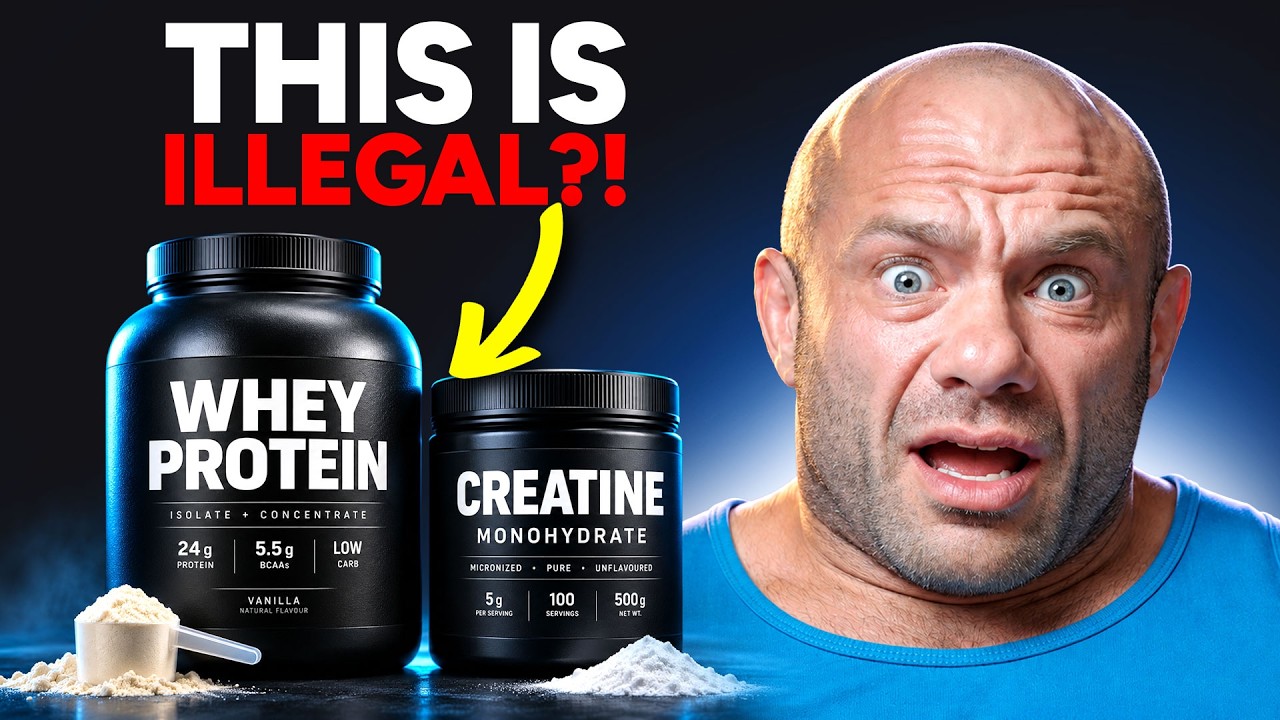
Does this legislation protect kids, or does it simply police a label?
Israetel pulled apart every statistic lawmakers used to defend it.
One flaw, he says, runs through nearly all of them.
Keep reading to find out what it is, plus the loophole that could make the whole thing toothless.

If you want something simple that actually works, this is one of the most effective tools I’ve used to build strength, conditioning, and endurance without needing a full gym setup.
- Full-body training with one weight using swings, squats, and presses
- Solid cast iron build that feels stable and lasts for years
- Comfortable grip that makes high-rep workouts easier to handle
Jump to:
What California’s New Supplement Law Actually Does
Assembly Bill 2030 was authored by Assembly Member Josh Lowenthal. Israetel says Governor Gavin Newsom signed it, with restrictions kicking in on January 1, 2027.
- Who is restricted: anyone under 18 buying covered products, including over-the-counter diet pills and supplements marketed for weight loss or muscle gain.
- What counts as covered: products labeled, marketed, or otherwise represented as helping with those goals.
- Who verifies age: retailers, through ID checks or locked displays. Online sellers must confirm age too, via third-party databases or adult-signature delivery.
- Penalties: up to $500 per violation, enforced by California’s attorney general and local attorneys.
- Exemption: minors holding a prescription. Adults are unaffected.
Shipments from out-of-state sellers fall under the rules as well.
So Is Creatine Banned? What About Whey?
Creatine isn’t automatically banned simply because it contains creatine, but it is explicitly on the radar.
Whey is murkier. Conventional foods with nutrition facts labels generally sit outside the supplement definition, yet California offers no explicit protection for protein, so Israetel believes whey is almost certainly covered.
Marketing claims and shelf placement both matter. A tub stocked beside fat burners could trigger ID checks, while one sitting elsewhere in the store might not.
Why Lawmakers Say Teens Need Protection
Eating disorder prevention groups drove the push, with Harvard’s STRIPED initiative and the Center for Science in the Public Interest among key backers. A similar bill reached Newsom in 2022, but he vetoed it over implementation concerns.
Supporters lean on several numbers:
If you want something simple that actually works, this is one of the most effective tools I’ve used to build strength, conditioning, and endurance without needing a full gym setup.
- Full-body training with one weight using swings, squats, and presses
- Solid cast iron build that feels stable and lasts for years
- Comfortable grip that makes high-rep workouts easier to handle
- A 2024 meta-analysis of 90 studies and 600,000-plus participants estimated 8.9% lifetime and 6.2% past-year use of nonprescription weight-loss products among teens.
- A longitudinal study of 10,000-plus young women found diet pill users had roughly 5.6 times the adjusted odds of a first eating disorder diagnosis within one to three years.
- A 2022 study of 1,500-plus adolescents linked protein supplement use to later steroid use: about twice the likelihood in boys, five times in girls.
- A 2025 study of 1,500-plus males tied frequent social media exposure to muscular bodies and supplements with more muscle dysmorphia symptoms.
- A 2019 analysis of 977 FDA adverse event reports found muscle-building supplement reports were about 2.7 times likelier to describe severe events than vitamin reports.
Where Israetel Says the Evidence Falls Apart
Diet Pills Are Not Protein Powder
Israetel notes that the teen-use research largely examined diet pills, laxatives, and diuretics. Creatine and whey were not the focus.
Now, that’s a substantial association, but it doesn’t demonstrate that the pills themselves cause the disorders.
The Cause-and-Effect Problem
Here lies the flaw Israetel keeps returning to. Teens already struggling with body image or disordered eating may seek out pills, not the reverse.
Folks buy supplements to look better. They don’t develop the desire to look better because supplements exist.
Steroid findings invite a similar reading. Teens eating high-protein diets may be more inclined toward supplements and, separately, toward chasing size by any means.
Muscle dysmorphia, Israetel adds, involves pathological preoccupation or impairment. Wanting bigger muscles or enjoying bodybuilding does not qualify.
Social Media and Adverse Events: Real Signals, Shaky Conclusions
Israetel acknowledges research behind the social media worry, which held even after accounting for total screen time. Still, he reads that link backward too.
Adverse event reports deserve caution as well, since they are voluntary submissions that reveal that problems were reported, not how common they are. Israetel also points out that the law does nothing to remove unsafe ingredients.
If you want something simple that actually works, this is one of the most effective tools I’ve used to build strength, conditioning, and endurance without needing a full gym setup.
- Full-body training with one weight using swings, squats, and presses
- Solid cast iron build that feels stable and lasts for years
- Comfortable grip that makes high-rep workouts easier to handle
Mind you, this law is about labeling and store placement. It does literally nothing to remove unsafe ingredients from supplements.
One more caveat: the projection of 1,800 prevented eating disorder cases and 27,000 other medical events over 30 years came from a manuscript in preparation, not a published study.
Do Supporters Have Any Point at All?
Israetel says yes, partly. Federal rules generally don’t require supplements to win FDA pre-market approval for safety, so harmful products can reach shelves first.
It’s true that some pre-workout formulas have some very interesting ingredients and have had over the years like DMA, which is basically eerily related to meth.
Hormone-altering claims on certain store products would also be concerning for young people, he says, though such claims are pretty much never true.
The Loophole That Could Undo Everything
Coverage hinges on claims, not ingredients. Swap a label’s “muscle builder formula” wording for “pure protein,” and Israetel expects the identical tub could sell to anyone.
Companies can just relabel their products and still sell them.
On safety, his stance on these ingredients is emphatic.
There isn’t a shred of evidence or even physiological rationale that whey protein, creatine, and caffeine are in any way remotely bad for teens or, drumroll, anyone.
That position targets those three ingredients specifically. Stimulant-heavy blends and dubious hormone claims, as noted above, remain a separate conversation.
If you want something simple that actually works, this is one of the most effective tools I’ve used to build strength, conditioning, and endurance without needing a full gym setup.
- Full-body training with one weight using swings, squats, and presses
- Solid cast iron build that feels stable and lasts for years
- Comfortable grip that makes high-rep workouts easier to handle
Who Ends Up Footing the Bill?
Relabeling costs money. Israetel expects consumers of every age to absorb it.
They’ll pass that cost onto you.
Practical Takeaways for Families and Lifters
- Whole foods stay fair game: chicken, beef, eggs, dairy, and legumes fall outside supplement rules.
- Read labels skeptically: stimulant blends and hormone-altering promises deserve extra scrutiny, especially for younger lifters.
- Loop in a professional: a pediatrician or registered dietitian can weigh in before a teen starts any supplement.
- Watch for warning signs: obsessive training, rigid eating, or distress about appearance call for support from a qualified mental health provider.