Building muscle naturally doesn’t demand a gym stuffed with exotic equipment.
In a recent YouTube video, fitness creator Joe from the Shredbundy channel unpacked which exercises deliver the biggest return on effort.
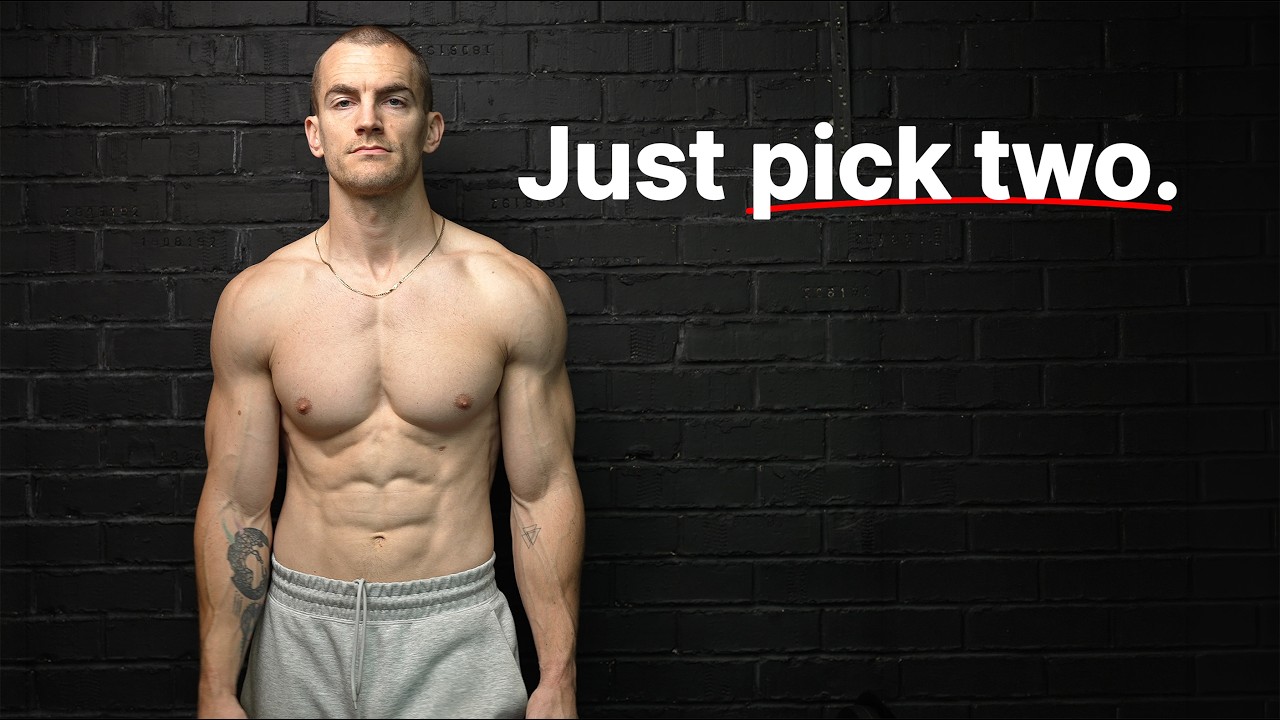
His surprising claim: choosing star movements matters less than pairing them smartly.
Two elite lifts can lose to a duo of average ones.
Stick around to find out why, plus his full pick list for every major muscle.
Jump to:
- Why One “Best” Exercise Per Muscle Falls Short
- The Three-Part Test for a Great Exercise
- Chest: Shallow Incline Dumbbell Press Plus Pec Deck
- Back: Pull-Ups, Straight-Arm Pulldowns and T-Bar Rows
- Shoulders: Overhead Press, Cable Raises and Rear Flies
- Legs: Hack Squats, Romanian Deadlifts and Curls
- Arms and Abs: Variety Is Cheap Here
- The One-Sentence Training Plan
Why One “Best” Exercise Per Muscle Falls Short
Joe flagged two big reasons you can’t simply crown a single winner per muscle.

If you want something simple that actually works, this is one of the most effective tools I’ve used to build strength, conditioning, and endurance without needing a full gym setup.
- Full-body training with one weight using swings, squats, and presses
- Solid cast iron build that feels stable and lasts for years
- Comfortable grip that makes high-rep workouts easier to handle
- Different growth patterns: some muscles grow in different regions depending on exercise mechanics, so one movement rarely covers everything.
- Different recovery costs: twelve weekly sets of bench press would exact a heavy toll, so gentler options help fill your weekly set count.
Knowing how to combine exercises beats memorizing tier lists.
You could take two elite chest exercises, but if they overlap or interfere with each other, you’d still be worse off than if you chose two exercises that aren’t as good on paper, but complement each other well.
The Three-Part Test for a Great Exercise
Joe’s yardstick is refreshingly simple: how much muscle does it build over the long term? Three factors drive that answer.
- Scientific effectiveness: would it build more muscle than alternatives under research conditions?
- Convenience: consider learning curve, ease of progressive overload, and setup complexity.
- Enjoyment: because you only grow from exercises you actually keep doing.
Direct head-to-head studies remain scarce, so much of this rests on well-founded theory rather than settled fact. Lab findings, in Joe’s words, work as a guide, not a rule.
Leaning too far toward comfort backfires too.
Even if you do 20 sets a week forever, if the exercise is just pure tomfoolery, all you’ll build is a physique that’s highly adapted to complete nonsense.
Chest: Shallow Incline Dumbbell Press Plus Pec Deck
Joe’s pressing pick is a shallow incline dumbbell press. Upper chest gets some emphasis, yet the movement still feels like chest training.
In many cases, the best thing you can do for your upper chest is not more incline, it’s get a bigger chest. Just generally.
Shallow angles let you lift heavier with less front delt takeover. Dumbbells beat barbells thanks to a slightly bigger range of motion, safer failure, and better protection against imbalances.
If you want something simple that actually works, this is one of the most effective tools I’ve used to build strength, conditioning, and endurance without needing a full gym setup.
- Full-body training with one weight using swings, squats, and presses
- Solid cast iron build that feels stable and lasts for years
- Comfortable grip that makes high-rep workouts easier to handle
Partner it with the pec deck fly. Good machines deliver resistance through the whole rep, with no easy lockout.
Standing cable flies work, but stronger lifters end up leaning into the weight just to stay in position. A bench fixes that, though setup gets laborious.
Back: Pull-Ups, Straight-Arm Pulldowns and T-Bar Rows
Lats: The Mid-Width Neutral Grip Pull-Up
Neutral grip narrowly beats overhand since elbow flexors get better leverage in the hammer position. Stuck with overhand only? Go a touch wider to mimic that elbow angle.
Can’t manage two or three sets of five to six reps yet? Build up with an assisted machine.
Lat pull down strength won’t actually translate into pull-up strength as much as you think.
Bands aren’t ideal either, since they assist most where you’re strongest and least where you need help.
The Exercise Joe Never Swaps Out
Meet the cable straight-arm pulldown, a permanent fixture in his own program.
If you want something simple that actually works, this is one of the most effective tools I’ve used to build strength, conditioning, and endurance without needing a full gym setup.
- Full-body training with one weight using swings, squats, and presses
- Solid cast iron build that feels stable and lasts for years
- Comfortable grip that makes high-rep workouts easier to handle
- Biceps stay out of it: you can train lats even when your arms need a break, making scheduling far more flexible.
- Adjustable difficulty: nudging your torso as you pull makes the finish easier than the start, unlike pull-ups, where gravity stays constant.
- Earlier failure point: you can reach failure at a shorter muscle length, which is probably beneficial for whole-muscle growth.
Upper Back: One Exercise Is Enough
The pick is a chest-supported T-bar row, harder where you’re strongest and easier where you’re weakest.
Chest support helps because without it you get way too much fatigue, potential for form degradation, potential for lower back to fail before upper back.
A second upper-back move? Joe says skip it: “We actually don’t need one.”
Shoulders: Overhead Press, Cable Raises and Rear Flies
- Barbell overhead press: it feels good, which makes you want to do it, and it recruits more side delt than angled pressing. Joe firmly rejects the idea that vertical pressing is redundant.
- Cable lateral raise: bad raise machines are common, so cables win. Cross them over for extra resistance early, then add uncrossed sets to hit failure at a different point.
- Seated cable rear fly: starting with arms crossed offers far greater range than a reverse pec deck.
Legs: Hack Squats, Romanian Deadlifts and Curls
Quads
Choose the hack squat. Its range of motion rivals any leg compound, while Bulgarian split squats demand heavy stabilization and fiddly setup.
Add leg extensions, since research suggests extensions and squats grow different quad regions.
Hamstrings
Hamstrings straighten the hip and bend the knee, so you need two moves. The Romanian deadlift covers hinging, and Joe favors higher reps with control over heavy, low-rep sets.
Why? Grip stops limiting you, and you can sink into the bottom stretch while driving the leg back with hamstrings. Mind-muscle focus is normally optional for Joe, but RDLs earn an exception.
If you want something simple that actually works, this is one of the most effective tools I’ve used to build strength, conditioning, and endurance without needing a full gym setup.
- Full-body training with one weight using swings, squats, and presses
- Solid cast iron build that feels stable and lasts for years
- Comfortable grip that makes high-rep workouts easier to handle
Next comes the seated leg curl for knee flexion. Studies lean in its favor over lying curls, though real-world differences may be small, so use whichever machine your gym offers.
Glutes and Calves
Glutes are already covered by hack squats and RDLs. Joe leaves out hip thrusts over range-of-motion concerns and sees hip abduction as low priority, though that’s a judgment call rather than a universal verdict.
Calves keep it simple: “anything standing that allows for a stretch is fine.”
Arms and Abs: Variety Is Cheap Here
Biceps: pair an EZ bar preacher curl with a seated incline curl. Shoulder positions differ and peak tension lands at different points, so you fail at different muscle lengths instead of duplicating similar mechanics.
Triceps: overhead cable extensions come first. Joe notes that if you want to base training on one non-replicated study, that might be all you need, but he prefers adding rope pushdowns.
Pushdowns share a similar resistance profile but use different shoulder angles, which may yield complementary growth. For low-fatigue moves, hedging your bets costs almost nothing.
If you want something simple that actually works, this is one of the most effective tools I’ve used to build strength, conditioning, and endurance without needing a full gym setup.
- Full-body training with one weight using swings, squats, and presses
- Solid cast iron build that feels stable and lasts for years
- Comfortable grip that makes high-rep workouts easier to handle
Abs: combine a top-down crunch, such as a kneeling cable or decline crunch, with a reverse incline crunch.
The One-Sentence Training Plan
Pick two exercises for each muscle and get better at performing them in hypertrophy rep ranges over time.
Nail your diet and recovery, and Joe promises you’ll end up in good shape.
Want to swap in your own favorites? Learn to separate exercises with different names but identical mechanics from those with truly different mechanics. Choose from the second group and redundancy disappears.