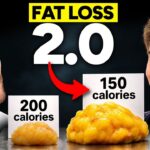
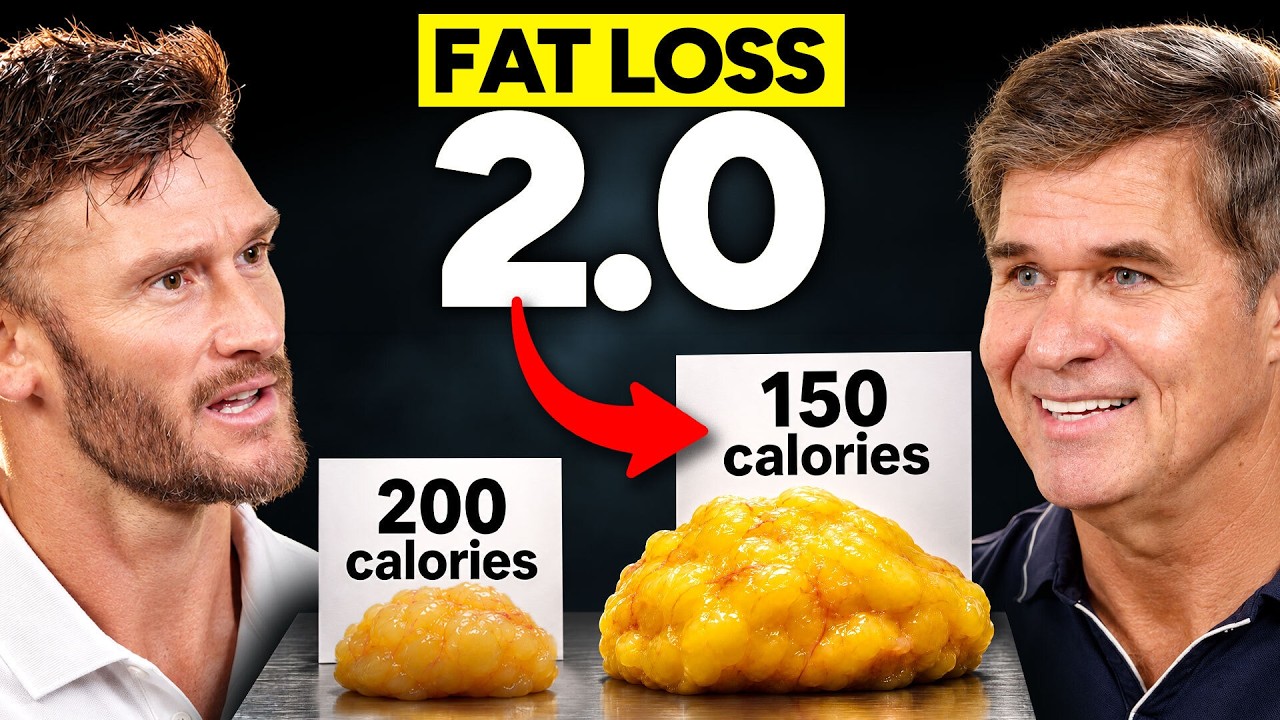
In a recent episode of the Thomas DeLauer Podcast, nutrition author Joel Greene laid out a fat loss framework that sounds almost backwards.
Eating more calories, he says, can sometimes coincide with dropping fat.
Deleting one macronutrient might jumpstart a stalled diet, too.
Even stranger: your first diet may be the best you ever run.
Stick around to learn why fat gets harder to lose with age, plus the simple moves Greene uses to dodge rebound.
Jump to:
Zero Out One Macro, Watch Fat Drop
Greene traces this idea back to bodybuilding legend Mike Mentzer in the 1970s. Cutting any single macronutrient to zero can restart fat loss.

If you want something simple that actually works, this is one of the most effective tools I’ve used to build strength, conditioning, and endurance without needing a full gym setup.
- Full-body training with one weight using swings, squats, and presses
- Solid cast iron build that feels stable and lasts for years
- Comfortable grip that makes high-rep workouts easier to handle
You can actually drop fat by just taking any one macronutrient to zero.
Protein at zero, he says, triggers cysteine depletion plus other mechanisms. Fat at zero works too, but about seven days will make you “kind of crazy.”
One longtime client was eating high protein and low carb when progress stalled. After a week with protein removed, he returned “absolutely dropping fat like crazy.”
Worth noting: these are coaching observations, not controlled trials. Dropping a macro also usually drops total calories, which likely explains a chunk of the effect, and extended protein restriction risks muscle loss.
Why Calories In, Calories Out Falls Short
Greene spent years running corporate wellness programs, watching software data from thousands of participants. Two patterns kept surfacing.
- Some people lost weight when given more calories.
- Others on tiny intakes never dropped body fat at all.
Typical explanations blame nighttime fridge raids and sloppy tracking. Greene concedes recent data supports that, then pushes further.
There’s a lot of demagoguery on this topic that makes us think that there is no debate.
He highlights researcher Francisco Albright, who argues energy balance equations treat energy and mass as interchangeable. Heat a gas and energy rises while mass stays put, Greene explains.
If you want something simple that actually works, this is one of the most effective tools I’ve used to build strength, conditioning, and endurance without needing a full gym setup.
- Full-body training with one weight using swings, squats, and presses
- Solid cast iron build that feels stable and lasts for years
- Comfortable grip that makes high-rep workouts easier to handle
His verdict on the standard equation: “That’s an accounting equation.” Kevin Hall’s metabolic ward work anchors the model he is challenging.
Mainstream researchers still treat energy balance as the backbone of weight change. Most surprising results are generally traced to metabolic adaptation and intake-tracking errors, so Greene’s position remains a minority view.
Fat Cells Come in Many Flavors
There’s not just vanilla. There’s all kinds of flavors. There’s tutti frutti, there’s chocolate, there is mocha.
With age, Greene says, one especially aggressive fat-storing cell type seems to proliferate. Mouse studies showed fat mass rising on lower food intake.
That could help explain why middle-aged people add visceral fat without eating much more. Animal findings do not automatically transfer to humans, though.
Greene also argues insulin resistance often begins in hypoxic belly fat near the navel. Stubborn fat there, he says, tends to correlate with oxygen-starved tissue.
Low Carb, Insulin, and the Diversity Fix
Here Greene gets provocative. Long stretches of low carb, he suggests, keep glucagon elevated and may eventually create glucagon resistance, then insulin resistance.
If you want something simple that actually works, this is one of the most effective tools I’ve used to build strength, conditioning, and endurance without needing a full gym setup.
- Full-body training with one weight using swings, squats, and presses
- Solid cast iron build that feels stable and lasts for years
- Comfortable grip that makes high-rep workouts easier to handle
Evidence is more mixed than that. Keto commonly improves insulin sensitivity short term, and long-term human data remain inconsistent, so Greene’s glucagon pathway is best viewed as a hypothesis.
The body is a set of variables that are always chasing a dynamic equilibrium.
His answer is dietary diversity, spread across the week rather than each plate. Because insulin and glucagon oppose each other, he suggests alternating plant-leaning days with carnivore-leaning days.
- Plant side: leafy greens, pulses like chickpeas, resistant starches such as sweet potatoes
- Animal side: meat and eggs
- Bridge food: dairy, which Greene calls maybe the most functional food around
The Sunday Reset Day
Greene also floats a seven-day “circaseptan” rhythm. Monday brings peak stress, he notes, and people medicate with carbs and alcohol.
His counter-move is a structured Sunday:
- Giant, massive breakfast to advance the sleep clock
- Satiety foods like brothy soup and grilled cheese through midday
- Fat-loss-centric dinner to offset the comfort food
- Early bedtime to lower cortisol
Many clients swear by it, he says. Research on weekly biological rhythms in nutrition remains thin, so treat this as an experiment, not established protocol.
Protein Cycling: Starve, Then Surge
Greene argues protein breaks the energy balance model outright. Overfeeding protein does not automatically add weight.
If you want something simple that actually works, this is one of the most effective tools I’ve used to build strength, conditioning, and endurance without needing a full gym setup.
- Full-body training with one weight using swings, squats, and presses
- Solid cast iron build that feels stable and lasts for years
- Comfortable grip that makes high-rep workouts easier to handle
His preferred tactic: a few days of mimicked starvation using green beans and egg whites, then roughly double calories for about 14 days while training heavy.
Most people that I’ve had do this will come back and say man, I’ve never gained muscle like that in my life.
Eating 4,000 to 5,000 clean calories is brutal, he admits. His “closest thing to steroids” line is hyperbole, and no controlled data in this discussion backs it, so treat results as anecdotal.
First-Timer Syndrome and Stubborn Fat
Greene calls it the “virgin fat loss effect.” Bodies new to dieting respond spectacularly to nearly anything.
Half the diet books ever written were written by people who never dropped weight before.
Later attempts get harder. When fat shrinks quickly, Greene says, tissue reads famine and installs stiffer, inflammatory collagen VI in its supporting matrix.
Over many years that scaffolding becomes fibrotic, making fat tougher to mobilize. Greene links this to chronic weight cycling, the cumulative toll of repeated lose-and-regain rounds.
The 12-Month Rebound Window
Greene says research points to about a year after fat loss during which the body actively tries to regain it. Dodge that window, and odds of keeping weight off improve.
If you want something simple that actually works, this is one of the most effective tools I’ve used to build strength, conditioning, and endurance without needing a full gym setup.
- Full-body training with one weight using swings, squats, and presses
- Solid cast iron build that feels stable and lasts for years
- Comfortable grip that makes high-rep workouts easier to handle
He lists a couple dozen contributing mechanisms, from ghrelin and leptin shifts to brain changes, fat-cell mitochondria, macrophages, and the microbiome. Regain is common and well documented, though the exact twelve-month figure is Greene’s reading of emerging work.
Three Moves to Prevent Rebound
- Strategic big breakfasts: two or three weekly, high in protein and carbs, to renormalize leptin-to-ghrelin ratios. Greene cites 2013 research linking such breakfasts to reduced regain.
- Microbiome reset: low carb dieting, he says, shifts gut ecology away from a youthful phenotype.
- Exercise snacks: brief bursts across the workday, which he calls “integrated intervals,” closing the energy gap without gym time.
Eat More, Move More
DeLauer added his own take on energy flux. After an aggressive cut, he raises intake and activity together.
5,000 calories consumed and 5,000 calories burned is not the same as 2,000 in and 2,000 out.
Greene’s broader message: most fat loss advice assumes a free schedule. Real jobs, real stress, and surprise Zoom calls demand strategies that work when time is taken out of the equation.
Find more of Greene’s work at thevnutrition.com and on Instagram at realjoelgreene.