

In his latest YouTube video, Dr. Mike explores the surprising truth about pre-workout meals.
A new study challenges conventional wisdom, suggesting carbs might not be the workout performance booster we thought. Discover how simply eating something before exercise, regardless of carb content, could be the key to unlocking better results.
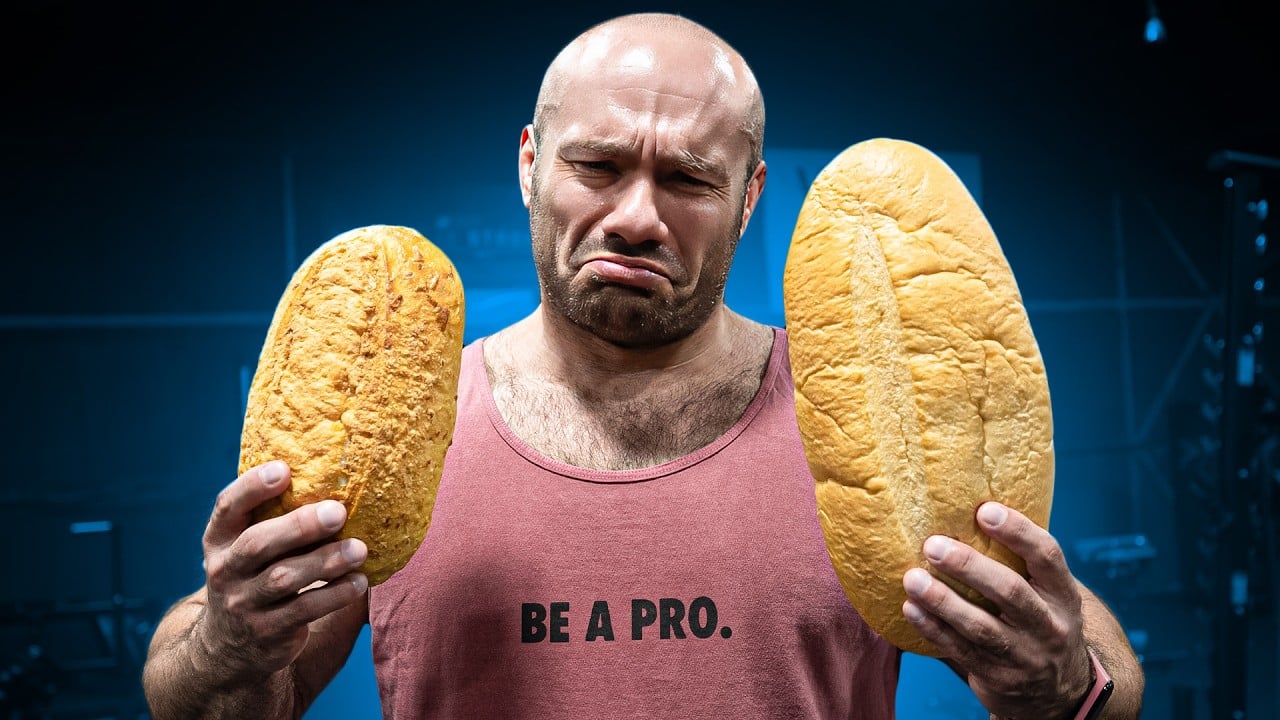
Could hunger, not fuel, be the real performance inhibitor?
Read on to learn how to optimize your pre-workout routine and maximize your gains.
Jump to:
What We Know About Carbs and Performance
Carbohydrates have long been hailed as an essential energy source for athletes and anyone engaging in high-intensity exercise. They replenish glycogen stores, prevent muscle breakdown, and help maintain steady energy levels. The body can draw on two primary energy sources during workouts:
- Muscle glycogen: Stored in muscles from previous meals, glycogen acts as a reserve fuel for intense exercise.
- Blood glucose: Carbs eaten just before exercise raise blood sugar levels, providing an immediate energy source that muscles can use.
Many believe that consuming carbohydrates right before a workout offers a direct performance boost. However, the body can still perform well by relying on stored glycogen—especially if your overall diet is rich in carbs. This raises an important question: Is eating carbs right before exercise crucial, or is it simply about avoiding hunger?
The Case for Eating Before a Workout
Hunger can be a serious distraction during exercise. When the body is in a calorie-deprived state, it prioritizes finding food over physical performance—a survival mechanism that dates back to human evolution.
Training on an empty stomach doesn’t just feel uncomfortable; it can reduce focus and mental clarity. While physical energy may still be available from glycogen stores, hunger can leave athletes feeling weak, distracted, and unmotivated.
This is why many athletes swear by eating something before hitting the gym. While the exact composition of the pre-workout meal matters to some extent, the simple act of eating seems to help most people feel more energized and focused.
The Studies: What Science Says About Pre-Workout Meals
A series of studies conducted from 2019 to 2021 explored how different pre-workout meals affect performance. These studies, led by Nuden and colleagues, tested the impact of eating various pre-workout meals on workout performance, specifically during strength exercises like squats and bench presses.
Each study followed a similar design: Participants performed four sets of squats and four sets of bench presses after consuming one of three pre-workout options—a high-carb meal, a placebo meal with no calories, or just water. Researchers tracked the number of repetitions completed across all sets to gauge workout capacity. The findings revealed some surprising insights.
- Study 1 (2019): High-Carb Meal vs. Water
Participants who consumed a carb-heavy breakfast performed better than those who only drank water. Unsurprisingly, eating before exercise improved performance. - Study 2 (2020): High-Carb Meal vs. Placebo Meal vs. Water
In this study, participants ate either a high-carb meal, a calorie-free placebo meal that mimicked the texture and volume of real food, or drank only water. Both the high-carb and placebo meals significantly outperformed water, but there was no meaningful difference between the two meals. This suggests that simply eating something—regardless of calorie content—can enhance performance. - Study 3 (2021): Semi-Solid Meal vs. Liquid Meal
The third study compared the performance effects of a semi-solid meal (similar to oatmeal) versus a liquid meal with an equal amount of carbohydrates. The semi-solid meal proved more effective, likely due to its ability to provide a greater sense of fullness and satiety.
Together, these studies suggest that pre-workout nutrition might be more about reducing hunger and promoting mental focus than consuming carbs specifically.
What This Means for Your Pre-Workout Routine
The takeaway from these studies is clear: Eating something before your workout matters, but it doesn’t always have to be carb-centric. Preventing hunger and ensuring mental focus may be just as important as replenishing glycogen stores, especially for shorter workouts.
For many people, a semi-solid meal—such as oatmeal, a banana, or a sandwich—offers the right balance of satiety and energy. Liquid meals or drinks like sports drinks may deliver carbohydrates but don’t do much to curb hunger. This can leave you distracted and less focused during your workout.
Here are some practical pre-workout meal ideas:
- A bowl of oatmeal with fruit
- A peanut butter and banana sandwich
- Greek yogurt with granola
- A protein bar or smoothie (with something solid added if you feel you need more fullness)
If you’re pressed for time, a simple snack an hour or two before exercise can make a difference. The key is to listen to your body—choose a meal or snack that leaves you feeling satisfied but not overly full.
Mental Fatigue and the Psychological Role of Pre-Workout Nutrition
Pre-workout nutrition isn’t just about fueling the body—it also plays a critical role in mental performance. Studies on mental fatigue show that psychological factors can significantly impact physical performance. In fact, being distracted by hunger can affect strength, endurance, and focus just as much as physical fatigue.
When the brain is preoccupied with hunger, it’s harder to concentrate on lifting, running, or maintaining proper form. This mental distraction can make workouts feel tougher than they are. Eating a meal or snack beforehand can eliminate that mental roadblock, freeing up energy and focus for your workout.
Even a small snack can make a difference in how motivated and energized you feel. For some, this might mean a carb-rich option like fruit or yogurt. For others, it could be something more substantial, like a sandwich or even a quick bite of beef jerky.
Ultimately, the right pre-workout nutrition depends on individual preferences and timing. As long as hunger is managed and focus remains sharp, performance is likely to improve.
Keep It Simple and Listen to Your Body
When it comes to pre-workout nutrition, there’s no one-size-fits-all solution. While carbohydrates are a proven fuel source for long, intense workouts, the simple act of eating something—anything—may be enough to boost performance for many people.
For shorter or moderate workouts, reducing hunger and staying mentally focused could be just as important as carb-loading. Whether it’s a bowl of oatmeal, a banana, or a protein bar, the key is to find what works best for you.
The bottom line: Don’t overcomplicate it. Listen to your body, stay flexible, and prioritize feeling satisfied and ready to focus on your workout. Sometimes, the best pre-workout meal is simply the one that leaves you feeling good and ready to move.










