Most people assume fitness naturally declines with age, but a groundbreaking study of elite older athletes is flipping that assumption on its head.
Researchers examined nearly 5,000 masters athletes who qualified for the National Senior Games and discovered something remarkable: their fitness levels weren’t just good for their age—they were exceptional by any standard.
Now, thanks to newly developed fitness tests from this research, anyone can measure themselves against these high-performing seniors.
The results might be humbling—or incredibly motivating.
Jump to:
Elite Seniors Are Rewriting Aging Rules
The study examined 4,659 masters athletes aged 50 to 90-plus who’d earned spots at the National Senior Games, a biennial competition formerly called the Senior Olympics. These competitors weren’t just active for their age—they were remarkably healthy across every metric researchers examined.
Heart disease, cancer, high blood pressure, and diabetes were rare among participants. Fewer than 10 percent required joint replacements. Their strength and aerobic conditioning tested consistently high, painting a picture of what’s truly possible in later decades.
They challenge conventions of age-related limitations.
That’s how researchers summarized their findings. But quantifying exactly how fit these athletes were presented an unexpected problem.
Existing Tests Were Too Easy
Becca D. Jordre, who led the study and serves as professor of physical therapy at the University of South Dakota School of Health Sciences, encountered a unique challenge. Standard physical function tests designed for older adults simply didn’t work for competitive seniors.
Older athletes aced them.
Jordre said these athletes needed their own fitness standards—ones that actually challenged them and provided meaningful performance benchmarks. So she and her team created exactly that.
Introducing the Sustained Athlete Fitness Exam
The result was SAFE—the Sustained Athlete Fitness Exam. This comprehensive assessment measures cardiovascular health, muscular strength and power, flexibility, and balance, creating age-specific benchmarks for older athletes.
Alison Doherty, a professor of sport management at Western University in Ontario who studies masters athletes but wasn’t involved in developing SAFE, recognized its significance immediately.
The importance and increasing popularity of masters sports warrants a more granular understanding of older athletes’ particular physiology and performance.
While SAFE was designed for competitive older athletes, Jordre recognized its potential value for everyone. Working with The Washington Post, she extracted the two most effective measurements and created simplified benchmarks that anyone can use.
Two Simple Tests Reveal Your True Fitness
The full SAFE protocol involves multiple complex assessments requiring specialized equipment and expertise. Some tests, like standing on one leg with eyes closed, carry inherent risks for untrained individuals.
But two particular tests emerged as remarkably predictive of overall physical capability. In a study of 308 masters track and field athletes presented at a physiology meeting, these two measures proved almost as reliable as the complete SAFE battery at forecasting competitive performance.
These two tests are the most important in the SAFE.
That’s Jordre’s assessment, based on their ability to predict physical capabilities. Both tests require dynamic movement and speed, providing insight into strength, power, and coordination combined.
Test One: Five Times Sit to Stand
Position a chair without armrests against a wall for stability. Sit at the edge, then stand completely upright and sit back down five times total—as rapidly as possible—without using hands for assistance. Have someone time your performance.
Athletic benchmarks: A 50-year-old athlete typically completes this in about 6 seconds. An 80-year-old athlete averages around 8 seconds.
Test Two: Maximal Walking Speed
Measure out 10 meters (10.9 yards or 32.8 feet—roughly the length of a school bus) in a hallway or open space. Start about 10 feet back from your measured course to build momentum. Walk as quickly as possible through the measured distance while someone times you.
Critical rule: Don’t run. One foot must always maintain ground contact. Divide 10 by your time in seconds to calculate speed in meters per second.
Athletic benchmarks: A typical 50-year-old athlete walks at approximately 2.3 meters per second or faster. An 80-year-old athlete averages about 2 meters per second.
How Elite Athletes Actually Score
Before assuming these benchmarks are impossibly high, consider this: perfection remains elusive even for National Senior Games qualifiers.
The complete SAFE includes more than a dozen tests, with points awarded for passing each one. A perfect score would be 20. Among nearly 4,700 tested athletes, only 1 percent achieved that perfect mark. Group average hovered around 13.
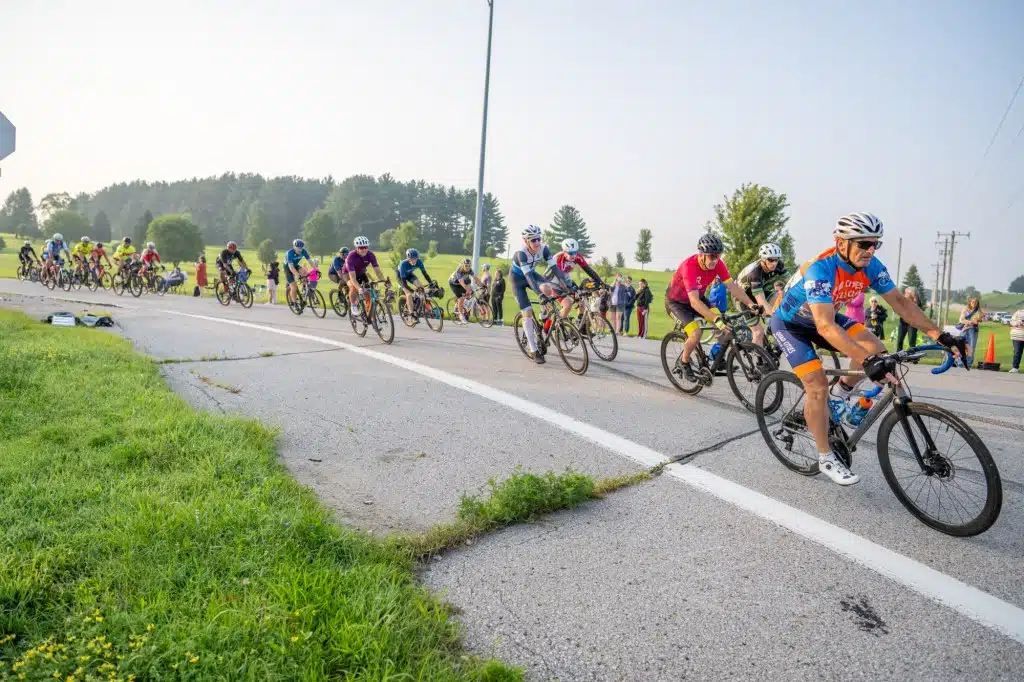
Interestingly, performance varied by sport. Track athletes, triathletes, and cyclists scored highest. Bowlers and cornhole players posted somewhat lower numbers—though still impressive compared to sedentary populations.
Four Strategies to Close the Gap
Falling short of elite 80-year-old benchmarks doesn’t mean defeat—it means opportunity. Jordre offers specific recommendations for building the kind of fitness these athletes demonstrate.
Prioritize Regular Weight Training
Resistance training does so much for older athletes’ – and aspiring athletes’ – muscular fitness.
Jordre recommends strength training at least twice weekly. Use weights that fatigue muscles within eight to 12 repetitions. Progress toward completing two to three sets.
Add Power Training
Power differs from pure strength. Using lighter weights than standard training, lift rapidly, then return to position more slowly. This builds explosiveness.
Alternative approaches include throwing a weighted ball with a partner or swinging a kettlebell.
Strength is critical for healthy aging, but power might be more important.
Jordre explains that movements like climbing stairs, rising from chairs, or catching yourself during a stumble all require power more than pure strength.
Incorporate Box or Stair Stepping
This single exercise simultaneously improves aerobic conditioning, leg strength, and balance. Start with a sturdy six-inch box positioned against a wall. Step up and down, alternating arms and legs, aiming for 12 repetitions initially.
When that becomes comfortable, progress by increasing box height, stepping speed, or adding dumbbells.
Consider Competitive Sports
The National Senior Games includes dozens of sports—swimming, tennis, volleyball, tai chi, and many others. Many elite senior athletes didn’t begin training until after retirement.
Starting late doesn’t prevent excellence.
Never Too Early to Prepare
At 48 years old, Jordre isn’t waiting to apply lessons from her research.
My husband and I have changed our training because of the SAFE research. We’re weight training more. We’re lifting faster.
Their goal? Matching the power, agility, and fitness of the 70- and 80-year-olds she works with.
Her final advice distills years of research into one powerful recommendation.
If you want a strategy for healthy aging, look to these athletes.
Those elite seniors aren’t defying aging through genetics alone. They’re demonstrating what consistent training, smart programming, and competitive drive can achieve—at any age. The question isn’t whether you can match an 80-year-old elite athlete. It’s whether you’re willing to train like one.