Elite athletes around the world share a hidden advantage that has nothing to do with big muscles or intense weightlifting.
According to performance coach and clinical researcher Coach Chonzee, the secret lies in something most fitness enthusiasts have never even heard of: fascial development.
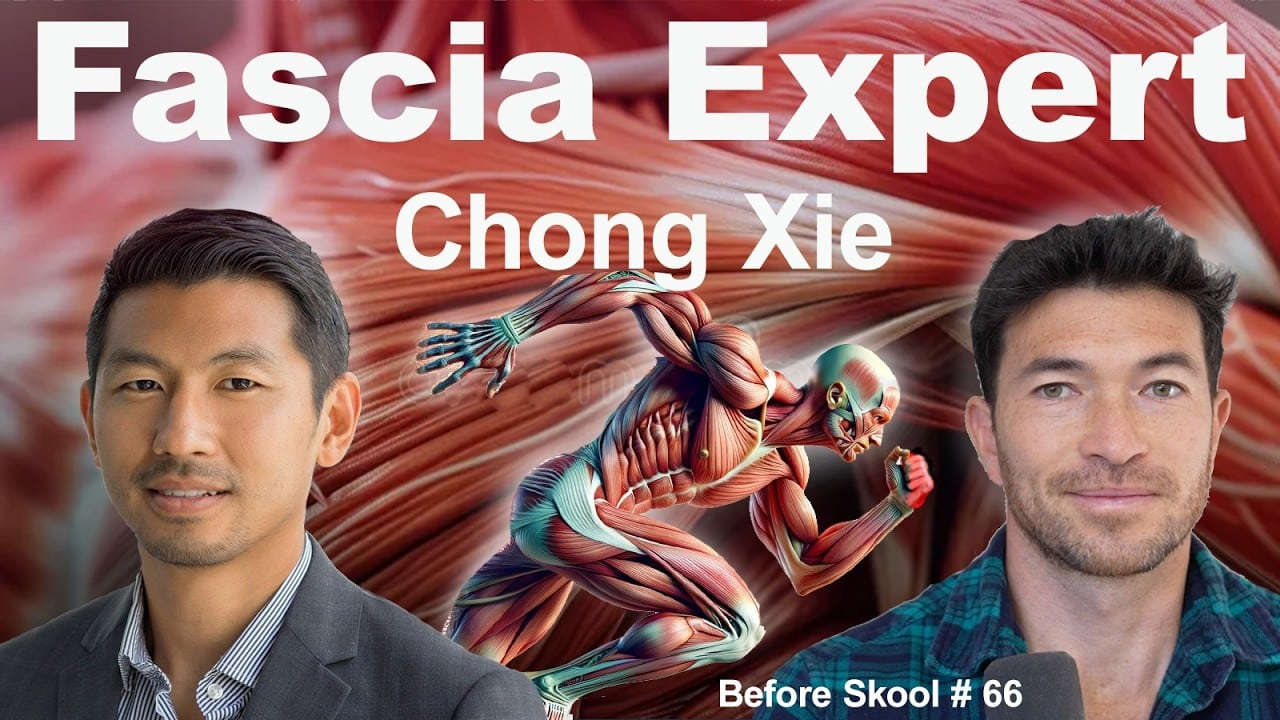
In a recent episode of the Before School podcast, Chonzee revealed how this overlooked tissue system separates champion-level athletes from everyone else—and why your workout routine might be working against you.
The implications for longevity, injury prevention, and athletic performance are staggering.
Jump to:
- The Missing 20% of Your Body
- Why Elite Athletes Look Different From the Feet Up
- Your Foot: A Sensory Antenna You’re Ignoring
- Why Weightlifting Can Make You Weaker
- The Fascia-Muscle Strength Paradox
- Why ACL Tears and Achilles Ruptures Keep Happening
- The LeBron James Foot Paradox
- How Fascia Controls Inflammation and Healing
- Nutrition for Fascial Health
- The Running Form Revolution
- A Simple Test for Fascial Integration
- Why Muscle Doesn’t Atrophy Alone
- Beyond Exercise: Fascia as Body-Wide Communication
- The Clinical Evidence Is Coming
- Practical Application: Where to Start
The Missing 20% of Your Body
Fascia is everywhere in your body, yet for decades it was literally thrown away during medical dissections.
Scientists dismissed it as mere packing material. But this “buffer tissue” actually accounts for 20% of your body weight—anywhere from 14 to 22 kilograms depending on your size.
Imagine you are a car mechanic and then you go to a car shop. You take your car to a car mechanic and the car mechanic said you know what, I disassembled your car, I took apart your car, but when I was trying to put it back I don’t know what that 20% does. I just left it out.
That’s essentially what mainstream fitness has been doing, Chonzee explained. Every organ, nerve, and muscle fiber is surrounded, separated, and integrated by fascia. Your nerves don’t travel through muscle—they exist within fascia.
When you lift weights and your muscles grow, fascia manages the relationship between enlarged muscles, blood vessels, and nerves. Without healthy fascia, that growth creates dysfunction.
Why Elite Athletes Look Different From the Feet Up
Chonzee has spent years studying what separates world champions from talented amateurs. His research revealed something remarkable: elite athletes have distinct fascial structures in their feet.
Champion-level performers share common signs—a prominent anterior tibial tendon running from the shin to the arch, highly visible extensor tendons, and exceptional fascial integration throughout the foot.
If you look at different tribes from Africa, from South America, Amazonian jungles, the Aborigines from Australia and other tribes that grew up without the shoe, they are actually very strong and very sturdy and athletic.
Countries that dominate soccer—Brazil, Argentina, Italy, Spain—all share a culture of barefoot play during childhood. Brazilian kids playing barefoot soccer on concrete aren’t just having fun. They’re developing natural athleticism through fascial development that no gym workout can replicate.
Your Foot: A Sensory Antenna You’re Ignoring
The bottom of your foot contains over 200,000 nerve endings. That makes it one of the most sensitive areas of your entire body.
Your foot should function like an antenna, constantly detecting ground conditions and sending signals that direct how your entire body moves. When you walk barefoot over varied terrain, your foot detects pressure and adjusts force distribution instantly—protecting you from injury without conscious thought.
Shoes eliminate this function entirely. They dampen sensory feedback and force your body to adapt to artificial cushioning rather than natural movement patterns.
We are pretty much the only animal on this planet that develops with a shoe.
That seemingly innocent choice has massive downstream effects on athletic performance, injury risk, and long-term health.
Why Weightlifting Can Make You Weaker
This doesn’t mean weightlifting is inherently bad. But Chonzee’s research reveals a troubling truth: if your fascial connections are imbalanced, lifting weights creates harmful compensation patterns.
He uses EMG testing to measure which muscles activate during movement. Elite athletes performing a squat activate their glutes and core significantly more than average people, who rely heavily on quads and lower back.
The difference? Fascial integration.
The whole science about lifting is they can control the stimuli which is how much weight you’re lifting but they cannot control the adaptation.
If your left side has poor fascial connection from foot to glutes, but your right side is functional, your body compensates. You might lift 150 pounds, but one side uses the glute while the other overloads the lower back. Over time, this creates the chronic pain and imbalances that plague gym-goers.
Compression-based training also works against fascial health. Your body has multiple tissue layers that need to glide smoothly during movement. Constantly compressing those layers through heavy lifting without addressing fascial function limits mobility and increases injury risk.
The Fascia-Muscle Strength Paradox
Here’s something that surprises most fitness enthusiasts: fascial tensile strength is 552 times stronger than muscle fiber.
When you jump and land, your body withstands forces up to nine times your body weight. If you weigh 180 pounds and can squat twice your bodyweight (360 pounds), that’s impressive. But it doesn’t explain how you absorb 1,620 pounds of force when you land from a jump.
Your muscles aren’t managing that load. Your fascia is.
Your fascia has to be always extremely pre-tensioned and strong working in the background. But we’re taking this for granted.
This explains why professional dunker Jordan Kilganon developed a 40-inch vertical without traditional weightlifting. His training emphasized jumping and holistic body usage, which strengthened his fascial system in ways isolation exercises never could.
Why ACL Tears and Achilles Ruptures Keep Happening
Common sports injuries like ACL tears, Achilles ruptures, and chronic tendinitis remain epidemic despite advances in sports medicine. Chonzee believes the focus on muscular rehabilitation misses the underlying fascial dysfunction.
Women suffer ACL injuries at higher rates because fascia contains hormone receptors for estrogen and testosterone. Higher estrogen levels create more laxity in fascial tissue, reducing stability during explosive movements.
Achilles injuries often occur because feet remain “deactivated” inside cushioned shoes. When your foot isn’t engaged and tensed, stepping down causes the foot to collapse and overstretch the Achilles tendon.
Why doesn’t it happen in nature or when people are barefooted? Because when they’re barefooted, the foot detects tension all the time. So your foot is tensed and engaged much more.
That constant engagement protects against injury. Shoes eliminate it entirely.
The LeBron James Foot Paradox
LeBron James has some of the most visibly deformed feet in professional sports. His big toe crosses over his other toes—clear evidence of decades playing in constrictive footwear.
Yet he’s also one of the most durable athletes in history. How?
Photos from LeBron’s youth show normal feet with the telltale signs of elite fascial development: prominent anterior tibial tendons, visible extensor tendons, and stiff, curled toes. That early development created fascial connections strong enough to compensate even as his feet deformed over time.
When your fascial connection is much higher, you’re no longer—you don’t need the foot to be at certain shape or form because it works holistically.
Russell Westbrook shows similar patterns. Both players built exceptional fascial systems before their feet were compromised by modern footwear.
How Fascia Controls Inflammation and Healing
Fascia isn’t just structural support. It’s a dynamic system that manages inflammation, healing, and cellular regeneration throughout your body.
The tissue contains specialized cells called fibroblasts. Under mechanical tension—like the kind created during proper movement—these convert to myofibroblasts, which are significantly stronger and trigger regenerative functions.
This explains why acupuncture works. Inserting a needle creates mechanical tension that causes fascia to grab and twist around the needle. This triggers the gliding function between fascial layers and activates beneficial cellular responses.
Chonzee has successfully treated athletes with calf atrophy that hadn’t responded to physical therapy for 10-15 years. By addressing fascial disorganization rather than just muscle weakness, he’s helped regrow muscle tissue that conventional approaches couldn’t restore.
Nutrition for Fascial Health
Proper hydration is non-negotiable. Fascia requires constant fluid movement to function properly.
Stagnance produces pestilence. If your body within the body is not flowing, you’re going to have problems.
Since fascia is made primarily of collagen, vitamin C becomes critical for collagen synthesis. Athletes following strict carnivore diets without adequate vitamin C intake compromise their connective tissue integrity.
Chonzee also warns against excessive processed sugar, which reduces fascial gliding and promotes inflammation. Antioxidants from vegetables and fruits help manage ROS (reactive oxygen species) that degrade fascial tissue over time.
The Running Form Revolution
Many Western runners were taught to strike heel-first when running—a pattern that only works with heavily cushioned shoes.
Remove the shoe and try running heel-first. You won’t. It hurts too much because your heel isn’t designed to absorb that impact.
Elite level athletes don’t run on the heels. Their foot and ankle so stiff. It’s one motion.
Proper running mechanics involve landing on the ball of the foot with the heel barely touching. The ankle remains stiff rather than dorsiflexing with each step. This eliminates the “braking energy” that heel-striking creates and allows force to transfer efficiently through the fascial system.
A Simple Test for Fascial Integration
Chonzee recently posted a dramatic test that reveals fascial connection quality instantly.
Have someone hold you horizontally about two feet off the ground, back facing down. When they release you, can you rotate your entire body quickly enough to land on your feet?
If your fascia integrates your body from head to toe, you’ll spin fast and land safely. If your body is segmented—upper body disconnected from lower body—you’ll rotate slowly and hit the ground hard.
You can just pick people out of a group. You can tell who’s going to be winning in the fight. That person that turns really fast and lands properly is the athletic person.
Why Muscle Doesn’t Atrophy Alone
After age 40, conventional wisdom says you’ll start losing muscle mass. Look closer at the research and you’ll see that loss occurs primarily in the posterior chain—glutes, hamstrings, back.
These are the exact muscle groups that require strong fascial connections to activate properly. When fascia degenerates with age—which microscopic imaging clearly shows—the muscles that depend on that fascial scaffold can’t function or grow.
The problem isn’t muscular. It’s fascial.
This explains how Eastern martial artists in their 70s and 80s move like cats while maintaining muscle mass. Bone density studies of martial artists in their 60s show bone health equivalent to someone in their 30s. Fascial training creates whole-body integration that preserves function across decades.
Beyond Exercise: Fascia as Body-Wide Communication
Fascia functions like a living notebook that records every injury and trauma your body experiences.
An ankle sprain at age 10 remains encoded in fascial tissue, potentially creating compensation patterns decades later. This is why Chonzee’s assessment process involves detailed injury history—understanding when and how fascial dysfunction began.
Fascia is also piezoelectric, meaning it conducts electricity throughout your body. This electrical flow is essential for cellular health. As fascial tissue loses conductivity with age, cells die and aging accelerates.
Grounding—direct contact between bare feet and earth—significantly improves blood flow compared to wearing rubber-soled shoes that block electrical exchange. Some shoe companies now incorporate grounding pads specifically to restore this function.
The Clinical Evidence Is Coming
Chonzee’s team is conducting clinical trials comparing traditional training methods against HFT (his fascial training protocol). Early results show participants can increase vertical jump height and explosive power without weightlifting while simultaneously resolving chronic ankle pain.
The data is “pretty shocking,” according to Chonzee, and will be published soon.
His ultimate goal extends beyond individual athletes. He wants to develop technology that allows people to see their fascia—to compare their fascial health to elite performers like Michael Jordan or LeBron James the same way fitness trackers currently monitor heart rate or sleep.
Until that technology exists, the problem remains invisible. People suffer chronic pain, limited performance, and accelerated aging without understanding the fascial dysfunction driving those outcomes.
Practical Application: Where to Start
For those ready to prioritize fascial health, Chonzee recommends starting with foot activation and barefoot training. His Instagram account Secret of Athleticism provides daily content on fascial development principles.
More detailed protocols are available through his Patreon, which includes exercises, weekly Q&A sessions, and guidance on implementing fascial training immediately. Elite athletes and those with complex issues work with him one-on-one since everyone’s fascial connections and goals differ.
The shift in perspective matters as much as specific exercises. Stop viewing your body as a collection of isolated muscles to be grown and start understanding it as an integrated fascial system that requires holistic development.
Show muscles versus go muscles. Aesthetics versus function. Compression versus flow.
Your fascia determines which side of those equations dominates your fitness future.