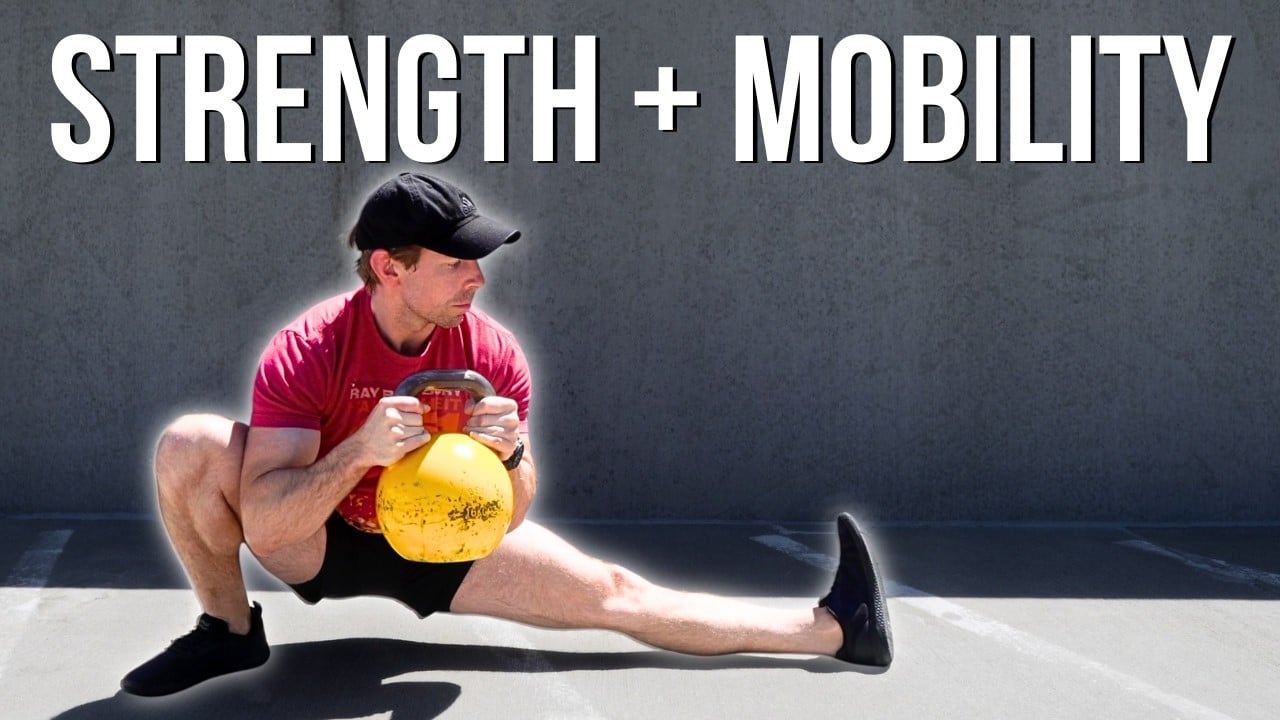
Cossack squats might look like an exotic party trick, but this old-school single-leg movement is actually one of the most effective exercises for building lower body strength while developing serious flexibility.
Unlike typical leg exercises that only move forward and backward, Cossack squats challenge your body side-to-side, filling critical gaps in hip stability and mobility that most training completely ignores.
Whether you’re an athlete looking for movement variability or someone who struggles with hip tightness, this comprehensive guide breaks down everything from beginner progressions to advanced loaded variations.
Named after the ritualistic dances of 15th century Eastern European warriors, the Cossack squat delivers exactly what its namesake represents: freedom through strong, flexible legs.
Jump to:
What Makes the Cossack Squat Different
The Cossack squat strengthens glutes and quads while simultaneously developing flexibility in hamstrings and adductors. Most lower body training happens almost exclusively in the front-to-back sagittal plane, but this movement operates in the frontal or side-to-side plane.
This unique angle challenges balance and builds hip stability that traditional squats simply can’t address. It’s particularly valuable for athletes and anyone needing movement variability in their training.

If you want something simple that actually works, this is one of the most effective tools I’ve used to build strength, conditioning, and endurance without needing a full gym setup.
- Full-body training with one weight using swings, squats, and presses
- Solid cast iron build that feels stable and lasts for years
- Comfortable grip that makes high-rep workouts easier to handle
Proper Cossack Squat Form
Setup begins with an ultra-wide stance. Feet should spread wide enough to allow hips to drop without the long leg needing to slide out—for most people, that means heels just inside wingspan.
Turn feet out 30° to 45°. Shift body weight and squat into one side, letting the long leg rotate out while pivoting on the heel and turning toes up.
Like any squat, knee tracking over middle toes is critical. Go as deep as mobility allows while striving to maintain tall posture. Reaching arms out helps tremendously with this.
Stand back up to starting position and repeat on the other side.
The Toes-Up Distinction
Many demonstrations show the long side foot staying flat on the ground. While this looks similar, it’s technically not a Cossack squat—it’s actually a lateral squat or the “poo boo drop stance” in Kung Fu training.
Both are excellent exercises with different goals and progressions. True Cossack squats require that toes-up position to achieve a big split stretch.
If you want something simple that actually works, this is one of the most effective tools I’ve used to build strength, conditioning, and endurance without needing a full gym setup.
- Full-body training with one weight using swings, squats, and presses
- Solid cast iron build that feels stable and lasts for years
- Comfortable grip that makes high-rep workouts easier to handle
Six Progressions From Beginner to Advanced
Cossack squats challenge strength, mobility, balance, and coordination simultaneously. Don’t get discouraged if the technique or range of motion feels impossible initially—these progressions will stair-step you into full Cossack squats.
Progression 1: Shallow Cossack Switch
From shoulder-width stance, shift weight into a quarter squat on one side while pivoting off the opposite heel into a straight-leg hamstring stretch. Go slightly wider as comfort allows.
Really emphasize the dynamic hamstring stretch by pushing hips back while allowing torso to lean forward and turn towards the stretch leg. Just about anyone can handle this starting point.
Progression 2: Cossack Sit
Stand in front of a bench, box, or chair and simply sit down and stand up from the same Cossack squat pattern. This allows you to standardize and safely progress squat depth while building single-leg strength and control.
Progression 3: Assisted Reps
Explore deeper ranges of motion using external support. Two primary goals emerge here: getting as deep as mobility allows while maintaining tall upright posture, and using only one hand for counterbalance while the other gently pushes the squatting knee out for additional stretch.
Five types of external support work well:
If you want something simple that actually works, this is one of the most effective tools I’ve used to build strength, conditioning, and endurance without needing a full gym setup.
- Full-body training with one weight using swings, squats, and presses
- Solid cast iron build that feels stable and lasts for years
- Comfortable grip that makes high-rep workouts easier to handle
- Sturdy upright structure like a squat rack or door frame
- TRX or rings (handles move with you, making side switches easy)
- Thick resistance band affixed around hip height
- Training partner in a braced hip hinge stance
- Heavy kettlebell (less ideal as it may encourage back rounding)
Remember: assistance helps with balance, not pulling you up.
Progression 4: Elevated Squat Foot
This setup allows full range of motion in the squat while easing some hamstring stretch in the long leg. It’s particularly useful for those with tight hamstrings.
Progression 5: Rolling Cossack Stretch
The rolling Cossack stretch is one of the most underrated hip openers you’ll find. And if you only steal one drill from this video, make it this one.
From an all-fours position, stretch one leg straight out to the side. Rock forwards and roll onto toes, driving into internal hip rotation. Rock backwards and drive toes up into external rotation.
Once comfortable, progress by rocking all the way back into the bottom of the Cossack squat and repeating. This opens hips while stretching feet and ankles simultaneously.
Progression 6: External Weight for Counterbalance
Hold a weight at chest height—something light at arm’s length or heavier held close to the body. If you have access to a landmine, this combines counterweight with structural support beautifully.
Addressing Specific Weaknesses
Working through progressions builds a solid Cossack squat foundation, but you might also need specific strength and flexibility drills to correct imbalances.
If you want something simple that actually works, this is one of the most effective tools I’ve used to build strength, conditioning, and endurance without needing a full gym setup.
- Full-body training with one weight using swings, squats, and presses
- Solid cast iron build that feels stable and lasts for years
- Comfortable grip that makes high-rep workouts easier to handle
Strengthening Adductors
These muscles rarely get trained directly. In Cossack squats, adductors don’t just need flexibility—they must be strong enough to stabilize and control hips and knees.
The Copenhagen side plank makes a perfect complement. In this side plank variation, you support some body weight with the adductor complex while engaging QLs and obliques for a complete hip and low back exercise.
Dynamic Adductor Stretch
Lie on your back holding one knee in deep squat position. Straighten the other leg and allow it to fall and stretch out directly to the side.
Work contract-and-relax pulses while striving to drive toes toward the back wall. A fun variation involves drawing big circles with the long leg, keeping hips flat to the floor in both directions.
Fixing Knee Cave and Weak Legs
If knees still cave in, back rounds excessively, or legs feel weak standing up, you probably need to fill strength gaps with more basic squat work. Training goblet squats and double kettlebell front squats improves leg strength in concert with core and upper back engagement.
Ankle Mobility Issues
A little heel raise isn’t always problematic, but it can put unwanted stress on knees and points to ankle mobility restrictions. The quick fix: simply elevate the heel.
If you want something simple that actually works, this is one of the most effective tools I’ve used to build strength, conditioning, and endurance without needing a full gym setup.
- Full-body training with one weight using swings, squats, and presses
- Solid cast iron build that feels stable and lasts for years
- Comfortable grip that makes high-rep workouts easier to handle
You’ll still get all Cossack squat benefits with better positioning. Address ankle mobility directly with elevated calf stretches.
Upper Back Stiffness
If you collapse forward regardless of ankle or hip mobility, a stiff upper back may be the culprit. Start with supported back bends over a foam roller.
The Cossack squat exposes numerous movement gaps, so most issues aren’t simply technique problems but actual deficits in strength and mobility.
Advanced Variations for Strong Movers
Once you’ve mastered the Cossack squat and can hit 10 clean reps on both sides, explore advanced variations that challenge strength, endurance, and mobility.
Low Transition and Circular Variations
Keep hips down as you shift deep squat position from one side to the other. The circular Cossack squat takes this further—squat down on one side, make a low switch, and stand on the other.
Transition from the bottom into a deep lizard lunge, where you can add bonus moves for hip and shoulder mobility. Elevating the foot on the long side adds extra hamstring and adductor stretch.
If you want something simple that actually works, this is one of the most effective tools I’ve used to build strength, conditioning, and endurance without needing a full gym setup.
- Full-body training with one weight using swings, squats, and presses
- Solid cast iron build that feels stable and lasts for years
- Comfortable grip that makes high-rep workouts easier to handle
Loaded Variations
Start with two classic drills from the goblet position: the bicep curl and the heartbeat. These are fun ways to boost core engagement while strengthening your squat.
Move from goblet position to front racked position. Start with a single kettlebell working both sides, eventually progressing to doubles. Strive for tall upright posture with elbows pointing straight down.
Cossack squats can also be performed with a barbell in three major squat positions: front, back, and Zercher. As with any unstable lift, progress weights slowly—you’re working not only muscles but also connective tissues, which take much longer to recover and adapt.
For those with great shoulder mobility and stability, the Cossack squat can be the base of an overhead press and even a windmill rotation. A gnarly combo lift worth trying: the swing clean to Cossack squat.
Programming Cossack Squats Into Your Training
For most people, the best place for Cossack squats is early in sessions, either as a mobility-focused warm-up or as a primary skill movement before fatigue sets in.
If you’re training with minimal equipment, the Cossack squat makes an excellent single-leg strength and hypertrophy movement alongside pistols, lunges, and split squats.
If you want something simple that actually works, this is one of the most effective tools I’ve used to build strength, conditioning, and endurance without needing a full gym setup.
- Full-body training with one weight using swings, squats, and presses
- Solid cast iron build that feels stable and lasts for years
- Comfortable grip that makes high-rep workouts easier to handle
For a fun challenge that really pumps up legs, try alternating Cossack squats continuously for a full minute.
The word Cossack means free man. And when you train their squat, you’ll experience the freedom that only strong, flexible legs can give.