Scarlett Espinoza didn’t just bounce back from a devastating ankle injury — she transformed her entire body and lifestyle.
In just two months, she shed 14 pounds, gained six pounds of muscle, and cut her body fat in half.
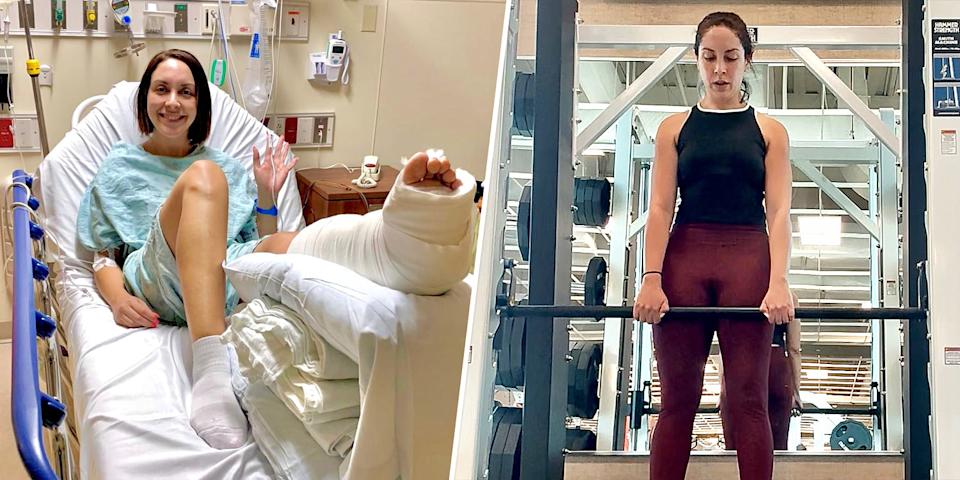
Her journey earned her a national Life Time fitness challenge victory and a $10,000 prize.
But perhaps more impressively, Espinoza figured out how to maintain her results long after the cameras stopped rolling.
Through four realistic, sustainable habits, she embraced strength, balance, and joy in both movement and meals.
Here’s how she did it — and how anyone looking to reshape their body (and life) can adapt her approach.
Jump to:
1. Start Small: Rebuild With Daily Micro Habits
Espinoza’s transformation began with tiny steps — literally.
After breaking her ankle in three places while practicing handstands, everyday motions became massive challenges. “It was like a twig next to my other leg,” she said, reflecting on her weakened limb.
To slowly regain strength, she began with gentle step-ups against the wall for balance. Her consistency paid off.
“I did step-ups every single day as my warm-up. I couldn’t see the progress week to week, but the exercise really was helping me,” Espinoza shared. “The first day I did a leg extension on the machine, I cried.”
That foundational habit still anchors every session. Warm-ups are now a non-negotiable routine she never skips before lifting weights.
2. Prioritize Strength Training For Long-Term Results
Once mobile again, Espinoza fully committed to building strength. “I wanted to be able to carry heavy things,” she said.
Throughout the two-month challenge, she trained with weights for an hour daily. Espinoza maximized time by using machines — avoiding the wait and complexity of free weights — and prioritized muscle engagement over speed.
“I went slow and focused on feeling my muscles, lifting as heavy as I could,” she said. As she became stronger, she continuously increased resistance, applying the principle of progressive overload — known to be essential for muscle hypertrophy.
Initially, she attempted daily cardio too, but quickly realized it was unsustainable. Instead, she scaled back to 15–20 minutes of low-impact cardio, like cycling, and focused on hitting 8,000 steps per day.
Post-challenge, she added a crucial missing piece: rest. Now, she schedules one full rest day each week to allow her body to recover.
3. Shift to High-Protein, High-Fiber Meals (Without Cutting All the Fun)
Espinoza’s diet was one of the biggest overhauls of her routine. She aimed to build lean mass while losing fat — and that meant cleaning up her meals.
During the challenge, she followed a tightly controlled plan: chicken, turkey, vegetables, and shakes. The results were dramatic — but the rigid approach wasn’t sustainable.
“I used to barely eat protein, and most of my meals were carbs. I didn’t cut out carbs, but I cut back on ultra-processed foods,” she explained.
Her strict routine backfired once the challenge ended — she found herself binging on previously restricted foods like pasta and brownies.
Rather than give up, she chose balance.
Here’s what her current “normal” eating plan looks like:
- Breakfast: Greek yogurt with berries, honey, and chia seeds
- Lunch: A large salad with chicken and assorted veggies — her biggest meal
- Snacks: Edamame for protein and fiber
- Dinner: Roasted vegetables, legumes like black beans, and pasta, when she wants it
- Dessert: A small sweet treat like a cookie or mini sundae
Her guideline remains keeping protein high (around 30 grams per meal) and prioritizing fiber — known to support satiety and blood sugar control.
“I’m not trying to just do a crash diet and go back to my old ways,” she said. “I need food to bring me joy.”
That joy became a core part of her long-term success. A moderate, nutrient-dense diet, after all, is more likely to lead to adherence than any ultra-clean eating plan.
4. Create a Plan You Can Stick To — Mentally and Emotionally
What set Espinoza apart wasn’t just her physical work ethic — it was her mindset shift.
She recognized early that unsustainable rules would only get her so far. So she focused on strategies she could commit to for the long run.
“I’m still not 100%, but it makes me so happy to feel my body getting stronger and moving better,” she said.
Espinoza acknowledged her limits, gave herself grace, and chose sustainability over extremes. She replaced all-or-nothing thinking with consistency, flexibility, and self-compassion — key themes echoed by top nutritionists and trainers alike.
Her core principles now include:
- Daily physical movement, but with variation and rest days
- Meal plans built around enjoyment and nourishment, not deprivation
- Progressive goals instead of perfection
- Gratitude for strength and mobility, even if imperfect
The Bottom Line
Scarlett Espinoza reclaimed her body, health, and confidence by embracing four powerful habits: start small, lift heavy, eat smart, and stay flexible.
Her transformation was about more than muscle and fat. It was about resilience, mental growth, and rethinking what fitness looks like for everyday life — not just challenges and photo finishes.
For anyone starting a comeback or building momentum, Espinoza’s journey proves that sustainable, joyful change is always possible — one step-up, one meal, and one rep at a time.