Longevity medicine has exploded onto the scene, but not everyone practicing it is walking the walk.
Dr. John Jaquish recently sat down to discuss what he sees as the most problematic trends in the longevity space—and his perspective might surprise anyone who’s been obsessing over grip strength devices or V2 max numbers.
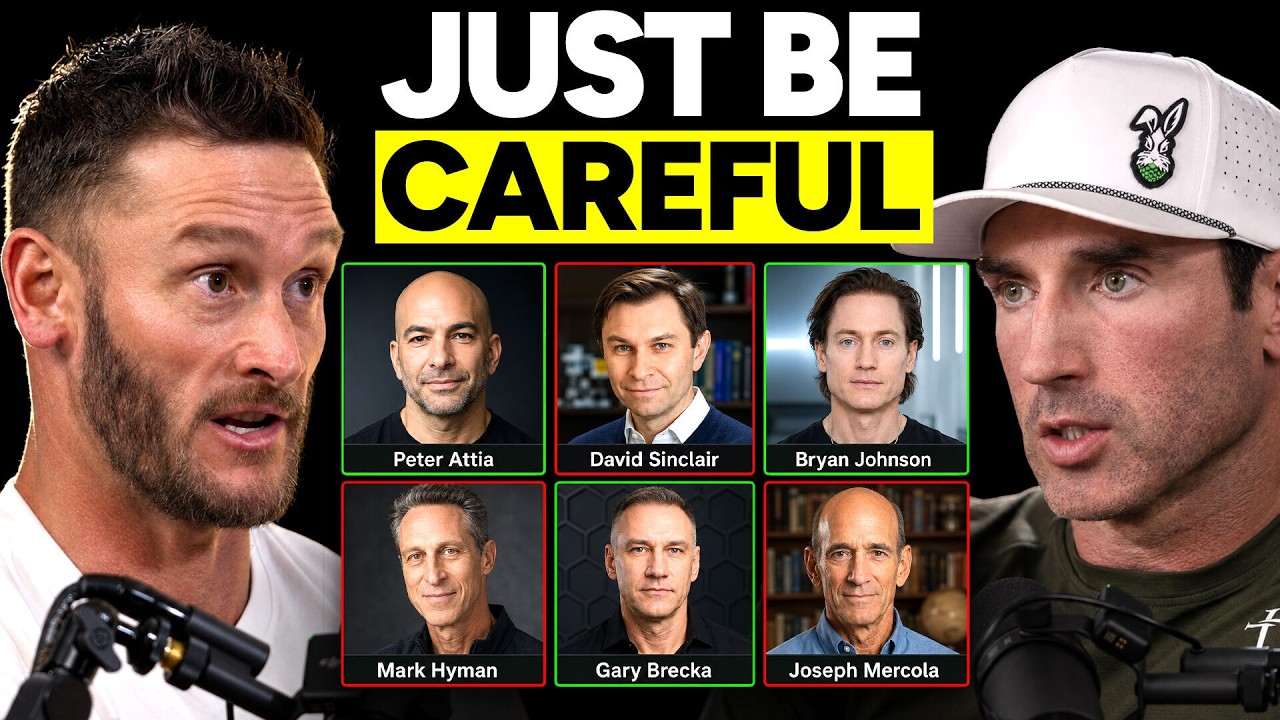
The conversation reveals a disturbing truth: the longevity industry has become cluttered with single data points being elevated to gospel status, often by people who may not even be following their own advice.
What follows is a deep dive into what actually matters for living longer and better—and it’s far less sexy than what’s being sold on social media.
Jump to:
The Dark Underbelly of Longevity Medicine
According to Dr. Jaquish, longevity medicine should be about increasing both lifespan and healthspan in a way that has broad-reaching impact. Instead, it’s become a monetization opportunity riddled with fear-based marketing.
The dark underbelly of the longevity space is this massive data dump and the obsession that we’ve developed through key characters in this industry around single solitary data points.
The problem isn’t that data doesn’t matter. It’s that individual metrics are being ripped from context and presented as the only thing that matters—creating an anxiety-riddled culture around numbers that may not even be the most important indicators of health.
The Grip Strength Obsession
Grip strength has become one of those flashpoint metrics that everyone suddenly cares about. But Dr. Jaquish argues this completely misses the forest for the trees.
Grip strength has nothing to do with anything. It’s just a surrogate marker for muscle health, which we already agree is a critical metric, if not the metric to define long-term health outcomes.
The metric itself isn’t useless—it’s a surrogate marker for whole-body strength and muscle health. But people have started treating it as if optimizing grip strength alone will extend their lifespan, which is absurd.
If someone can carry groceries in from the car, they’re doing better than someone who needs help. That’s common sense, not something requiring a specialized handheld device.
The V2 Max Controversy
V2 max—the measure of maximum oxygen consumption during exercise—has been elevated to near-mythical status in longevity circles. Some physicians have gone so far as to call it the single most powerful predictor of longevity.
Dr. Jaquish calls this an absurdly false statement.
Does it matter? Here’s where the crux is. No. It’s one piece of a huge puzzle.
V2 max reflects cardiopulmonary health and performance output. That matters. But if someone can climb mountains or walk two city blocks comfortably, their V2 max number becomes far less relevant in the grand scheme of things.
Why Muscle Health Trumps V2 Max
When comparing V2 max to muscle health, the temporal difference becomes obvious. With untrained individuals, structured cardiovascular training can increase V2 max by 30% in just weeks.
Increasing skeletal muscle mass by 30%? That takes years—potentially lifetimes.
When I’m looking at broad-based strategy for long-term health and performance, I’m going to invest more time into what takes more time to build.
V2 max is also highly volatile. Stop training for a week or two, and it drops. Muscle, once built, can be maintained with relatively minimal effort—making it a far better long-term investment.
Additionally, maintaining an elite V2 max requires consistent, painful training. For athletes, that’s manageable. For regular people just trying to stay healthy? It’s unsustainable torture.
The Problem With Scientific Studies
Much of the longevity advice being thrown around is backed by studies—randomized controlled trials, the gold standard of research. But there’s a problem: one-third of RCTs are never reproduced.
The gold standard is flawed enough that only two-thirds of the time can that even be reproduced, much less consistently reproduced over time.
This doesn’t mean science is worthless. It’s a methodology for asking questions and attempting answers. But presenting single studies as absolute truth—especially when those studies may never be replicated—is intellectually dishonest.
The Women’s Health Initiative is a prime example. For decades, it directed women’s healthcare. Today, experts recognize it was fundamentally flawed and misinterpreted, yet it shaped medical education and practice for years.
What Data Actually Matters
If grip strength and V2 max aren’t the be-all-end-all, what should people actually focus on?
Dr. Jaquish breaks it down to foundational elements that center on three core areas:
- Sleep duration and quality
- Metabolic flexibility
- Muscle health and strength progression
Sleep: The Foundation
Sleep tracking isn’t about obsessing over REM cycles or deep sleep percentages. It’s about awareness.
Understanding sleep hygiene—why being asleep by 10 PM matters, why six hours isn’t enough—provides actionable information. Sleep architecture also offers a window into metabolic health that most people don’t realize exists.
If someone can’t sleep through the night, that raises questions about glucose regulation, what they’re eating before bed, and overall metabolic function.
Metabolic Flexibility: The Core Metric
Metabolic flexibility is simply the body’s ability to switch between fat and carbohydrates as fuel sources based on demand and environmental conditions.
When stressed or active, the body uses glucose for rapid energy. During rest, it should efficiently burn fat. Most people today are locked into glucose dependence due to constant availability of ultra-processed foods and added sugars.
Dr. Jaquish advocates for short-term continuous glucose monitoring—not for life, but for two weeks paired with strict food journaling. This creates awareness of what foods do to blood glucose, which directly correlates to long-term health.
Strength: Simple and Measurable
Strength doesn’t need to be complicated. If someone can bench press 125 pounds today and 145 pounds next month, they’re stronger. That’s it.
Do I need to define grip strength? No. If I can bench press 125 lbs today and I can bench 145 lbs in a month, I’m stronger. Move on.
Progressive overload—gradually increasing weight, reps, or intensity—remains the simplest, most effective metric for tracking muscle development.
Build Muscle Early, Maintain It Forever
One of the biggest challenges Dr. Jaquish sees is people coming to him in their 50s who have never stepped foot in a gym. Building muscle at 50 is undeniably harder than at 20.
But that doesn’t mean it’s impossible or not worth doing.
The biggest challenge I see with people who come in in their 50s is, is it harder to build muscle at 50 than it is at 20? Absolutely. Undeniable.
This is where hormone optimization becomes critical. Testosterone, growth hormone, and even peptides like tesamorelin can level the playing field—not by making things easy, but by removing biological barriers that accumulate with age.
The good news? Someone who has never trained before will see significant muscle improvement in their first year regardless of age. The body responds to stimulus, and untrained individuals have the most room for rapid gains.
Why Women Need to Start Young
Dr. Jaquish has a five-year-old daughter, and they do push-ups together. His goal? To instill the importance of muscle health early, especially for young girls.
Too many women still come to him in their 20s focused on calorie restriction, cardio, and body weight—what he calls the “absolute guaranteed disaster trifecta.”
Getting young girls lifting weights and understanding muscle health creates a foundation that will serve them for life.
The Peptide Problem
Peptides have become the new frontier in longevity optimization—and simultaneously, a wild west of unregulated sales and dubious claims.
Dr. Jaquish is pro-peptide, but only specific, well-researched peptides used in humans. Compounds like tesamorelin consistently produce positive outcomes with solid evidence behind them.
The problem? Influencers and even physicians are promoting massive “stacks” of peptides, many with zero human research, purely for commission-based sales.
You’ve got three things that are the most potent substrates in humankind and are supported with high-quality research-based evidence. Then you’ve got 10 more things on your list that don’t even rise to the level of intrigue.
This MLM-style approach is dangerous. It preys on consumers who believe influencers are actually taking these massive stacks, when in reality they’re just pushing products for profit.
The Unsexy Truth About Longevity
Real longevity medicine isn’t about exotic peptides, obsessive data tracking, or chasing single metrics. It’s about basic core principles that work synergistically:
- Sleep hygiene
- Muscle health and progressive strength training
- Metabolic and nutritional optimization
- Hormone balance when appropriate
These aren’t sexy. They don’t generate viral content. But they work.
Maybe it’s not sexy, but it’s really about just giving people a good chance and direction and strategy.
Longevity medicine should be about root cause analysis, understanding core pillars of health, and creating actionable strategies—not selling anxiety-inducing data points or unproven supplements.
What Regular People Should Focus On
For someone who isn’t a biohacker or longevity enthusiast, the prescription is refreshingly simple:
- Prioritize sleep. Aim for 7-9 hours with consistent timing. Track it for awareness, not obsession.
- Build and maintain muscle. Start with basic resistance training. Progressive overload is all that matters.
- Improve metabolic flexibility. Use short-term glucose monitoring to understand how food affects your body. Reduce ultra-processed foods and added sugars.
- Consider hormone optimization if appropriate. Work with a qualified physician to assess whether testosterone, growth hormone, or other interventions make sense for your situation.
- Ignore the noise. Grip strength devices, obsessive HRV tracking, and exotic peptide stacks aren’t going to move the needle unless the basics are dialed in first.
The person who can carry in their groceries, walk several blocks without fatigue, and maintain muscle mass into old age will outlive and out-perform the person obsessing over data points while neglecting foundational health.
That’s the real longevity advantage—and it’s available to everyone willing to do the unglamorous work.