Forget everything you think you know about building real, functional strength.
Because in the mountains of Dagestan, fighters are forging bodies that can dominate opponents twice their size—without ever touching a barbell.
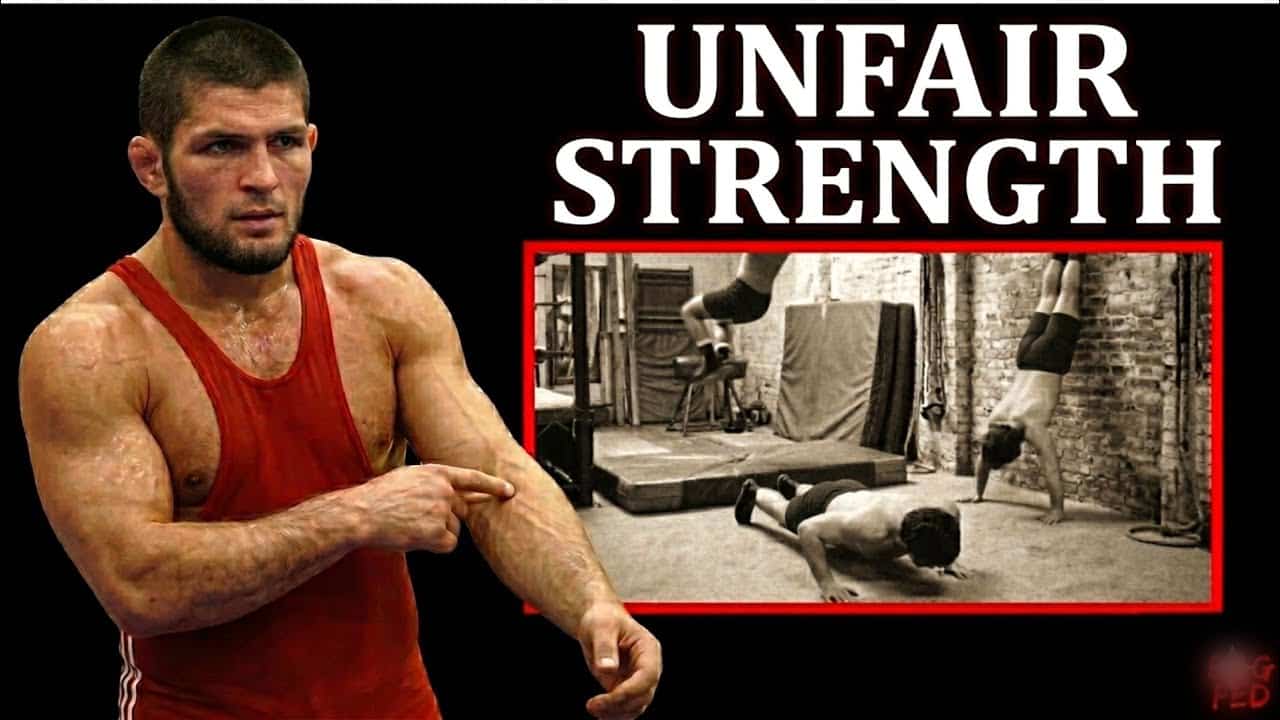
These aren’t bodybuilders with impressive mirrors selfies.
They’re wrestlers who’ve turned their bodies into weapons using nothing but ancient bodyweight techniques, relentless discipline, and a training philosophy that most modern gyms have completely forgotten.
Jump to:
- Why Gym Strength Doesn’t Translate to Fighting Power
- The Dagestani Training Philosophy: Master Your Body First
- Upper Body Training That Actually Mimics Combat
- Ground Fighting Dominance: Training Where Matches Are Won
- Grip Strength: The Secret Weapon Nobody Talks About
- Single-Leg Strength and Balance Mastery
- Injury-Proof Your Body: Nordic Curls
- Why This Training Philosophy Produces Superior Athletes
- Getting Started Tonight
Why Gym Strength Doesn’t Translate to Fighting Power
Picture this scenario: A gym enthusiast who benches 140 kg and squats 220 kg walks into a wrestling room. He looks powerful, muscles bulging under his shirt.
Then a lean Dagestani wrestler—who might weigh 20 pounds less—grabs him. Within seconds, the bigger man is on the ground, completely controlled, unable to move.

If you want something simple that actually works, this is one of the most effective tools I’ve used to build strength, conditioning, and endurance without needing a full gym setup.
- Full-body training with one weight using swings, squats, and presses
- Solid cast iron build that feels stable and lasts for years
- Comfortable grip that makes high-rep workouts easier to handle
What just happened? The answer reveals everything wrong with how most people train.
The gym guy trained to lift weight. The Dagestani trained to control another human body. That’s an entirely different kind of strength—one that’s built on connection, endurance, and full-body integration rather than isolated muscle development.
The Dagestani Training Philosophy: Master Your Body First
In Dagestan, where wrestling isn’t just a sport but a cultural institution, training starts early. Before anyone touches weights, there’s one non-negotiable rule: master your own bodyweight first.
This approach builds something that fancy gym equipment can’t replicate—bodies where muscles, tendons, and ligaments develop together as one integrated system.
The Wrestler’s Bridge: Building an Unbreakable Neck
The foundation of Dagestani wrestling training begins with the wrestler’s bridge. Fighters push their hips upward, roll onto their heads, and hold their bodies in an arch position.
For beginners, necks shake violently and spines burn with intensity. That discomfort signals adaptation—because in wrestling, your neck constantly comes under attack.
If you want something simple that actually works, this is one of the most effective tools I’ve used to build strength, conditioning, and endurance without needing a full gym setup.
- Full-body training with one weight using swings, squats, and presses
- Solid cast iron build that feels stable and lasts for years
- Comfortable grip that makes high-rep workouts easier to handle
Dagestani fighters transform this potential vulnerability into a weapon of control. This exercise helped create fighters like Khabib Nurmagomedov, who became nearly impossible for opponents to pin or control on the ground.
Endless Squats: Building Championship Endurance
Dagestani wrestlers don’t perform squats for maximum strength. They perform them by the hundreds.
This isn’t about lifting heavy once. It’s about building muscular endurance that outlasts any opponent.
Fights aren’t decided in single explosive moments—they’re won when one fighter’s legs give out and the other’s don’t. High-repetition squats build legs that refuse to quit when fatigue sets in.
Upper Body Training That Actually Mimics Combat
Traditional bench pressing has no place in authentic Dagestani training. Instead, fighters rely on movements that replicate actual fighting positions.
Hindu Push-Ups: Flowing, Functional Power
Hindu push-ups force the entire body to work as one unit. Your chest dives forward, spine extends, and every muscle coordinates together.
If you want something simple that actually works, this is one of the most effective tools I’ve used to build strength, conditioning, and endurance without needing a full gym setup.
- Full-body training with one weight using swings, squats, and presses
- Solid cast iron build that feels stable and lasts for years
- Comfortable grip that makes high-rep workouts easier to handle
Why does this matter? Because in real combat, you’re never stable. You’re constantly adjusting, reacting, and moving through unstable positions.
Hindu push-ups train your body to generate power while moving through space—exactly what happens during a fight.
One-Arm Push-Ups: Total Body Integration
Progression to one-arm push-ups demands complete body lockdown. Core muscles engage intensely, legs brace for stability, and any loss of control results in immediate collapse.
This exercise builds real strength—the kind that transfers directly to controlling an opponent who’s fighting back with everything they have.
Ground Fighting Dominance: Training Where Matches Are Won
Most people completely overlook this reality: fighters don’t spend matches standing upright in perfect posture. They fight low, scrambling on all fours, battling for position.
Bear Crawls and Duck Walks
Yes, these movements look unusual in conventional gyms. But Dagestani wrestlers train exactly how they fight.
If you want something simple that actually works, this is one of the most effective tools I’ve used to build strength, conditioning, and endurance without needing a full gym setup.
- Full-body training with one weight using swings, squats, and presses
- Solid cast iron build that feels stable and lasts for years
- Comfortable grip that makes high-rep workouts easier to handle
Bear crawls and duck walks develop:
- Hip mobility for maintaining low fighting stances
- Shoulder stability under dynamic movement
- Core endurance in compromised positions
- Mental toughness through uncomfortable exercises
These “weird-looking” exercises are precisely where championship matches get decided.
Grip Strength: The Secret Weapon Nobody Talks About
Dagestani training operates on a brutally simple principle: if you lose your grip, you lose everything.
Controlling an opponent requires hands that simply won’t let go, no matter how much they struggle.
Towel Pull-Ups
Instead of grabbing a smooth bar, fighters drape towels over pull-up bars and grip the fabric. Forearms burn within seconds as fingers desperately maintain hold.
This specialized grip training translates directly to grabbing opponents’ clothing, limbs, or body—and never letting go until you’ve secured dominant position.
If you want something simple that actually works, this is one of the most effective tools I’ve used to build strength, conditioning, and endurance without needing a full gym setup.
- Full-body training with one weight using swings, squats, and presses
- Solid cast iron build that feels stable and lasts for years
- Comfortable grip that makes high-rep workouts easier to handle
Single-Leg Strength and Balance Mastery
Perfect bilateral balance rarely exists in actual combat. You’re constantly off-balance, compensating, and generating power from compromised positions.
Pistol Squats
Pistol squats—single-leg squats performed to full depth—build unilateral strength that translates directly to fighting scenarios. No cheating allowed, because matches demand full control on one leg while the other attacks or defends.
This exercise develops the balance and power needed when an opponent attacks one leg or when you’re defending takedowns.
Injury-Proof Your Body: Nordic Curls
One of the most challenging exercises in Dagestani training involves Nordic curls—slowly lowering your body using only hamstring strength.
Most people fail instantly. The eccentric loading creates intense muscle damage initially, but fighters who persist build hamstrings that resist injury even under extreme stress.
This matters because hamstring tears can end fighting careers. Nordic curls create resilience that keeps athletes competing at peak levels.
If you want something simple that actually works, this is one of the most effective tools I’ve used to build strength, conditioning, and endurance without needing a full gym setup.
- Full-body training with one weight using swings, squats, and presses
- Solid cast iron build that feels stable and lasts for years
- Comfortable grip that makes high-rep workouts easier to handle
Why This Training Philosophy Produces Superior Athletes
Here’s the truth that gym culture often ignores: muscles grow faster than tendons and ligaments.
When you rapidly build muscle through heavy weightlifting without corresponding tendon development, injury risk skyrockets. Muscles can generate force that connective tissues can’t handle.
Dagestani bodyweight training forces everything to adapt together—muscles, tendons, ligaments, and nervous system coordination all develop as one integrated unit.
That’s exactly why a Dagestani fighter can dominate someone bigger, stronger, and more muscular. His body isn’t just strong—it’s connected, coordinated, and combat-ready.
Getting Started Tonight
The most powerful aspect of this training approach? You need absolutely nothing except your body and discipline.
No gym membership required. No expensive equipment necessary. Just commitment to mastering movements that have produced some of the most dominant fighters on Earth.
If you want something simple that actually works, this is one of the most effective tools I’ve used to build strength, conditioning, and endurance without needing a full gym setup.
- Full-body training with one weight using swings, squats, and presses
- Solid cast iron build that feels stable and lasts for years
- Comfortable grip that makes high-rep workouts easier to handle
Start with whichever exercise challenges you most—whether that’s the wrestler’s bridge, pistol squats, or towel pull-ups. Begin conservatively, focus on perfect form, and gradually increase intensity as your body adapts.
This isn’t about looking strong in gym mirrors. It’s about becoming strong in ways that actually matter—building a body that moves powerfully, resists injury, and never quits when tested.