A seasoned fitness coach with 45 years of training experience recently sparked widespread interest with his unconventional approach to high-rep training.
His second-ever YouTube video went viral, prompting hundreds of questions from curious viewers wanting to understand the nitty-gritty details of his grueling workout protocol.
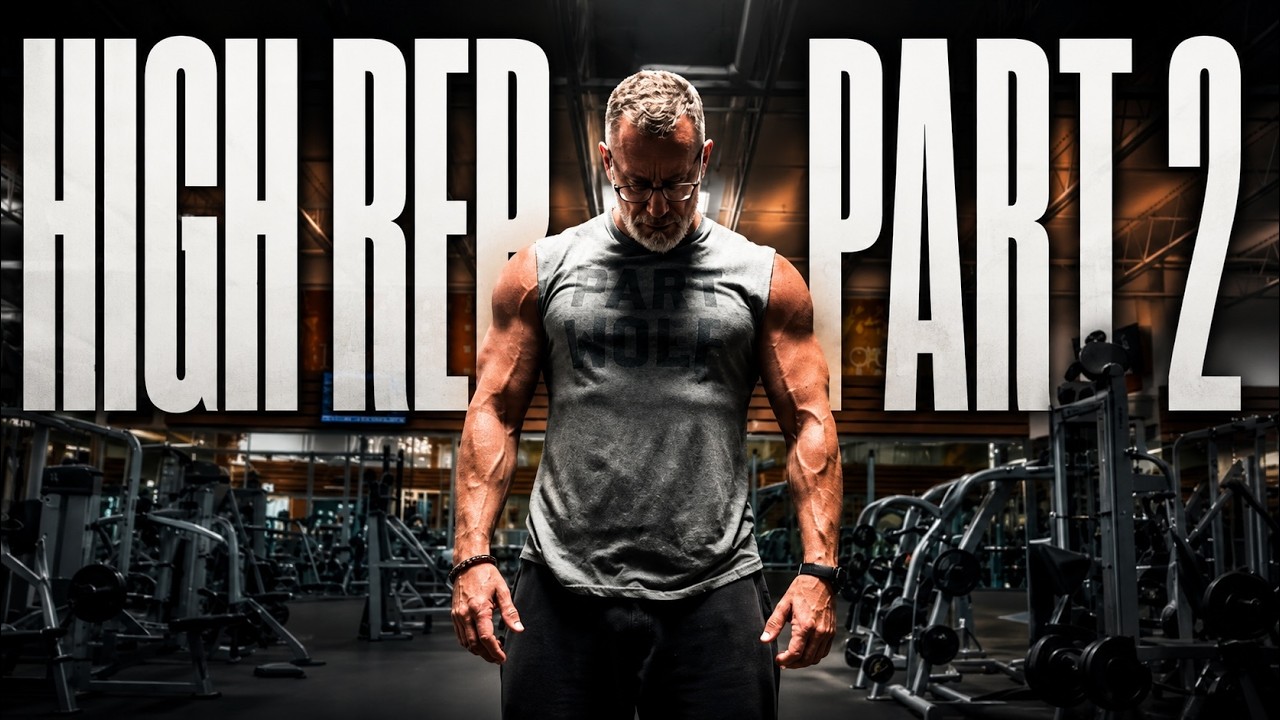
What started as a spontaneous experiment inspired by legendary bodybuilder Serge Nubret evolved into a three-month training journey that challenged everything he thought he knew about volume and recovery.
Now, after fielding countless questions and adjusting his approach multiple times, he’s sharing the real story behind the method—including what worked, what didn’t, and why he’s ready to move on.
Jump to:
- The Serge Nubret Inspiration That Started Everything
- Rest Periods: Finding Balance Between Recovery and Intensity
- Training Split Evolution: From Overtraining to Smart Recovery
- Progressive Overload Strategy: Same Weight, Building Intensity
- Volume Allocation: Bigger Versus Smaller Muscle Groups
- Exercise Rotation: Preventing Pattern Overload
- Three-Month Results: Diminishing Returns Signal Change
- Training Philosophy: Variation Keeps Progress Alive
- Age Is Just Data: Training Smart in Your 40s, 50s, and Beyond
- Key Takeaways From Three Months of Extreme Volume
The Serge Nubret Inspiration That Started Everything
The fitness veteran stumbled upon a documentary featuring Serge Nubret, who competed against Arnold Schwarzenegger in the 1970s. Nubret discussed his signature training approach: 10 sets of 20 reps.
Intrigued by this unconventional volume, the coach decided to test it himself.

If you want something simple that actually works, this is one of the most effective tools I’ve used to build strength, conditioning, and endurance without needing a full gym setup.
- Full-body training with one weight using swings, squats, and presses
- Solid cast iron build that feels stable and lasts for years
- Comfortable grip that makes high-rep workouts easier to handle
I think I went through one workout and barely made it through 10 sets of 20 reps on everything and it was just too much for me. There was just no way that I could keep up with that kind of volume.
Reality hit hard. The original protocol proved unsustainable, forcing an immediate adjustment to five sets of 20 reps—a modification that delivered phenomenal results without completely destroying his recovery capacity.
Rest Periods: Finding Balance Between Recovery and Intensity
One question dominated the comment section: How much rest are you taking between sets?
The answer surprised many who expected a rigid, programmed approach.
I just did this for fun. I’m not following Serge Nubret’s program at all. I watched a video on him. I saw a cool rep scheme. I thought I’d try it out.
Throughout all three months, rest periods remained intuitive rather than timed. After monitoring himself during a recent session, he estimated 1-2 minutes between sets—just long enough to feel strength return for another quality effort.
This flexible approach allowed him to listen to his body rather than follow arbitrary numbers on a stopwatch.
Training Split Evolution: From Overtraining to Smart Recovery
Month One: Too Much, Too Fast
Initial enthusiasm led to aggressive programming: push-pull-legs repeated twice weekly (Monday through Saturday). The result? Complete exhaustion.
If you want something simple that actually works, this is one of the most effective tools I’ve used to build strength, conditioning, and endurance without needing a full gym setup.
- Full-body training with one weight using swings, squats, and presses
- Solid cast iron build that feels stable and lasts for years
- Comfortable grip that makes high-rep workouts easier to handle
I was so sore in the muscles, not in the joints. I was so exhausted by the time Sunday rolled around. I kept that up for like three of the four weeks, and I was like, this is crazy.
Month Two: Adding Strategic Rest
Recognition of overtraining prompted a shift to 3 days on, 1 day off, 3 days on, 2 days off. Recovery improved significantly, making workouts sustainable and enjoyable again.
Month Three: Maximizing Recovery Time
Curiosity about even greater recovery led to the final evolution: 2 days on, 1 day off, 2 days on, 2 days off. This schedule maintained the push-pull-legs rotation while providing ample time for muscular adaptation.
Progressive Overload Strategy: Same Weight, Building Intensity
Managing weight selection across five sets of 20 reps required strategic thinking. Rather than adjusting loads throughout sets, he chose one weight for all five sets—a decision that simplified execution and mental focus.
The approach followed a specific intensity curve:
- Sets 1-2: Deliberately lighter, functioning as extended warm-ups
- Sets 3-4: Working sets with significant muscle engagement
- Set 5: All-out effort requiring maximum mental fortitude
The fifth set was usually an all-out war. The fifth set is really hard. It’s hard to count reps on. It’s hard to stay focused. You’re just in so much pain, but it’s a good pain.
Starting with weights that felt “too light” proved essential. What seemed easy during set one became brutally challenging by set three.
Volume Allocation: Bigger Versus Smaller Muscle Groups
Not all muscles respond equally to extreme volume—a lesson learned through trial and error.
If you want something simple that actually works, this is one of the most effective tools I’ve used to build strength, conditioning, and endurance without needing a full gym setup.
- Full-body training with one weight using swings, squats, and presses
- Solid cast iron build that feels stable and lasts for years
- Comfortable grip that makes high-rep workouts easier to handle
Larger muscle groups (chest, back, thighs) handled 2-3 exercises effectively. These areas possessed sufficient capacity to benefit from multiple movement patterns.
Smaller muscle groups (calves, biceps, triceps) required only one exercise. After training larger pushing muscles, triceps were already thoroughly fatigued.
By the time I got to the smallest muscle group, triceps, I had hardly anything left. I was just smoked. So, one exercise was perfect. I would leave the gym so blown up.
Even biceps—initially programmed with two exercises—needed reduction to a single movement. The freed-up capacity allowed addition of dedicated forearm work, supporting overall arm development.
Exercise Rotation: Preventing Pattern Overload
Repeating identical workouts twice weekly risked overtraining specific movement patterns. The solution involved creating two distinct workout variations for each training day.
This meant maintaining six different sessions in rotation:
- Push workout A and push workout B
- Pull workout A and pull workout B
- Leg workout A and leg workout B
Exercise variety prevented repetitive stress while maintaining training frequency and volume benefits.
If you want something simple that actually works, this is one of the most effective tools I’ve used to build strength, conditioning, and endurance without needing a full gym setup.
- Full-body training with one weight using swings, squats, and presses
- Solid cast iron build that feels stable and lasts for years
- Comfortable grip that makes high-rep workouts easier to handle
Three-Month Results: Diminishing Returns Signal Change
Initial adaptations proved dramatic. Months one and two delivered noticeable improvements in muscle fullness, endurance, and mental toughness.
Month three revealed something different—diminishing returns.
I believe that the human body does really really well with new stimuli and I feel like I’m getting to the point now after 3 months of training like this that the results are not as significant as they were in the very very beginning.
Mental fatigue accompanied physical plateaus. Maintaining focus during grueling sets became increasingly difficult, signaling readiness for new training stimuli.
Training Philosophy: Variation Keeps Progress Alive
This experiment represents just one phase in a constantly evolving training approach. Every three months brings fresh challenges and methodologies:
- Heavy strength phases focusing on low-rep compound movements
- Light weight, high-volume periods emphasizing metabolic stress
- High-intensity functional training incorporating CrossFit-style workouts
- Powerlifting blocks centered on squat, bench, and deadlift progression
- Bodybuilding phases targeting aesthetic development and muscle detail
I try to be a multi-athlete. I try to keep training fun for me and in order to do that I have to switch it up all the time.
Occasional competitions—like upcoming local powerlifting meets—add playful motivation without creating pressure or compromising long-term health.
Age Is Just Data: Training Smart in Your 40s, 50s, and Beyond
Perhaps the most valuable insight transcends specific protocols. After 45 years of consistent training, this coach embodies proof that peak performance isn’t reserved for youth.
If you want something simple that actually works, this is one of the most effective tools I’ve used to build strength, conditioning, and endurance without needing a full gym setup.
- Full-body training with one weight using swings, squats, and presses
- Solid cast iron build that feels stable and lasts for years
- Comfortable grip that makes high-rep workouts easier to handle
Many people entering their 40s and 50s make critical mistakes—either abandoning training entirely or attempting to replicate their 20-year-old intensity without adaptation.
The sustainable alternative involves training smarter rather than necessarily harder:
- Prioritizing recovery as much as effort
- Checking ego at the door
- Experimenting with diverse training modalities
- Listening to body signals rather than forcing predetermined plans
- Maintaining consistency over decades, not just months
If you’re in your 40s, 50s, 60s, even 70s, your best years are not necessarily behind you. They could be right in front of you. Sometimes you just need to switch up your training a little bit.
Humility replaces performance anxiety. Gym sessions become laboratories for exploration rather than stages for ego validation.
Key Takeaways From Three Months of Extreme Volume
This high-rep experiment delivered valuable lessons applicable beyond any single protocol:
- Start conservative when testing new training methods—initial enthusiasm often exceeds sustainable capacity
- Recovery requirements increase with training volume; adjust frequency accordingly
- Smaller muscles fatigue faster during compound session days; reduce their direct volume
- Progressive adaptation slows over time; recognize when diminishing returns signal needed change
- Intuitive rest periods work when you’ve developed body awareness through decades of experience
- Exercise rotation prevents overuse even when maintaining high frequency
Most importantly: training should remain enjoyable. When mental engagement fades, physical progress soon follows.
This coach isn’t claiming to replicate Serge Nubret’s exact methods or achieve identical results. He simply borrowed inspiration, adapted it sensibly, learned from the experience, and will now transition toward new challenges.
If you want something simple that actually works, this is one of the most effective tools I’ve used to build strength, conditioning, and endurance without needing a full gym setup.
- Full-body training with one weight using swings, squats, and presses
- Solid cast iron build that feels stable and lasts for years
- Comfortable grip that makes high-rep workouts easier to handle
That cyclical approach—experimenting, adapting, learning, and moving forward—represents the true secret behind 45 years of consistent training success.