Thirty minutes on a treadmill might burn roughly 120 calories, about two cookies.
That eye-opening figure comes from Dr. Jason Fung, Canadian nephrologist and bestselling author of The Obesity Code.
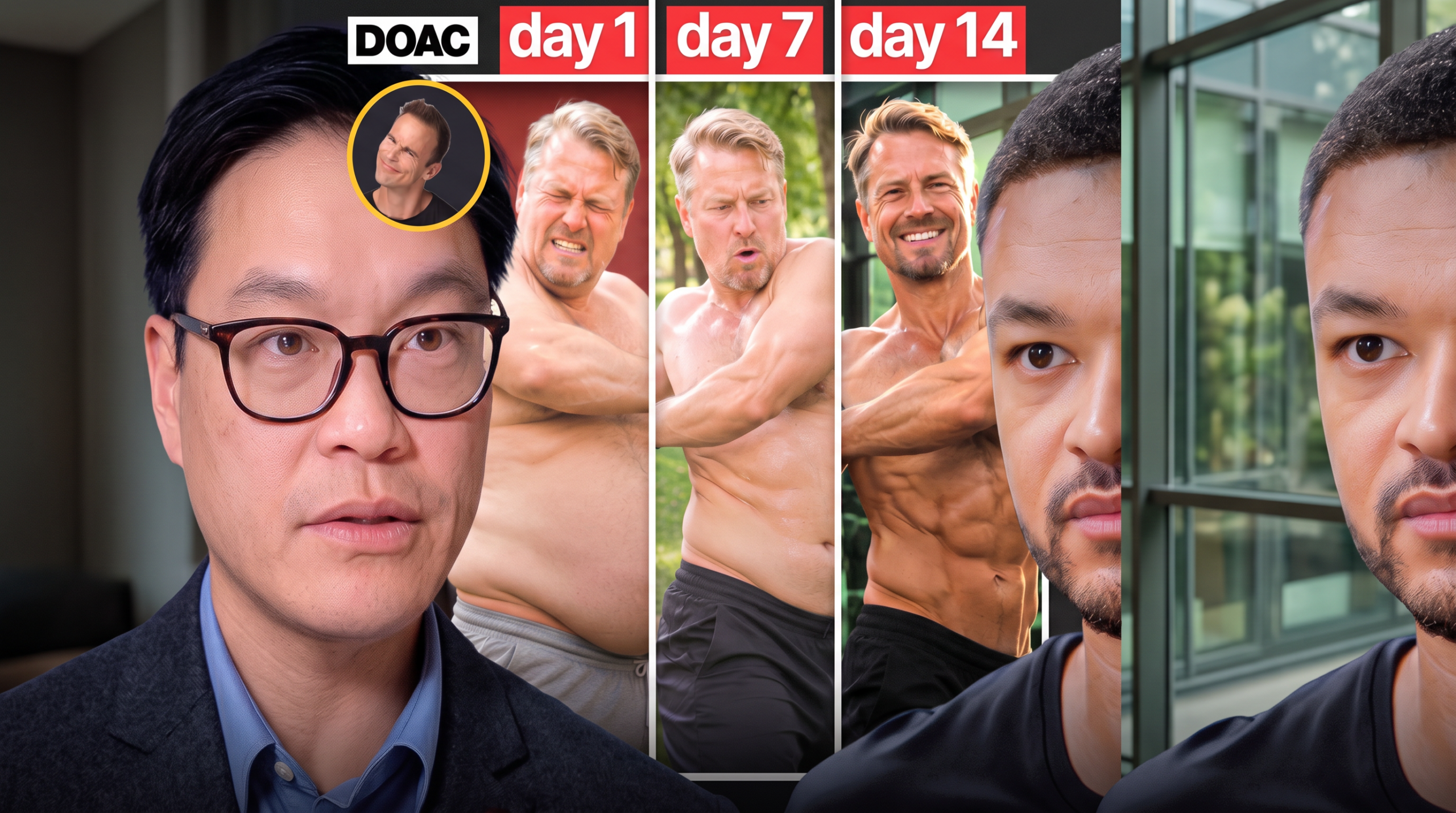
In a recent episode of The Diary of a CEO, Fung argued that exercise barely nudges the scale.
His bigger claim? Simply eating less may quietly slow your metabolism to match.
Stick around to learn which hormone he believes holds the key, and why constant snacking may be working against you.
Jump to:
Genes Explain Who Gains, Not Why Everyone Is Gaining
Fung says genetics play a huge role in obesity risk. He points to twin research, where siblings raised apart end up with remarkably similar body weights.

If you want something simple that actually works, this is one of the most effective tools I’ve used to build strength, conditioning, and endurance without needing a full gym setup.
- Full-body training with one weight using swings, squats, and presses
- Solid cast iron build that feels stable and lasts for years
- Comfortable grip that makes high-rep workouts easier to handle
About 70% of your risk of becoming obese is due to genetics and we know that from twin studies for example.
But here’s the twist. Obesity is climbing on every continent, and our DNA hasn’t shifted in a few decades.
The genetics of the world population has not changed.
His conclusion: genes explain why one person gains weight more easily than another, while food environment explains the population-wide surge.
Worth knowing: heritability estimates vary between studies. They describe differences across groups of people, not a fixed destiny for any individual.
The “Calorie Deception” Behind Yo-Yo Dieting
Conventional wisdom says cut 500 calories daily and lose a pound of fat weekly. Fung calls that math unquestionably false.
You eat fewer calories, your body burns fewer calories.
Picture someone eating 2,000 calories and burning 2,000. They drop to 1,500 but keep grazing on high-carb foods, so insulin stays elevated.
It’s like it’s in the bank and the bank is closed.
Stored fat stays locked away, so the body adapts by burning only 1,500. Fatigue, chills and hunger follow.
If you want something simple that actually works, this is one of the most effective tools I’ve used to build strength, conditioning, and endurance without needing a full gym setup.
- Full-body training with one weight using swings, squats, and presses
- Solid cast iron build that feels stable and lasts for years
- Comfortable grip that makes high-rep workouts easier to handle
How the Rebound Happens
- Step 1: Calories drop from 2,000 to 1,500.
- Step 2: Metabolism slows to roughly 1,500 as well.
- Step 3: Misery pushes intake back up to 1,800.
- Step 4: Burn is still 1,500, so weight returns, and then some.
Fung says this explains why dieters feel gaslit when professionals accuse them of eating more than they admit.
The research here is more mixed than his one-to-one framing suggests. Metabolic slowdown during dieting is well documented, but it is usually partial rather than a perfect match, and calorie deficits do produce fat loss in controlled settings.
Hormones Carry Instructions, Not Just Energy
Fung’s alternative focuses on insulin, which rises after meals and falls between them.
Food contains calories, energy, but it contains instructions as to what to do.
Take the same 1,500 calories, but add intermittent fasting. Insulin dips, the body taps roughly 500 calories from fat stores, and burn stays at 2,000.
Return to 2,000 afterward and weight simply holds steady. Fung stresses that other hormones, cortisol among them, matter too.
Scientists still debate how much insulin drives weight gain compared with total energy intake. Many see it as one important piece of a larger puzzle, not the sole master switch.
If you want something simple that actually works, this is one of the most effective tools I’ve used to build strength, conditioning, and endurance without needing a full gym setup.
- Full-body training with one weight using swings, squats, and presses
- Solid cast iron build that feels stable and lasts for years
- Comfortable grip that makes high-rep workouts easier to handle
Why Exercise Moves the Scale So Little
Fung isn’t anti-exercise. Far from it.
Exercise is really good for you in a number of ways.
His point is narrower: for weight loss specifically, impact is tiny. He gives two reasons.
Reason 1: The Numbers Are Small
Most middle-aged people he treats manage brisk walks or half-hour sessions a few times weekly.
You’ll do half an hour and it’ll be up to like 120 calories or something like that.
Against a body already burning around 2,000 daily, an extra 100 is a rounding error.
Reason 2: Hunger Bounces Back
During activity, appetite dips. Mid-basketball game, nobody craves lunch.
We see that people are actually more hungry after exercise.
He cites a Harvard study of children: an hour of TV meant about 100 extra calories consumed, and mild exercise showed a similar bump. His reading is that activity itself drives extra eating.
If you want something simple that actually works, this is one of the most effective tools I’ve used to build strength, conditioning, and endurance without needing a full gym setup.
- Full-body training with one weight using swings, squats, and presses
- Solid cast iron build that feels stable and lasts for years
- Comfortable grip that makes high-rep workouts easier to handle
Fung echoes the book’s claim that roughly 95% of weight loss comes from diet. That number is a rough rule of thumb, and evidence suggests exercise plays a bigger role in keeping weight off, plus protecting heart, muscle and mood.
Everybody should exercise.
From Three Meals to Six: The Snacking Shift
An American survey of more than 60,000 adults and children found most people ate three times daily in 1977. By 2003, five or six eating occasions was typical.
Fung blames official advice to eat 55 to 60% carbohydrates and less fat. Picture the cycle:
- Toast with jam spikes glucose and insulin.
- Both crash, and hunger returns by 10:30.
- A low-fat muffin gets you to lunch, and pasta sets up an ravenous 3:00 slump.
- Crackers and a bedtime snack close out the day.
This sort of inadvertent change in our diet that we never talked about.
Pre-1977, snacks were an occasional indulgence. Later, they became health advice.
His formula is blunt: eat, and you store; stop eating, and you burn.
If you want to lose body fat, you actually need to extend the period of time that you’re not eating.
Practical Takeaways
- Judge food by quality, not only calorie counts, since refined carbs keep hunger cycling.
- Trim unnecessary snacks and allow longer gaps between meals.
- Keep moving for heart health, strength, flexibility and mood, without expecting it to erase a pizza.
- Avoid crash dieting, which can leave you tired, cold and primed to rebound.
- Talk to a doctor before fasting if you take diabetes medication, are pregnant, or have a history of disordered eating.