Still running races and winning medals at 105, E. Gerald Meyer proves that staying active isn’t about age—it’s about mindset. Here’s how he does it, and how you can too.
When E. Gerald “Gerry” Meyer started running in his 40s to cope with job stress, he never imagined it would carry him through more than six decades of movement, medals, and mental clarity.
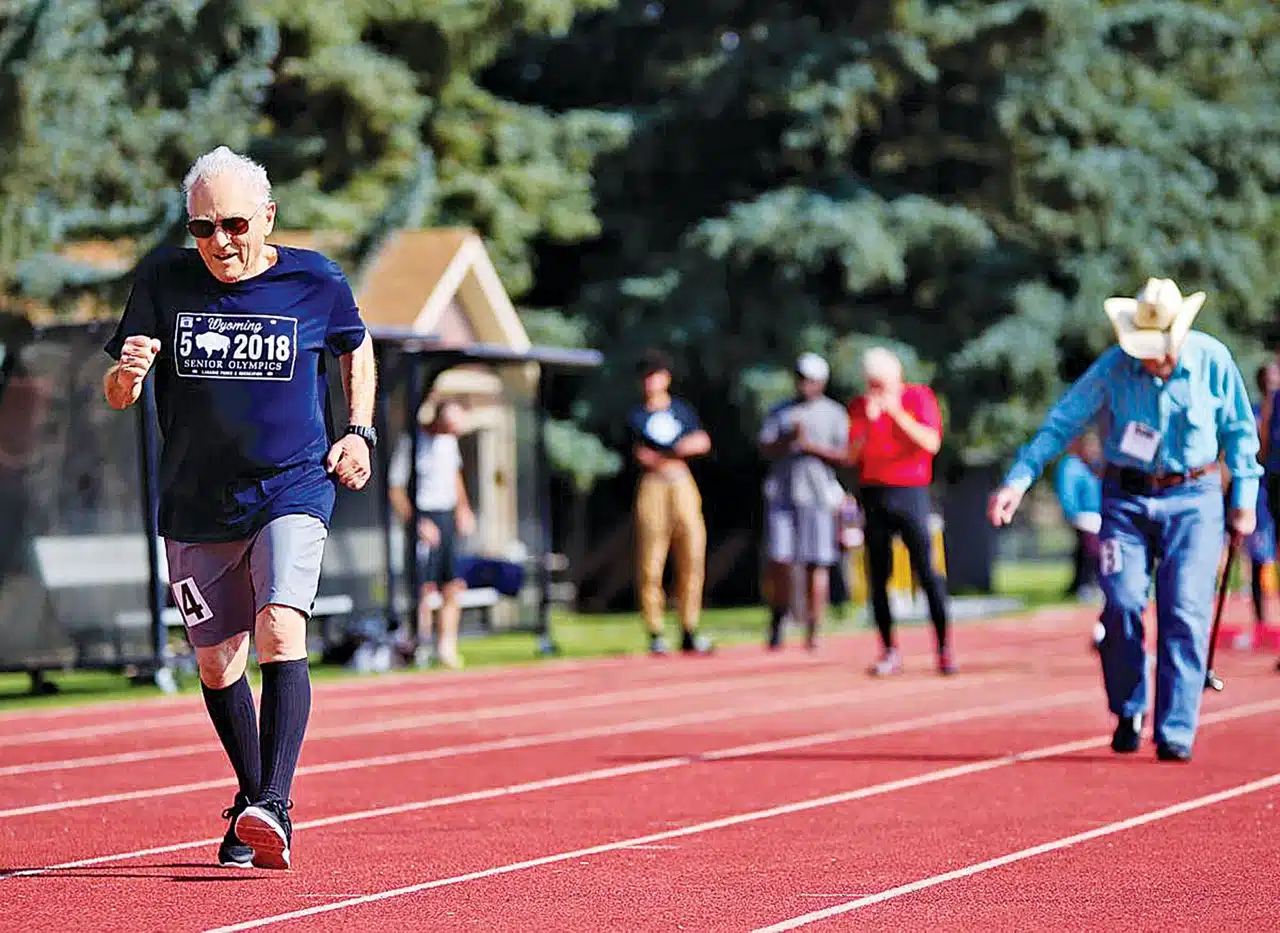
Now, at 105, the Laramie, Wyoming resident is still walking daily, competing in races, and defying expectations about aging—one stride at a time.
His story is equal parts inspiration and instruction.
Whether you’re just getting started in your 50s or looking for proof that it’s never too late, Meyer offers practical wisdom on movement, mindset, and making fitness a lifelong habit.
Jump to:
Build a Habit That Sticks—Then Stick With It
“I thought about work all the time, but then I’d run and say, ‘This is a nice day,’” Meyer said in an interview. “That sort of stuff disappears when you’re out running.”
Running became more than exercise—it became a way to manage stress, clear his head, and start each day with purpose. He began during a stressful chapter as dean of the University of Wyoming’s College of Arts and Sciences, and never looked back.
By making his morning run a non-negotiable part of the day, Meyer turned fitness into a fixture. The simplicity helped: no fancy gear, just shoes, clothes, and the open space of a nearby golf course.
Even in his later years, that commitment hasn’t faded. Though he’s replaced most runs with daily walks and bodyweight strength training, the principle remains: just do it.
“It’s not a chore,” Meyer says. “It’s something that I get in the habit of doing. You just do it.”
Let Your Dog Be Your Coach
Meyer credits a furry accountability partner—his German Shepherd, Rom—with helping him keep up his habit in his earlier years.
Every morning, Rom would wake him by pressing a cold nose to his face, signaling it was time to hit the trails. Rain, snow, or sunshine, Rom insisted they get moving.
Rom didn’t follow a structured routine—neither did Meyer. Instead, their runs adapted to the day. Sometimes a quick jog. Other times, a longer meander through the golf course or snowy trails.
It was this flexible, joyful relationship with movement that kept running fun—and sustainable.
Compete for Something Bigger Than a Medal
At 78, Meyer entered his first National Senior Games (NSG), competing in both the 5K and 10K events.
He’s since collected multiple wins and even made history. At 100 years old, Meyer shattered the NSG record for the 100-meter dash in his age division, clocking in at 36.93 seconds—over five seconds faster than the previous best.
“It felt great to cross the finish line,” Meyer said. “I was confident in my ability to run.”
This year, he won two gold medals at the Wyoming Senior Olympics in the 50- and 100-meter events—becoming the sole competitor in the 105–109 age bracket.
For Meyer, competition isn’t about crushing opponents—it’s about setting goals, showing up, and enjoying the experience.
“I think I might have been able to do 200 meters this time, if I really put my mind to it,” he said. “But I didn’t try it.”
Still, he’s already looking ahead to next year’s National Senior Games in Des Moines.
Balance, Bodyweight, and Knowing When to Slow Down
While he doesn’t follow a strict training plan, Meyer still trains with intent. These days, that means walking and doing bodyweight strength exercises focused on balance and mobility.
This adjustment has helped him stay independent and fall-free—something many aging adults struggle with.
“If you’re older, add balance exercises to your routine,” he advises. “They can help you stay on your feet, improve mobility, and reduce fall risk.”
Examples of balance-focused moves include:
- Single-leg stands
- Heel-to-toe walking
- Step-ups
- Bodyweight squats holding onto a chair
Meyer also listens to his body. He gave up his beloved Harley-Davidson at 92 when he noticed his vision and balance slipping.
“I rode a motorcycle for a long time,” he said. “But I decided I’d better quit that.”
Knowing when to scale back is just as important as knowing when to push.
The 3 Ingredients to Longevity, According to Meyer
Asked about the secret to living to 105, Meyer breaks it down like a chemistry equation:
- Genetics – His mother lived to 90. “That’s one-third of it.”
- Healthy lifestyle – No smoking, minimal alcohol, regular sleep, and consistent exercise.
- Luck – “Luck to not be in a place where you might have gotten run over,” he laughs.
He’s quick to add that taking care of yourself gives luck a better shot.
“I have not had any trouble with my hips and joints. … I really have been fortunate in that everything has held together,” he said.
Think Young, Stay Young
More than any training plan, meal prep, or supplement routine, Meyer’s greatest asset might be his outlook.
“I’m an optimist, of course. I’ve always been. You have to be.”
That positive mindset extends to how he sees aging—not as a limitation, but a new chapter. After retiring in 1990, he continued running, traveling, and finding new passions, including road-tripping to races around the country.
His favorite? Stanford University.
“It was beautiful,” he said. “We just ran around what’s called The Farm. It was great. Probably the finest one.”
Even his personal life reflects that sense of adventure. Meyer lives independently with his partner, Barbara Hofmann, who is 20 years younger. They met after losing their spouses and now share a full life together—celebrating his 100th birthday in 2019, and still walking side by side today.
How to Stay Active at Any Age, According to Meyer
- Make movement a morning habit. Even a 10-minute walk counts.
- Keep it simple. You don’t need gear, gadgets, or a gym.
- Add balance and strength work. It protects against injury and supports mobility.
- Sign up for a competition. It gives you a reason to train—and celebrate.
- Be realistic, but persistent. Adapt to your body, but don’t give up.
- Stay positive. Mindset may be the most powerful tool of all.
The Bottom Line
Gerry Meyer didn’t set out to become a world-record-holding centenarian. He just started running to cope with stress.
But over the years, that simple habit became a life-defining practice—keeping his mind sharp, his body strong, and his spirit resilient.
His story is proof that it’s never too late to move, to grow, and to keep chasing finish lines.
As Meyer puts it: “You’re not going to win them all. Just finishing in a good time that you deem fit is good enough.”