A middle school math teacher from Santa Fe, New Mexico is about to attempt something that fewer humans have ever done than climbed Everest.
Megan Eckert, who turned 40 last month, is heading to Balatonfüred, Hungary this week to compete at the Global Organization of Multi-Day Ultramarathoners World Championship — and her goal is nothing short of extraordinary.
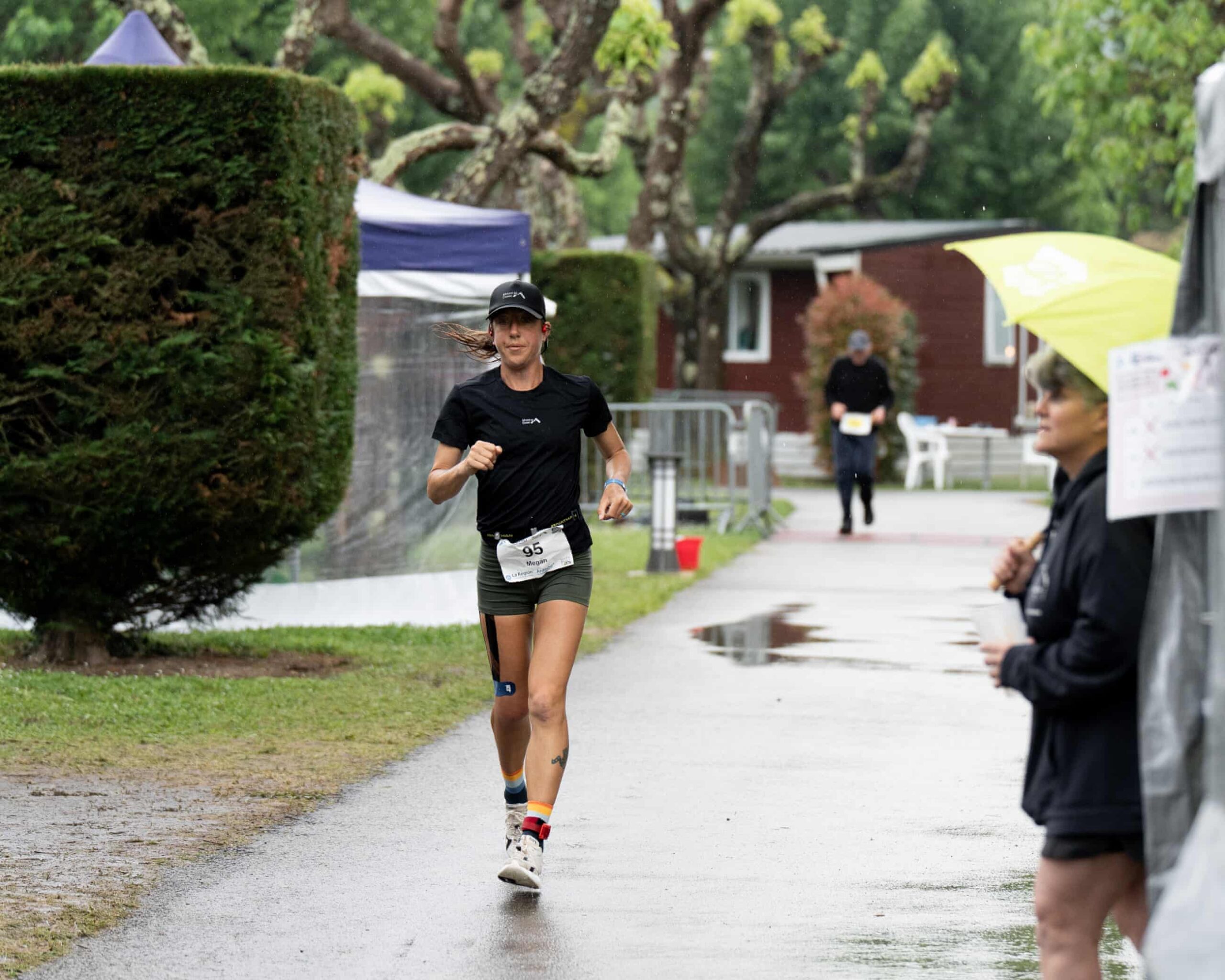
She doesn’t just want to defend her own women’s world record — she wants to obliterate it, and take down the US men’s record while she’s at it.
Here’s everything you need to know about the woman quietly rewriting the history of human endurance, one lap at a time.
Jump to:
- What Exactly Is a Six-Day Race?
- The Record She Already Owns — and Still Wants to Break
- The Woman Who Once Couldn’t Make It to a 5K Start Line
- From First Half Marathon to Outright Race Winner
- The Six-Day Race She Almost Never Signed Up For
- What Fuels a Record-Breaking Run?
- The Mindset That Makes It All Possible
What Exactly Is a Six-Day Race?
For the uninitiated, the concept sounds almost fictional.
More than 100 runners will gather at a start line in Hungary and attempt to cover as many miles as humanly possible in six consecutive days — 144 hours of non-stop forward movement, with only brief pauses to sleep, eat, and deal with whatever the body throws at them.

If you want something simple that actually works, this is one of the most effective tools I’ve used to build strength, conditioning, and endurance without needing a full gym setup.
- Full-body training with one weight using swings, squats, and presses
- Solid cast iron build that feels stable and lasts for years
- Comfortable grip that makes high-rep workouts easier to handle
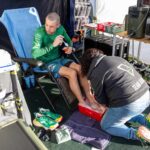
Blisters. Chafing. Stomach rebellions. All of it, managed on the fly.
The course itself is almost laughably simple: a 0.558-mile paved loop. If Eckert hits her target and surpasses the US men’s record of 606.243 miles, she will have completed that same loop at least 1,086 times.
The Record She Already Owns — and Still Wants to Break
Last May, at the world championships in France, Eckert did something no woman had ever done before.
She ran 603.156 miles in six days — smashing Camille Herron’s previous mark by more than 40 miles and becoming the first woman in history to crack the 600-mile barrier. That’s the equivalent of running nearly four full marathons every single day for six straight days.
The ultrarunning world took notice. Ultrarunning Magazine voted her third in their global Worldwide Ultrarunner of the Year rankings.
Now, Eckert wants more — and she’s honest about the odds.
If you want something simple that actually works, this is one of the most effective tools I’ve used to build strength, conditioning, and endurance without needing a full gym setup.
- Full-body training with one weight using swings, squats, and presses
- Solid cast iron build that feels stable and lasts for years
- Comfortable grip that makes high-rep workouts easier to handle
I like to choose goals where I have a 50% chance of success and a 50% chance of failure. It’s amazing what can happen when you go after goals that scare you — and that just might not be possible.
The Woman Who Once Couldn’t Make It to a 5K Start Line
What makes Eckert’s story genuinely remarkable isn’t the records — it’s the journey to get there.
Back in 2008, she trained for months to run her very first 5K. On race morning, she never left her house.
I was too afraid of failing. I let my doubts win.
She quit running entirely after that. Years passed before her now-husband Joe convinced her to attempt a half marathon with him in 2016.
She made it to that start line — and something shifted. When the course split and half-marathoners peeled off toward the finish, Eckert remembers a thought surfacing: “It would be fun to keep going.”
That quiet thought became the defining philosophy of her entire running career.
From First Half Marathon to Outright Race Winner
Her progression was fast — and then it was jaw-dropping.
If you want something simple that actually works, this is one of the most effective tools I’ve used to build strength, conditioning, and endurance without needing a full gym setup.
- Full-body training with one weight using swings, squats, and presses
- Solid cast iron build that feels stable and lasts for years
- Comfortable grip that makes high-rep workouts easier to handle
Eckert crossed that first half marathon finish line in 1 hour 57 minutes. Not long after, she entered her first 100-mile race simply because she’d read a book about someone doing it and wanted to know if she could too.
She won. Outright. Beating all the women and all the men.
She kept pushing — 100-mile races in extreme desert heat, brutal mountain runs through deep mud, and multi-day events covering more than 200 miles at a stretch. Her resume now includes podium finishes at Badwater 135, Cocodona 250, and Vermont 100, three of ultrarunning’s most notorious events.
I started dabbling in lots of different distances, different places, and different terrains and found that, regardless of where I went or how I performed, I loved it.
The Six-Day Race She Almost Never Signed Up For
Even Eckert had her limits — or so she thought.
When she first heard about six-day events, she signed up for email updates about one in Wisconsin without any real plan to actually compete. Then a price-increase notice landed in her inbox, and she turned to Joe with a question that changed everything: “Should we go try this stupid six-day thing?”
She’s now a two-time world championship competitor, a world record holder, and someone who describes the six-day format as her happiest place on earth.
If you want something simple that actually works, this is one of the most effective tools I’ve used to build strength, conditioning, and endurance without needing a full gym setup.
- Full-body training with one weight using swings, squats, and presses
- Solid cast iron build that feels stable and lasts for years
- Comfortable grip that makes high-rep workouts easier to handle
I didn’t even know six-day runs existed until a few years ago, but I fell in love with them the minute I found them. When I’m training for a big goal like the American men’s record, I don’t dwell on fear because I get so excited about how the goal is pushing me to train harder — and how I get to go and run with a community who’s turning the same 144-hour race into our own little world.
What Fuels a Record-Breaking Run?
The logistics of covering 600-plus miles involve more strategy than most people might expect — and some surprisingly humble fuel choices.
During her world record run last year, Eckert slept just an hour or two every 12 hours. Her nutrition plan leaned on rice cakes, pasta, eggs, gummy bears, barbecue potato chips, and turkey and pickle sandwiches.
She also hands the math entirely to her crew — fitting, given that she spends her weekdays teaching algebra and calculus.
It’s such a long time to have to think about your pace, I trust them to tell me when I need to push. I’m really good at being mindful and just staying in the moment on the course.
She even has a fish tattoo on her foot, inspired by a mark on the floor of her first six-day event — something small and personal to anchor her focus lap after lap.
The Mindset That Makes It All Possible
Eckert now sponsored by shoe brand Mount to Coast and apparel label Janji, operates from a place of hard-won mental clarity that took years to develop.
The woman who once let fear keep her inside on race morning has completely rewritten her relationship with doubt.
If you want something simple that actually works, this is one of the most effective tools I’ve used to build strength, conditioning, and endurance without needing a full gym setup.
- Full-body training with one weight using swings, squats, and presses
- Solid cast iron build that feels stable and lasts for years
- Comfortable grip that makes high-rep workouts easier to handle
Sure, I go into races and have doubts, but it’s not the limiting factor or the loudest voice any more. Failure isn’t the worst case scenario — it’s not having the experience of whatever thing I’m chasing.
She knows exactly how to silence those doubts now, drawing directly from the lesson that 2008 version of herself learned the hard way.
When you take your first step, they all dissipate and you can just be in the moment.
Six hundred and six miles. One hundred and forty-four hours. Over a thousand laps of a Hungarian road.
All Megan Eckert has to do is take that first step.