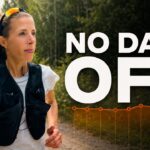
She wakes up, laces her shoes, and runs the equivalent of a marathon — and then some — before most people have finished their morning coffee.
Every single day.
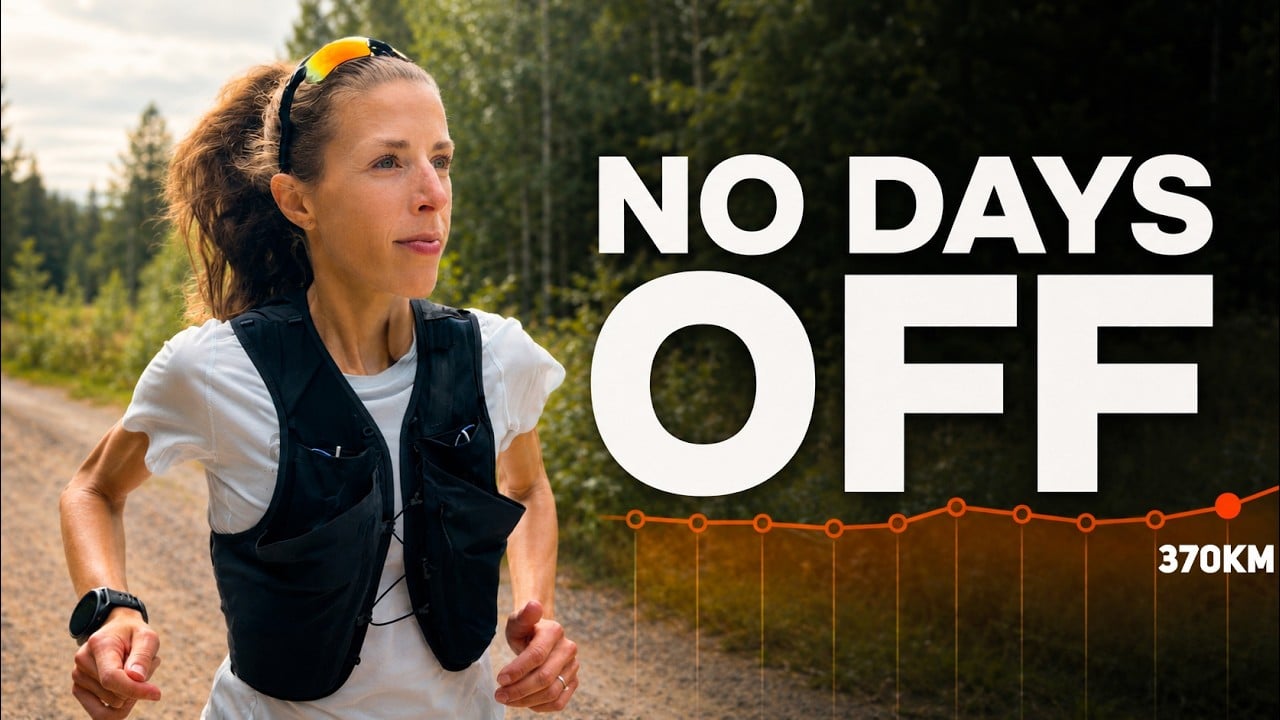
Miriam, a 30-year-old clinical dietician, running coach, and shop assistant from Oslo, Norway, is on the verge of completing something no woman has ever done before — 250 consecutive ultramarathons, each at least 45 kilometers, with zero rest days.
What makes her story even more extraordinary isn’t just the running — it’s everything else happening alongside it.
Jump to:
Not Your Average Morning Run
For context: most trained athletes need several days to recover from a single ultramarathon. Some need weeks.
Miriam has been doing one every day — averaging 50 to 55 kilometers per session — while simultaneously working full-time, maintaining a relationship, and fundraising for Doctors Without Borders’ child malnutrition programs.

If you want something simple that actually works, this is one of the most effective tools I’ve used to build strength, conditioning, and endurance without needing a full gym setup.
- Full-body training with one weight using swings, squats, and presses
- Solid cast iron build that feels stable and lasts for years
- Comfortable grip that makes high-rep workouts easier to handle
When asked whether she feels any pain or injury on day 243, her answer stopped the conversation cold.
It’s actually not that big a difference between day 243 and day 70. No niggles or injuries.
That’s not a boast. Coming from a trained physiotherapist who understands the human body at a clinical level, it’s something far more interesting — a signal that preparation, mindset, and consistency can push the boundaries of what a body can tolerate.
How This Was Years in the Making
Miriam is emphatic that this didn’t happen overnight — and she doesn’t want anyone thinking they can replicate it without serious groundwork.
I really want to stress that I don’t advocate anyone to just think that yeah, I’ve done a couple of ultras, I can do this. You need a good base of training.
Her athletic history stretches back to childhood soccer, followed by 10K races in high school and cross-country running during a year spent in Portland, Oregon — a place she credits with making her fall in love with the sport.
In the year leading up to the project, she had already been running 25 to 35 kilometers to work each day. Her body wasn’t shocked by the volume. It was ready.
The original plan was only 100 days — a test to see how her body responded before committing further. After monitoring her menstrual cycle, bone health, blood markers, mood, and energy levels, everything checked out. The goal was extended to 250.
If you want something simple that actually works, this is one of the most effective tools I’ve used to build strength, conditioning, and endurance without needing a full gym setup.
- Full-body training with one weight using swings, squats, and presses
- Solid cast iron build that feels stable and lasts for years
- Comfortable grip that makes high-rep workouts easier to handle
The Secret? She Actually Enjoys It
Here’s what separates Miriam from many endurance athletes chasing records or suffering through pain for the sake of toughness — she genuinely loves running.
I never want to run because I want to feel pain. I like to run because I really like the experience — the ups and downs. Running gives me more than it takes.
She runs without music or podcasts, spending five or six hours alone with her thoughts each day. No Netflix at night. Early bedtimes. A five-minute yoga sequence every single morning, without exception.
Strength training twice a week — one upper body session, one lower — rounds out her routine. And when it comes to fueling those massive daily efforts, she keeps it surprisingly simple.
I eat a lot of bananas, peanut butter, jam, milk. On my runs, I do a lot of candy, Tailwind, sports drinks. And I’m really focused on getting a proper meal when I’m finished.
Crucially, she acknowledges that hunger cues alone can’t guide her intake at this level. Eating well beyond what feels natural has been a non-negotiable part of keeping the project sustainable.
Turning 30 and Running Into a Dream
The timing of this project was deliberate. Miriam and her fiancé Andreas had long dreamed of spending time abroad, and when a part-time work arrangement made that possible, she saw her window.
I turned 30 this year, so it’s also like a 30th gift to myself.
Andreas, who runs shorter distances himself, has been a cornerstone of the project’s success. Both share training updates, help each other with early mornings, and crucially — never get angry at one another for wanting to train.
If you want something simple that actually works, this is one of the most effective tools I’ve used to build strength, conditioning, and endurance without needing a full gym setup.
- Full-body training with one weight using swings, squats, and presses
- Solid cast iron build that feels stable and lasts for years
- Comfortable grip that makes high-rep workouts easier to handle
That kind of quiet, mutual support, she says, has been just as important as any physical preparation.
What She Wants Other Runners to Know
Miriam’s professional background as both a physio and dietician gives her advice particular weight. For runners looking to build mileage safely, she keeps it practical.
- Build gradually — consistency beats big one-off efforts every time
- Run more frequently, rather than cramming distance into single sessions
- Do some strength training — even five minutes makes a real difference
- Don’t fear discomfort — pain doesn’t automatically mean injury
- Know the difference — if something worsens the further you run, stop and get it checked
It’s a big misconception that it needs to be a massive commitment — and then people do nothing instead.
The Finish Line Is Almost Here
With just days remaining, Miriam says the ending feels both right and a little surreal. Day 250 will be marked with a long run — possibly 100 kilometers — before finishing at Gresen, a scenic Oslo viewpoint, surrounded by friends and family.
We will pop some alcohol-free champagne, meet my family, and then I’ll go home and have a good shower and a dinner I’ve probably been thinking about for the eight hours I’ve been running.
After the project wraps, her sights are already shifting toward racing — and one event in particular has captured her imagination: the legendary Western States 100, the race that put ultrarunning on the map, held in the very state where she first discovered her love for the sport.
Breaking records was never the point for Miriam. What she’s proven — across 250 days, thousands of kilometers, and countless early mornings — is something far more lasting.
That when you love something deeply enough, the impossible starts to look a lot like Tuesday.
If you want something simple that actually works, this is one of the most effective tools I’ve used to build strength, conditioning, and endurance without needing a full gym setup.
- Full-body training with one weight using swings, squats, and presses
- Solid cast iron build that feels stable and lasts for years
- Comfortable grip that makes high-rep workouts easier to handle