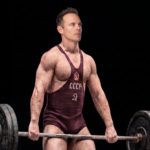
Long before protein shakes lined gym shelves and pre-workout formulas promised explosive pumps, bodybuilders were sculpting legendary physiques with nothing but iron, determination, and whole foods.
The pioneers of bodybuilding—men like Eugen Sandow, George Hackenschmidt, Otto Arco, and Max Sick—built muscle that still impresses over a century later, achieving what modern science confirms as near-maximal natural development.

Their success wasn’t accidental.
These early champions discovered fundamental training and nutrition principles that remain cornerstones of effective muscle building today, proving that supplements aren’t prerequisites for impressive physiques.
Jump to:
The Birth of Modern Bodybuilding
Eugen Sandow revolutionized fitness culture in the late 1800s by transforming bodybuilding from simple strength demonstrations into aesthetic muscle display. Born in 1867, Sandow drew inspiration from ancient Greek and Roman statues, believing the human body could achieve similar sculptural perfection through systematic training.
In 1901, Sandow organized what’s widely considered the first modern bodybuilding competition at Royal Albert Hall in London. This landmark event shifted public perception of muscular development from carnival sideshow to respected athletic pursuit.

If you want something simple that actually works, this is one of the most effective tools I’ve used to build strength, conditioning, and endurance without needing a full gym setup.
- Full-body training with one weight using swings, squats, and presses
- Solid cast iron build that feels stable and lasts for years
- Comfortable grip that makes high-rep workouts easier to handle
The era’s champions achieved remarkable development using equipment that seems primitive by contemporary standards—basic barbells, dumbbells, and bodyweight exercises formed the foundation of their training arsenals.
What Science Says About Natural Limits
Modern researchers use Fat-Free Mass Index (FFMI) to assess muscular development relative to height. This metric provides valuable context when evaluating historic physiques.
Early bodybuilding legends achieved FFMI scores between 23 and 27—numbers that align precisely with current scientific understanding of natural muscle-building potential. Sandow himself scored around 25-26, while later natural champion Steve Reeves reached approximately 26-27.
These figures matter because synthetic anabolic steroids weren’t widely available until the 1950s-60s, making pre-1950 bodybuilders predominantly natural athletes. Their physiques represent authentic benchmarks for what’s achievable without pharmaceutical enhancement.
The Whole Food Approach
Without access to protein powders, creatine monohydrate, or amino acid formulations, early bodybuilders constructed their nutrition plans entirely around whole foods.
Their dietary staples included:
If you want something simple that actually works, this is one of the most effective tools I’ve used to build strength, conditioning, and endurance without needing a full gym setup.
- Full-body training with one weight using swings, squats, and presses
- Solid cast iron build that feels stable and lasts for years
- Comfortable grip that makes high-rep workouts easier to handle
- Animal proteins: Beef, chicken, fish, and organ meats
- Dairy products: Milk, cheese, and eggs in substantial quantities
- Natural carbohydrates: Potatoes, oats, bread, and seasonal vegetables
- Healthy fats: Butter, cream, and fats naturally present in animal products
This approach provided complete amino acid profiles, essential vitamins, minerals, and sufficient calories for muscle growth—all without processed supplements.
The simplicity forced bodybuilders to master fundamental nutrition principles: adequate protein intake, caloric surplus during growth phases, and consistent meal timing.
Training Methods That Still Work
Early bodybuilders developed training philosophies centered on compound movements and progressive overload—principles that remain gold standards in modern strength training.
Squats, deadlifts, overhead presses, and rows formed workout backbones. These multi-joint exercises stimulated maximum muscle fiber recruitment and natural hormone production.
George Hackenschmidt, known as the “Russian Lion,” exemplified this approach while simultaneously holding multiple wrestling championships. His combination of strength training and athletic performance demonstrated that muscular development and functional ability weren’t mutually exclusive.
Progressive overload—gradually increasing weight, repetitions, or training volume—drove continuous adaptation. Without advanced recovery supplements, these athletes relied on adequate sleep, nutrition, and strategic rest periods between training sessions.
If you want something simple that actually works, this is one of the most effective tools I’ve used to build strength, conditioning, and endurance without needing a full gym setup.
- Full-body training with one weight using swings, squats, and presses
- Solid cast iron build that feels stable and lasts for years
- Comfortable grip that makes high-rep workouts easier to handle
The Timeline Nobody Talks About
Perhaps the most important lesson from early bodybuilding involves realistic timeframes.
Most legendary natural bodybuilders trained consistently for 10 to 20+ years to reach peak development. This stands in stark contrast to modern marketing suggesting dramatic transformations in weeks or months with the right supplement stack.
Muscle building follows biological laws that haven’t changed since Sandow’s era. Natural hypertrophy occurs gradually through consistent progressive resistance and adequate recovery, regardless of available supplements.
The patience and persistence demonstrated by historic champions offers valuable perspective for contemporary natural athletes who may feel discouraged by slow progress.
What Modern Lifters Can Learn
The achievements of supplement-free bodybuilders prove that fundamentals matter far more than accessories.
Protein powders and creatine offer convenience and modest performance benefits, but they cannot replace consistent training, adequate whole food nutrition, and sufficient recovery.
If you want something simple that actually works, this is one of the most effective tools I’ve used to build strength, conditioning, and endurance without needing a full gym setup.
- Full-body training with one weight using swings, squats, and presses
- Solid cast iron build that feels stable and lasts for years
- Comfortable grip that makes high-rep workouts easier to handle
Early bodybuilders’ focus on compound movements, progressive overload, and whole food protein sources created results that modern science validates as near-optimal for natural muscle development.
Their FFMI scores—achieved without any supplementation—demonstrate realistic upper limits for drug-free athletes. Setting expectations based on these historic benchmarks helps contemporary lifters avoid frustration and potentially dangerous shortcuts.
The Bigger Picture
Examining pre-supplement bodybuilding reveals how marketing has complicated what remains fundamentally simple.
Building muscle requires progressive resistance training, adequate protein and calories from quality sources, and consistent recovery practices. These requirements existed in Sandow’s era and remain unchanged today.
Supplements can enhance convenience and provide marginal benefits, but they cannot compensate for inadequate training or poor nutrition fundamentals.
The physiques of early bodybuilding champions stand as monuments to what disciplined training and whole food nutrition can achieve. Their legacy reminds modern athletes that impressive natural development doesn’t require extensive supplementation—just commitment to proven principles applied consistently over years.
If you want something simple that actually works, this is one of the most effective tools I’ve used to build strength, conditioning, and endurance without needing a full gym setup.
- Full-body training with one weight using swings, squats, and presses
- Solid cast iron build that feels stable and lasts for years
- Comfortable grip that makes high-rep workouts easier to handle
For natural bodybuilders today, these historic physiques offer both inspiration and realistic benchmarks, proving that supplement-free training can produce results worthy of admiration over a century later.