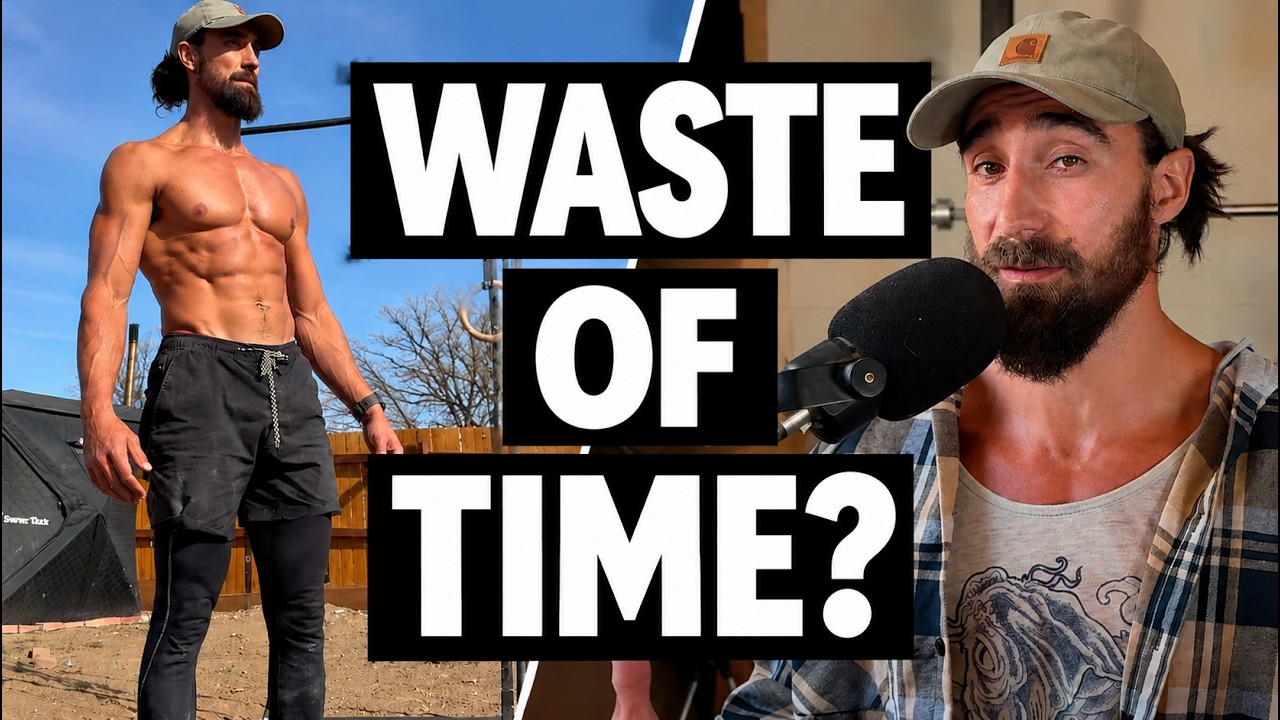
After 20 years of lifting, calisthenics, and experimenting with nearly every training style imaginable, strength coach Trevor Hash has a confession.
In a recent YouTube video, he named exercises he wishes he’d spent far less time on.
One cost him an entire year of training.
Others left him with a stiff spine and cranky shoulders.
Curious which popular favorites made his list, and what he does instead? Read on, because the final entry surprises most lifters.
Jump to:
Calisthenics Skills: Impressive, but Often Premature
Hash is clear that he isn’t calling these exercises bad. His beef is with timing, and with how much he sacrificed to chase them.

If you want something simple that actually works, this is one of the most effective tools I’ve used to build strength, conditioning, and endurance without needing a full gym setup.
- Full-body training with one weight using swings, squats, and presses
- Solid cast iron build that feels stable and lasts for years
- Comfortable grip that makes high-rep workouts easier to handle
Muscle-Ups: A Costly Party Trick
Muscle-ups rank among the most gratifying strength moves around. Hash still thinks he rushed them.
I started chasing them way too early, and because of it, my elbows were a wreck.
His advice: build pull-ups and dips first. Wait until strength, control, and mobility catch up, and learning the skill could take a fraction of the time.
Hash’s benchmarks before attempting one:
- 10 solid chest-to-bar pull-ups, or at least chins well over the bar
- 10 solid, deep dips
One-Arm Chin-Ups: The Skill He Regrets Most
This one stings. Hash spent a full year battling elbow tendonitis after attacking one-arm chin-ups far too soon.
I literally couldn’t do any pulling exercises and many pressing exercises for a whole year. Think about how much progress I lost.
Even low-level progressions like archer pull-ups carry risk. The trap? Plenty of people who crank out solid pull-up numbers can physically perform archers or assisted one-arm versions.
You’re playing with fire. The connective tissues elbows for 95% of people are not prepared for this.
His readiness test: a weighted pull-up with 65% of body weight for a rep or two. Until then, one-arm active hangs are a smart place to start, since Hash calls them one of the best ways to boost pulling strength right now.
If you want something simple that actually works, this is one of the most effective tools I’ve used to build strength, conditioning, and endurance without needing a full gym setup.
- Full-body training with one weight using swings, squats, and presses
- Solid cast iron build that feels stable and lasts for years
- Comfortable grip that makes high-rep workouts easier to handle
Handstands: Loved, but Oversold
Handstands remain among his favorite things to practice. Social media, however, has painted an unrealistic picture.
Even with good coaches, it took me over a full year to finally hold a solid handstand and I was working on them basically daily.
Benefits are real: shoulder strength, mobility, core control, body awareness, even posture. But most of those arrive from occasional wall holds, no daily obsession required.
Heavy Barbell Deadlifts: When Strength Becomes a Sport
A strong back, glutes, hamstrings, and hip hinge matter enormously for health and athleticism. Deadlifts can help build them.
Problems begin when lifting turns into ego fuel. Past that threshold, Hash argues, risks can outweigh rewards.
I’m still undoing the rigidity in my spine from years of dead lifting.
He also reports that many older clients regret pulling so heavy in their younger years, now dealing with lingering back pain. That’s his coaching experience, not a universal rule, but it shaped his approach.
His Fix: Diversify Your Hinge
- Odd objects such as sandbags, instead of one standardized bar height and diameter
- Good mornings and back extensions
- Single-leg variations that expose hidden hip weaknesses
- Dynamic hinges using kettlebells, Olympic lifts, or power sandbag movements
I can’t dead lift as much as I used to when I was hyper-specialized, but my body feels night and day better, and I’m capable of way more dope stuff.
Hash suspects the same logic applies to excessive heavy barbell squatting.
If you want something simple that actually works, this is one of the most effective tools I’ve used to build strength, conditioning, and endurance without needing a full gym setup.
- Full-body training with one weight using swings, squats, and presses
- Solid cast iron build that feels stable and lasts for years
- Comfortable grip that makes high-rep workouts easier to handle
Bench Press: Shoulder Blades Were Built to Move
A strong chest and triceps are healthy, and yes, attractive. Yet lifters have accepted benching as the best way to build them.
His critique centers on mechanics. Pinning shoulder blades back boosts bench numbers but fights natural scapular motion.
Push-ups let shoulder blades glide between protraction and retraction. Overhead pressing sends them through even more range.
The more you train bench press, the more you teach your body that shoulder blades aren’t meant to move, and that’s the antithesis of shoulder health.
Hash personally blames a majority of his shoulder problems over 20 years on benching too much as a young man.
No need to ditch the bench entirely. Balance it with push-ups, dips, and overhead work, especially one-arm overhead pressing, which takes shoulder blades through full range.
I’m still pretty damn strong, but now my shoulders are way more healthy.
His own program, Bulletproof Shoulders, is what he used to undo years of benching and bad posture.
If you want something simple that actually works, this is one of the most effective tools I’ve used to build strength, conditioning, and endurance without needing a full gym setup.
- Full-body training with one weight using swings, squats, and presses
- Solid cast iron build that feels stable and lasts for years
- Comfortable grip that makes high-rep workouts easier to handle
Ab Isolation Exercises: Training Core the Wrong Way
Crunches, sit-ups, cables, machines: Hash did them all, dreaming of magazine-cover abs.
Now he considers core training one of fitness’s most misunderstood topics. Core muscles exist to connect body parts, so isolating them, particularly in high-rep burn circuits, makes little sense to him.
Unless it’s connecting my legs to my arms, I don’t do it.
His go-tos:
- Hanging or supported leg raises
- Rollouts
- Carries
Each should be hard enough that 30 reps never become necessary to feel it.
The Biggest Mistake: Strength Above Everything
Number five isn’t an exercise at all. It’s letting every other physical quality lag while chasing bigger lifts.
I don’t want to be one of those guys who used to bench a house but can’t grab a cup from a cupboard when I’m 60 because my shoulders are shot.
Mobility, balance, and heart health usually get postponed until trouble appears. Hash urges lifters to pay it forward to their 60-year-old selves.
If you want something simple that actually works, this is one of the most effective tools I’ve used to build strength, conditioning, and endurance without needing a full gym setup.
- Full-body training with one weight using swings, squats, and presses
- Solid cast iron build that feels stable and lasts for years
- Comfortable grip that makes high-rep workouts easier to handle
Low-Intensity Habits Worth Adding
- Jumping rope
- Sprinting
- Stretching
- Playing sports
- Moving often at lower intensities
Bonus: this work doesn’t zap energy like heavy lifting. Most sessions leave you feeling clear and energized.
Mobility, he says, is the quality most foreign to men. That inspired his Flexibility Flow program, offering 16 weeks of follow-along sessions built around mobility through movement, not just static stretching.
Takeaway: Move Well for Decades
Hash isn’t telling anyone to abandon deadlifts, benches, or handstands. His message: earn advanced skills patiently, vary your patterns, and train for a body that feels good long after your PRs fade.
Which of these would you add to the list? And which ones do you disagree with?