A startling reality confronts us: babies born today can expect to live 100 years, yet the World Health Organization warns that our average healthspan is just 64.
That means most of us will spend 15 years in declining health.
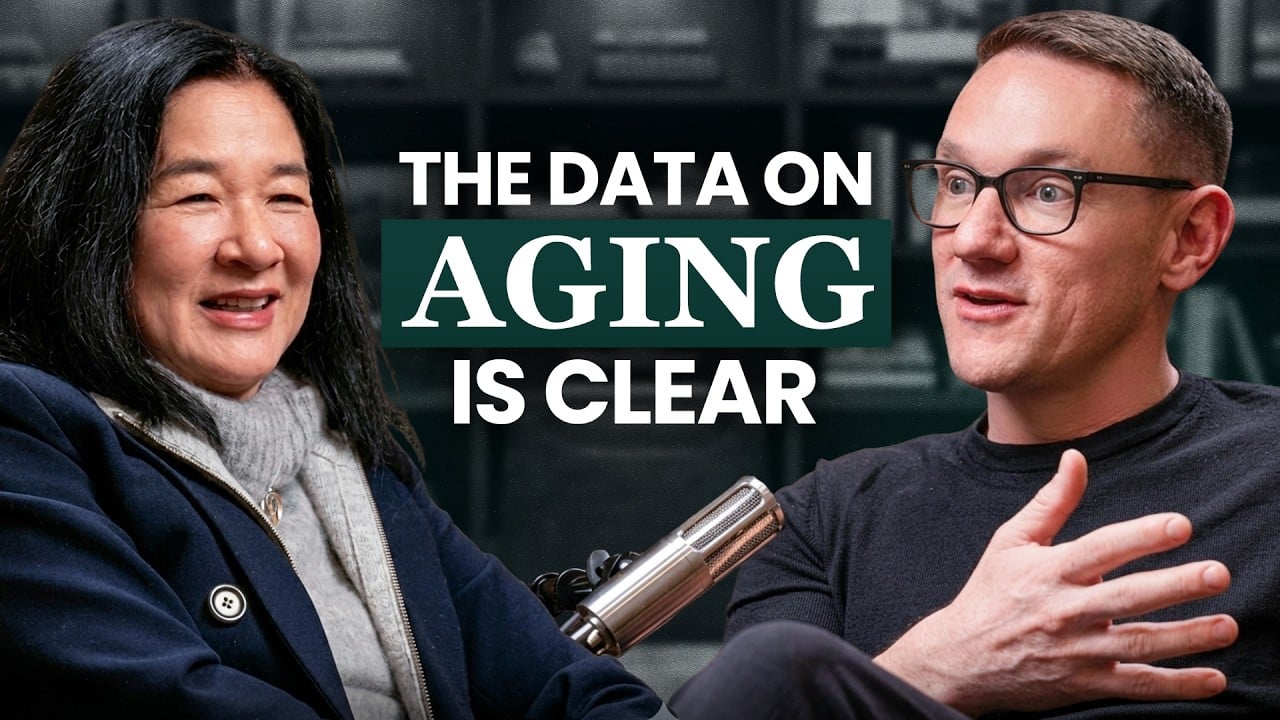
But Dr. Deborah Kado, professor of medicine and co-director of the Stanford Longevity Center, believes this decline isn’t inevitable.
Her research reveals that much of what we accept as “normal aging” may be preventable—and even reversible.
Jump to:
- It’s Never Too Late to Start
- The Fall That Changes Everything
- Posture as a Longevity Marker
- Exercise: The Universal Intervention
- Building Your Bone Bank Account
- When Medications Make Sense
- Age-Specific Strategies
- Reframing Healthspan
- What NOT to Waste Money On
- The Most Underrated Intervention
- Compression of Morbidity
- Looking Forward
It’s Never Too Late to Start
One groundbreaking study from 1990 demolished the myth that frailty is permanent.
Researchers took nursing home residents around age 90 and put them through what they called “high-intensity interval training”—working with trainers three times weekly for 12 weeks.
The results were extraordinary. CT scans showed muscle mass increased by 174%.
It proved the concept that even if you’re late to the party, you can still have a good time.
These weren’t just aesthetic improvements. Participants walked faster, climbed stairs they couldn’t manage before, and regained independence they thought was lost forever.
The Fall That Changes Everything
Falls represent the leading cause of injury-related death in adults over 60.
Since 2000, CDC data shows a steady rise in fall-related deaths—a trend that continues climbing.
When someone over 65 breaks a hip, roughly 25% will die within the following year. But hip fractures aren’t the only concern.
Dr. Kado’s research uncovered something surprising about vertebral fractures—compression fractures in the spine that often go undiagnosed.
Only about a third of vertebral fractures come to diagnosis. That means two-thirds of people are walking around, they don’t even know they have a vertebral fracture, and they’re more likely to die.
Her study of nearly 10,000 women found that the more fractures present, the higher the mortality risk—regardless of whether women knew about them.
Posture as a Longevity Marker
This discovery led Dr. Kado down an unexpected path: investigating posture.
She found that women with vertebral fractures were dying primarily from pulmonary causes—pneumonia, blood clots in the lungs, chronic obstructive pulmonary disease.
The connection? Hyperkyphosis—that characteristic forward rounding of the upper back.
When measuring spinal curvature in 600 women, the pattern became clear: the more curved the spine, the shorter the lifespan. And the more likely death would come from lung-related problems.
But here’s what shocked researchers: only one-third of the most hunched-over women actually had vertebral fractures.
Poor posture itself—independent of osteoporosis—predicted worse outcomes.
Exercise: The Universal Intervention
Exercise is the thing that comes up time and time again for every single thing we talk about associated with aging. The evidence is absolutely clear, and I think if you don’t get 100% agreement across the board, then that person needs to be checked.
Dr. Kado’s position on exercise is unequivocal.
For cancer, cardiac disease, neurological decline, bone loss, muscle wasting, cognitive impairment—physical activity improves outcomes across the board.
Recent research published in JAMA reinforces this, showing strong correlations between women’s strength levels and mortality risk.
Power Matters More Than You Think
While grip strength has gained attention as a longevity marker, Dr. Kado’s latest research suggests we should focus on something else: power.
In a study of 2,000 men with a mean age of 84, researchers used force plates to measure jump performance.
After 10 years of follow-up, power output proved most predictive of who would avoid fractures.
My take home from the research part is like we should be thinking about power as we would think about muscle.
This matters because we lose power at two to three times the rate we lose strength.
Building Your Bone Bank Account
Bone health follows economics: you want the highest possible balance before inevitable withdrawals begin.
Bone density peaks around age 30. Women experience steep declines during perimenopause and menopause, while men see more gradual losses.
The strategy mirrors VO2 max: build the highest peak possible early, because decline is inevitable.
Starting from a higher baseline means you may never reach the fracture threshold, even if you fall.
What Protects Bone Health
- Fresh fruits and vegetables
- Adequate protein intake
- Sufficient calcium from diet
- Vitamin D optimization
- Resistance training (muscles and bones communicate directly)
Dr. Kado emphasizes that stronger muscles protect bone through direct mechanical signaling.
When Medications Make Sense
For those diagnosed with poor bone density, particularly post-menopausal women in their 70s, medications work remarkably well.
Bisphosphonates (like alendronate/Fosamax) remain the gold standard, despite negative publicity in 2008.
These drugs slow bone resorption, allowing formation to catch up. And contrary to sensational media reports, they demonstrate mortality benefits in clinical trials.
In the IV form, people had less mortality. They died less. There seemed to be a mortality benefit which we are not talking about.
The newest option, romosozumab (approved 2019), shows even more impressive results: 12% bone density increases in the spine, with significant hip improvements.
Most importantly: decreased fracture risk across all types.
Age-Specific Strategies
For Those in Their 20s and 30s
Research shows ages 18-30 represent the highest stress periods of life.
Career uncertainty, relationship questions, financial pressure, and identity formation create massive psychological burden.
Dr. Kado’s advice? Find your passion. Let that become your north star.
It may take some things that don’t sound so healthy to get there, but knowing that it’s a finite thing to get where they want to go.
Focus on building peak bone mass, muscle, and cardiovascular fitness during these decades.
For Those in Their 70s and 80s
Variability becomes the defining characteristic of older age.
Some face serious health challenges like Parkinson’s or cancer. Others remain remarkably healthy but maintain poor dietary habits.
The commonality among healthy 95-year-olds? They pay attention to nutrition, typically including green vegetables and fruits.
And yes, coffee is not only fine—filtered coffee may offer protective benefits, with no upper limit on the U-shaped curve.
Reframing Healthspan
Dr. Kado challenges the concept of healthspan as traditionally defined.
She’s treated cancer survivors diagnosed at 45 who, 20 years later at 65, demonstrate perfect function and vitality.
I say healthspan is not what I’m looking at, I’m looking at healthy longevity.
Health challenges don’t necessarily end healthy living. With proper intervention, people maintain quality of life despite diagnoses that once would have been devastating.
What NOT to Waste Money On
When asked about the most overrated longevity intervention, Dr. Kado’s answer was immediate: NAD supplementation in all forms.
While NAD+ levels decline with age and show promise in animal studies, human trials tell a different story.
Studies lasting 24 hours to three months consistently show increased blood levels of NAD—but no improvements in blood pressure, blood sugar, muscle function, or any meaningful health metric.
Your blood levels go up. So must work. NAD and it’s in your blood. But they forget to advertise that everything that people care about, whether it’s blood pressure, blood sugar, muscle function, just name it—no difference between the groups.
The Most Underrated Intervention
Beyond physical activity, Dr. Kado identifies purpose as the most underrated longevity factor.
Stanford research on mindset demonstrates how powerfully attitudes influence outcomes. Yale studies show that beliefs about aging directly impact how aging unfolds.
Recent research on emotions and inflammation reveals something fascinating: hope, joy, and happiness reduce inflammatory markers.
But the emotion with the greatest anti-inflammatory effect? Awe.
Psychological richness—exposure to new experiences, ongoing learning, intergenerational connection—may be as important as diet and exercise.
Compression of Morbidity
The concept, coined by Stanford rheumatologist James Fries in 1980, focuses on shortening the period of poor health at life’s end.
This might matter more than extending total lifespan.
When Stanford students were asked how long they’d like to live, answers clustered around 80 years. But add the qualifier “living independently,” and that number jumped to 95.
If you have the qualifier that if you could live and be healthy, everybody wants to live to 100.
The goal isn’t immortality. It’s maintaining function, independence, and joy for as long as we live.
Looking Forward
For the first time in history, 2026 marks demographic equilibrium—roughly equal numbers of people in each decade of life from 0-100+.
This presents unprecedented opportunity for intergenerational collaboration, which research shows benefits everyone involved.
Dr. Kado envisions communities that avoid age segregation—places where 90-year-olds learn pickleball from teenagers, where retirees mentor young professionals, where psychological richness replaces predictable routine.
The science is clear. The interventions work. And it’s never too late to start building the suit of armor that protects against the hallmarks of aging.
We just need to do the work—consistently, purposefully, and with realistic optimism about what’s achievable in our 9th and 10th decades.