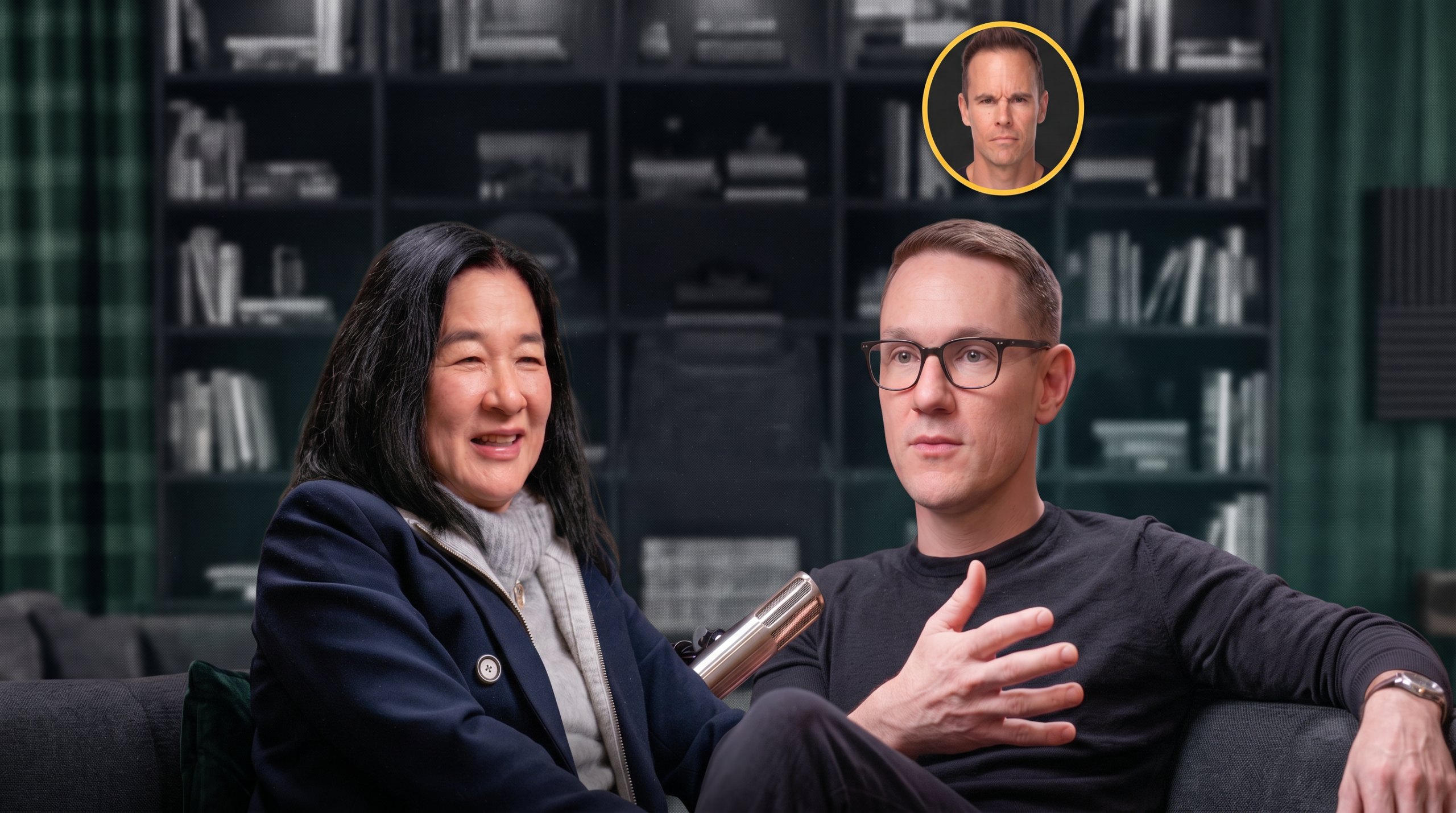
In a recent podcast interview, Stanford Longevity Center co-director Dr. Deborah Cardo challenged a belief most people never question.
Her claim: much of what gets labeled “normal aging” may not be normal at all.
Babies born today could live 100 years, yet average US health span sits near 64.
Her fix starts with posture, bone, and one muscle trait most gym-goers ignore.
Her pick for most overrated longevity trend might sting supplement fans.
Jump to:
- The 15-Year Gap Nobody Wants
- Why Hunched Posture Is More Than Cosmetic
- Falls: The Quiet Danger
- Late to the Party? Muscle Still Responds
- Power: The Overlooked Metric
- Building a Bone “Bank Account”
- The Most Overrated Longevity Advice
- The Most Underrated Longevity Hack
- Advice by Decade
- Compressing Decline, Embracing Mortality
The 15-Year Gap Nobody Wants
Cardo cited US life expectancy of 79 years as of 2023, against a World Health Organization health span estimate of 64. Translation: roughly 15 years lived in rough shape.

If you want something simple that actually works, this is one of the most effective tools I’ve used to build strength, conditioning, and endurance without needing a full gym setup.
- Full-body training with one weight using swings, squats, and presses
- Solid cast iron build that feels stable and lasts for years
- Comfortable grip that makes high-rep workouts easier to handle
Still, she questions the label itself. Cancer survivors in her bone clinic changed lifestyles, then looked and functioned great decades later.
I say health span is not what I’m looking at, I’m looking at healthy longevity.
Her reasoning? Definitions of “healthy” differ for every person, and setbacks do not doom anyone to decline.
Why Hunched Posture Is More Than Cosmetic
Cardo’s career-defining discovery began with a simple question about vertebral fractures in older women. More fractures meant higher odds of death over eight years, whether women knew about them or not.
Here’s the catch: only about a third of vertebral fractures ever get diagnosed. Two-thirds of affected people walk around unaware.
Next came posture. Among women with curvature measurements, greater spinal rounding predicted earlier death, partly from lung-related causes. Yet only a third of the most hunched women died of pulmonary problems, so the full story stays complicated.
Regardless of the cause, the more hunched over you were, the more likely it was that you were going to be walking slower.
Slower walking, functional decline, falls, and fractures all tracked with curvature. Findings were replicated beyond a single dataset.
If you want something simple that actually works, this is one of the most effective tools I’ve used to build strength, conditioning, and endurance without needing a full gym setup.
- Full-body training with one weight using swings, squats, and presses
- Solid cast iron build that feels stable and lasts for years
- Comfortable grip that makes high-rep workouts easier to handle
Falls: The Quiet Danger
Cardo confirmed that CDC data show fall-related deaths rising since 2000. Hip fracture mortality figures she referenced date back to the 1980s, and she noted they have stayed fairly constant, though she has not personally re-examined them.
Why so deadly? Injury leads to bed rest, bed rest drives muscle loss, and mood and confidence follow. Feeling old can become a self-fulfilling prophecy.
Late to the Party? Muscle Still Responds
Cardo pointed to a small 1990 study in the Journal of the American Medical Association. Frail nursing home residents aged roughly 87 to 93 trained with a coach three times weekly for 12 weeks.
She cited a 174% improvement, plus faster walking and stair climbing they had not managed before. Only about 10 participants took part, so consider it proof of concept rather than final word.
Even if you’re late to the party, you can still have a good time.
Her point: most seniors are not chasing bodybuilding trophies. They want independence and agency, and mobility anchors both.
Power: The Overlooked Metric
Grip strength gets plenty of attention. Cardo’s own observational research points elsewhere.
If you want something simple that actually works, this is one of the most effective tools I’ve used to build strength, conditioning, and endurance without needing a full gym setup.
- Full-body training with one weight using swings, squats, and presses
- Solid cast iron build that feels stable and lasts for years
- Comfortable grip that makes high-rep workouts easier to handle
Her team asked about 2,000 older men, average age 84, to jump on a force plate, then tracked them for roughly 10 years.
The thing that was most predictive of who was going to go on to not fracture, so protected, was power.
Power fades faster than raw strength, with her conversation partner noting two to three times the speed. Cardo suggests benchmarking a composite of strength, power, and lean tissue.
Building a Bone “Bank Account”
Bone mass peaks around the 30s. Women then face steep loss at perimenopause and menopause, while men decline more gradually.
Put more in the bank earlier and get a higher peak bone mass.
A higher starting point may keep someone above the fracture threshold even after a fall. Her core building blocks:
- Fresh fruits and vegetables in a healthy diet
- Adequate protein
- Enough calcium and vitamin D
- Strong, flexible, powerful muscles, since muscle and bone constantly “talk” to each other
What About Medication?
Late starters still have options. Cardo says her workup begins with activity, balance, posture, breathing, and sleep, then screens for other causes of bone loss before prescriptions enter the picture.
Alendronate (Fosamax) and related bisphosphonates, around since 1995, remain her go-to when no contraindication exists. Their reputation took a hit in 2008 after widely publicized side effects.
If you want something simple that actually works, this is one of the most effective tools I’ve used to build strength, conditioning, and endurance without needing a full gym setup.
- Full-body training with one weight using swings, squats, and presses
- Solid cast iron build that feels stable and lasts for years
- Comfortable grip that makes high-rep workouts easier to handle
Her take: rare atypical femur fractures appeared partly because patients stayed on the drugs indefinitely, “like a statin.” These medications are not forever. She also noted that IV bisphosphonate trials showed lower mortality, a benefit not originally studied.
Newer still is romosozumab, approved in 2019. Monthly shots for a year raised spine density by 12% and lowered fracture risk.
Bone density is certainly an important measure of risk for who might be going on to have the greatest risk of having a fracture, but it’s not the only metric.
Meanwhile, when asked about an experimental bone hydrogel, Cardo said she had not heard of human efficacy yet. Promising headlines and proven therapies are very different things.
The Most Overrated Longevity Advice
Asked to name it, Cardo answered instantly: NAD, in all forms, including NMN and NR.
Her reasoning? NAD declines with age in mice and humans, so scientists reasoned replacement should help. Human trials, lasting from 24 hours to around three months, tell a duller tale.
Your blood levels go up. So must work.
But they forget to advertise that everything that people care about, whether it’s blood pressure, blood sugar, muscle function, just name it. No difference between the groups.
The Most Underrated Longevity Hack
Exercise was off-limits as an answer. Cardo’s pick: purpose, followed closely by love.
If you want something simple that actually works, this is one of the most effective tools I’ve used to build strength, conditioning, and endurance without needing a full gym setup.
- Full-body training with one weight using swings, squats, and presses
- Solid cast iron build that feels stable and lasts for years
- Comfortable grip that makes high-rep workouts easier to handle
Her conversation partner added research linking awe, hope, and joy to lower inflammation markers, with awe producing the biggest drop.
Cardo also highlighted mindset research from Stanford’s Ali Crum and Yale’s Becca Levy, showing that attitudes toward aging influence outcomes. She added that filtered coffee is fine, too, with no leveling off in harm she has seen.
Advice by Decade
In Your 20s and 30s
Cardo worries about young adults, citing UK data suggesting ages 18 to 30 are peak stress years. Her advice: find a passion and treat it as a north star, while remembering that muscle and bone built now pay dividends later.
In Your 70s and Beyond
The older we get, the more heterogeneous we become.
Variability widens with age, meaning no two 72-year-olds share one fate. Her 95-plus-year-old patients all pay attention to what they eat, and something green usually sits on the plate.
Her advice for any age: skip dismissing yourself over a scary scan. Cardo asks whether a patient has fractured, fallen, or has relatives who broke bones, then reassures accordingly.
I never write anybody off.
Compressing Decline, Embracing Mortality
Cardo pointed to “compression of morbidity,” a term coined in 1980 by Stanford rheumatologist James Fries. Idea: shrink years of poor health, even without adding lifespan.
If you want something simple that actually works, this is one of the most effective tools I’ve used to build strength, conditioning, and endurance without needing a full gym setup.
- Full-body training with one weight using swings, squats, and presses
- Solid cast iron build that feels stable and lasts for years
- Comfortable grip that makes high-rep workouts easier to handle
She also teaches a Stanford elective, Being Mortal, aiming to bring humanity back to medicine. Her view: nobody is waiting for immortality, and good deaths exist.
Exercise, she stressed, helps nearly every age-linked condition, and agreement on that is now close to universal. As for aging research’s future?
I just hope we do it in a human way.