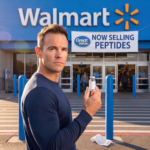
Legal peptides just became a real thing in the United States, at least for six of them.
Dr. Alex, host of the Lab Rat Legion YouTube channel, calls it the biggest shift in peptide access since the FDA’s 2023 crackdown.
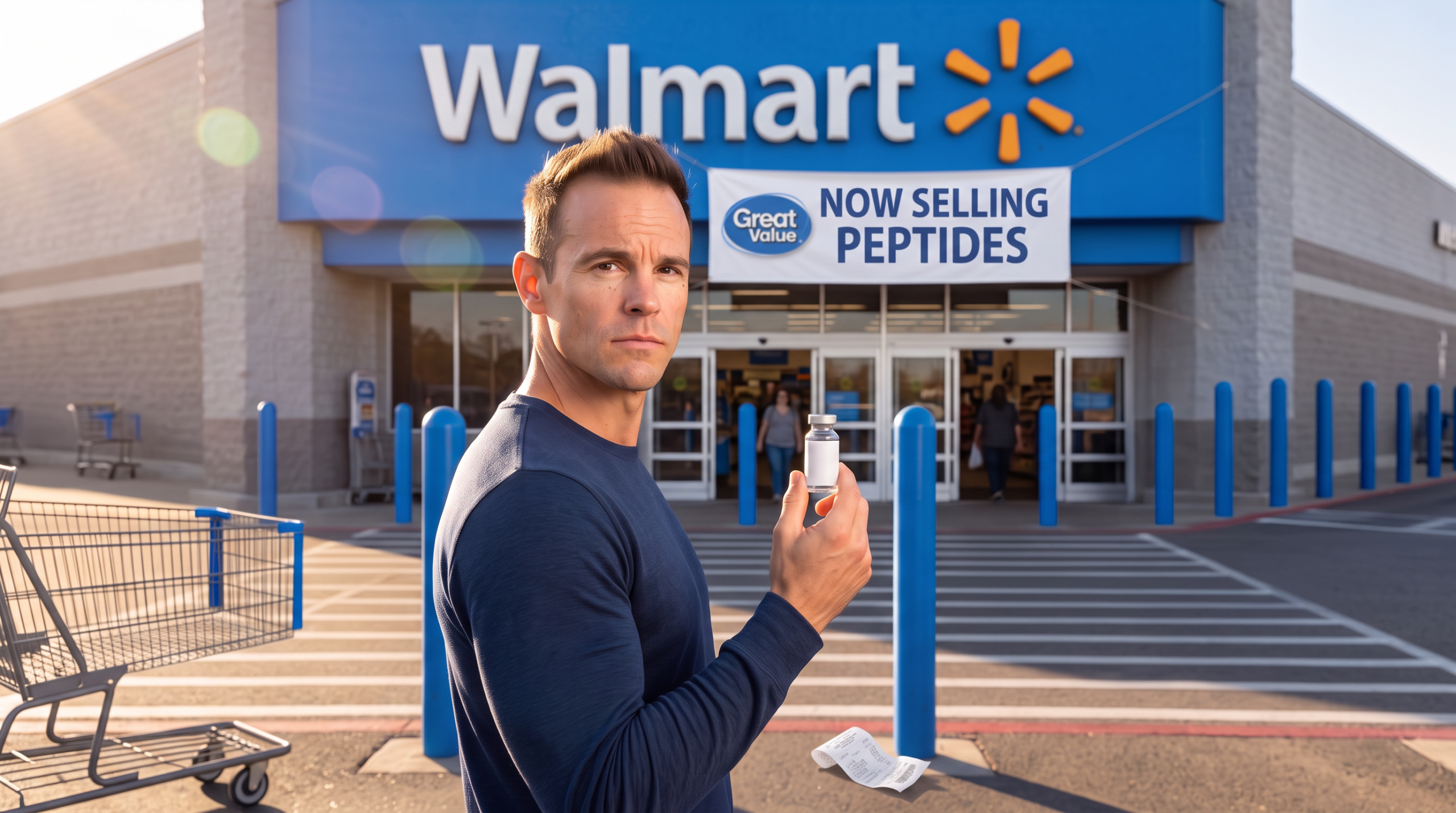
BPC-157, TB-500, MOTS-c, Semax, Epitalon, and KPV are all part of the new federal policy.
But one word, discretion, changes everything about what “legal” means here.
Stick around to learn which forms are allowed, which rule may frustrate plenty of people, and what a vial must now prove.
Jump to:
What Actually Changed This Week
According to Dr. Alex, the whole saga fits inside a single year. He says he testified on all seven peptides at the FDA advisory meeting in July.

If you want something simple that actually works, this is one of the most effective tools I’ve used to build strength, conditioning, and endurance without needing a full gym setup.
- Full-body training with one weight using swings, squats, and presses
- Solid cast iron build that feels stable and lasts for years
- Comfortable grip that makes high-rep workouts easier to handle
- February: RFK Jr. appeared on Joe Rogan’s podcast and signaled a reversal was coming.
- April: The FDA pulled 12 peptides off the “category two” list, which had made them uncompoundable, and sent seven to its advisory committee.
- July: The committee voted yes on six and no on one.
- October 14: A federal registry update showed HHS had sent an interim access policy to the Office of Management and Budget.
- This past Wednesday: The policy’s status flipped to concluded.
The result? HHS says it does not intend to take enforcement action against a state-licensed pharmacy, a federal facility, or a licensed physician compounding any of the six, provided 10 conditions are met.
After a year of yelling at the FDA on this channel, I get to say something I’ve never said on camera. The government did something right.
A Ceasefire, Not a Peace Treaty
So are peptides suddenly legal? Yes, but only these six, with an asterisk.
The policy is not a formal addition to the official compounding list, since those rules are still being written. Washington has simply promised in writing not to pursue pharmacies for breaking a rule that technically still exists.
So think of this as a ceasefire, not a formal peace treaty.
Patients still need a real prescription, filled by a real pharmacy. Coverage applies to licensed prescribers using 503A compounding pharmacies, with patient-specific prescriptions.
State boards of pharmacy may still weigh in. The notice also says it creates no rights and doesn’t bind HHS, which Dr. Alex translates as “we reserve the right to change our minds.”
Is This Permanent? Not Even Close
The policy lasts until each peptide is addressed in a final FDA rule, and that rule can still reject any of them. HHS can also pull the plug if a safety signal appears.
If you want something simple that actually works, this is one of the most effective tools I’ve used to build strength, conditioning, and endurance without needing a full gym setup.
- Full-body training with one weight using swings, squats, and presses
- Solid cast iron build that feels stable and lasts for years
- Comfortable grip that makes high-rep workouts easier to handle
How long is “temporary”? Dr. Alex points to a 2016 proposal on bulk substances that wasn’t finalized until 2019. By his account, only six substances have cleared the full process in 15 years of the program.
Six in 15 years. So when I say temporary could mean years, I’m being optimistic.
A public comment docket is open now and closes around November 13. Real patient stories can give the FDA evidence to use when drafting its final rule.
The Rules That Shape What You Can Get
Routes Matter (And One Will Sting)
Each peptide is limited to specific delivery forms:
- BPC-157: under the skin, into muscle, oral, or topical
- TB-500: injection only
- MOTS-c: injection only
- Epitalon: injection only, with no oral version
- Semax: nasal spray only
- KPV: oral or topical only, with no injections
Oral BPC-157 comes with a catch. A pharmacy must document that its specific formula is absorbed in humans, which Dr. Alex suggests could prove challenging.
The policy also references intermittent courses, so HHS apparently doesn’t want anyone running these indefinitely.
No Blends, No Pens, Strict Labels
- Exact molecule: The ingredient must match the appendix down to its salt form. BPC-157 freebase and BPC-157 acetate are not interchangeable.
- No blends: The popular “Wolverine stack” (BPC-157 plus TB-500) would need two vials and two prescriptions.
- Devices: Only FDA-cleared syringes qualify, so preloaded auto-injector pens are out.
- Labeling: Every vial must read as a compounded drug product, not for resale.
- Reporting: Pharmacies must tell the FDA what they made, who manufactured the ingredients, and any serious adverse event.
That final item matters. It means prospectively collected, systematic safety data on these compounds for the first time, according to Dr. Alex.
If you want something simple that actually works, this is one of the most effective tools I’ve used to build strength, conditioning, and endurance without needing a full gym setup.
- Full-body training with one weight using swings, squats, and presses
- Solid cast iron build that feels stable and lasts for years
- Comfortable grip that makes high-rep workouts easier to handle
Why the Vial Is the Real Story
Dr. Alex calls ingredient testing the biggest rule in the document. A typical research-use-only certificate of analysis, he says, checks just two things: purity, and a mass spec confirming the right molecule is present somewhere.
This policy asks for roughly 20 testing categories per ingredient, including:
- Identity and potency
- Peptide content and impurities
- Residual solvents and heavy metals
- Residual TFA, the acid used to make and purify peptides
- Bioburden and bacterial endotoxins
- Nitrosamines
Testing must also be orthogonal, meaning two independent methods built on different physics must agree. Identity, for instance, requires both mass spec and amino acid analysis pointing to the same molecule.
The original ingredient maker, not a repacker, re-labeler, or online storefront, must be FDA-registered and operating under pharmaceutical manufacturing standards. Its plant address goes on the certificate.
Dr. Alex compares it to a sanctioned powerlifting meet versus a gym guy claiming he once benched 315. Calibrated plates, judges, drug testing, and film replace bragging rights.
He supports personal choice, but says higher costs reflect apples-to-oranges standards.
If you want something simple that actually works, this is one of the most effective tools I’ve used to build strength, conditioning, and endurance without needing a full gym setup.
- Full-body training with one weight using swings, squats, and presses
- Solid cast iron build that feels stable and lasts for years
- Comfortable grip that makes high-rep workouts easier to handle
A Disclosure Worth Reading
Dr. Alex states plainly that he is a paid medical advisor to Superpower, which sponsors his channel, and that he helped design its peptide clinical protocols. Readers should weigh his enthusiasm accordingly.
Per his description, Superpower’s program starts with BPC-157, TB-500, and MOTS-c from FDA-registered manufacturers, prescribed by clinicians, filled by US pharmacies, and paired with a 40-plus biomarker blood panel. Epitalon, oral BPC-157, and Semax nasal spray remain on a waitlist.
Pricing was listed at $149 monthly for BPC-157 or TB-500, with shipments targeted for late November. Currently it’s a pre-order, with a full refund if a clinician declines.
None of these are FDA approved and a clinician makes the call, not you and actually not me either.
Practical Takeaways
- Patients: Access now runs through a licensed prescriber and a licensed pharmacy, and none of the six are FDA approved.
- Prescribers and pharmacists: Read the appendix, not just the headline.
- Tested athletes: Legal does not mean permitted in competition. Dr. Alex notes BPC-157, TB-500, and MK-677 remain banned.
- Advocates: Submit a story to the public docket before it closes.
Dr. Alex says he won’t lecture anyone still buying research-use-only products. His bottom line? Better options are arriving, but this window has an expiration date nobody has written yet.