Humans evolved to squat, crawl, climb, and hang, yet modern life parks most of us in chairs for hours.
In a recent YouTube video, fitness creator Josh says he would teach his younger, stiff, over-lifted self just four moves.
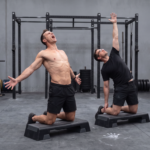
His brother Trevor, a mobility coach, jumps in to demonstrate two of them.
One move restores what Josh calls “humans’ most important position.”
Another needs only a couch, and a bonus stretch at the end takes just minutes a day.
Jump to:
Why Basic Beats Fancy
Josh has tried plenty of specialized stretching over the years. His verdict: beginners should reclaim foundational positions before chasing advanced drills.

If you want something simple that actually works, this is one of the most effective tools I’ve used to build strength, conditioning, and endurance without needing a full gym setup.
- Full-body training with one weight using swings, squats, and presses
- Solid cast iron build that feels stable and lasts for years
- Comfortable grip that makes high-rep workouts easier to handle
If you want to be good at basketball, you don’t start with launching three-pointers. Similar with mobility, you don’t start with specialized stretches.
Move 1: The Z Sit Pigeon
Most important for the hip and the spine is the ability to sit on the ground.
Stiff hips can feed into back, hip, and even knee discomfort. Floor sitting is the antidote.
Step one: the Z sit
- Place one leg in front, one behind, both knees fully bent.
- Feeling awkward? Raise your hips on a cushion, not a tiny pillow but something substantial.
- Notice the rear leg: it is relearning hip internal rotation.
Toddlers and kids have tons of this. It allows them to play and access any positions they want. But then we introduce chairs and our hips get locked up.
Step two: the pigeon press
Set both hands on the floor ahead of you. Lean your chest toward the front knee until a stretch spreads through the glutes, then press back up.
Why bother? Hip-hinging mobility keeps the spine from rounding whenever you bend toward your knees. Over weeks, shift weight out of the hands and into the hips, eventually going hands-free.
Move 2: The Elevated Downward Dog
Trevor takes over here, and his pitch is blunt.
We keep trying to reinvent the wheel with new scientific methods of stretching, but let’s be real. People had this one figured out thousands of years ago, the downward dog.
Cranking a stiff body into a floor-level version is, in his words, “not only inaccessible, it’s unproductive.” The fix: put your hands on a wall or couch.
- Begin with bent knees, then straighten them.
- Drop your chest toward the floor.
- Drive shoulder blades toward your hands.
- Gradually choose lower surfaces until you reach the ground.
Payoffs include looser low back, hamstrings, calves, and ankles, plus stronger shoulders.
If you want something simple that actually works, this is one of the most effective tools I’ve used to build strength, conditioning, and endurance without needing a full gym setup.
- Full-body training with one weight using swings, squats, and presses
- Solid cast iron build that feels stable and lasts for years
- Comfortable grip that makes high-rep workouts easier to handle
We think we should be cranking ourselves into lat and pec stretches. But by simply pushing into the ground, you learn how to use your shoulder blades correctly.
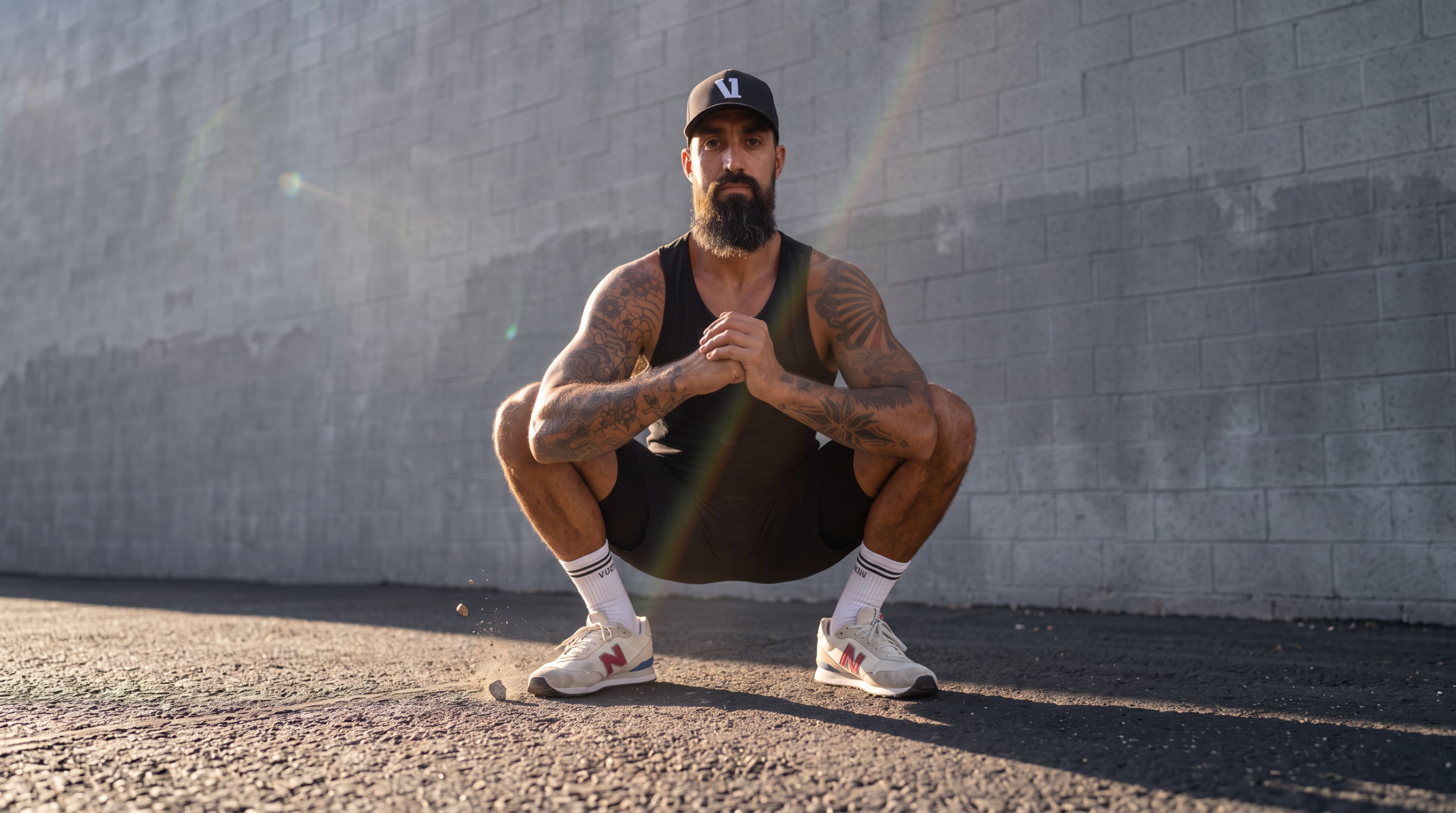
Move 3: The Deep Resting Squat
This is humans’ most primal and useful position. It allows us to play with our kids, work low to the ground, but most importantly, it develops majority of the lower body mobility that you need.
Josh even knows high schoolers who cannot sit into one. Good news: practice fixes it. Pigeon work and calf-opening dog work already prime the pattern.
Two tricks Josh wishes he’d known sooner
- Use a counterbalance. Hold a light weight, even a water bottle, out in front. It shifts your center of gravity forward and nudges you deeper.
- Dress for the squat. Josh admits restrictive jeans, slacks, and stiff sweatpants kept him from ever sinking low.
A simple lightweight can be life-changing in allowing you to sit deeper.
Struggling with balance? Hold onto a sturdy support, similar to gripping a pole, then progress toward lighter weight or none.
Move 4: The Crab
Squatting compresses the body. The crab opens it back up.
When we sit, the hip flexors shorten, the chest collapses, and the fronts of the shoulders and arms stiffen from pounding on keyboards. This one movement counteracts it all, the crab.
- Sit with hands beside you.
- Lift your hips and look toward the sky.
- Press actively into the floor to raise your chest high.
That pressing cue stretches biceps, chest, and shoulder fronts while waking the glutes. Trevor performs 5 to 10 reps every morning, holding 3 seconds at the top.
The shoulders won’t really like it on the first rep, but they’ll be feeling loose and strong by the time you’re done.
How to Fit It Into Real Life
All four moves are floor-based, and each flows into the next. Josh suggests cycling through them while coffee brews.
Target: 3 to 4 days weekly. Beginners should treat discomfort as a signal to scale back, using cushions, elevated surfaces, and supports freely.
If you want something simple that actually works, this is one of the most effective tools I’ve used to build strength, conditioning, and endurance without needing a full gym setup.
- Full-body training with one weight using swings, squats, and presses
- Solid cast iron build that feels stable and lasts for years
- Comfortable grip that makes high-rep workouts easier to handle
Bonus Stretch: Just Hang
One extra habit earns a spot in nearly any routine: reach overhead, grab something stable, and dangle.
Hanging has been studied by doctors, and there’s evidence that it opens up space in the shoulder joint. It mobilizes the big lat and chest muscles, and it leads to less pain and restriction, and it’s a powerful decompression tool for the full body.
Josh says results arrive with modest doses: 1 to 3 total minutes daily, accumulated in 10 to 30 second chunks.
Fair caveat: research on hanging for shoulder health remains limited, and individual responses vary. Treat it as a low-risk experiment, and check with a clinician if you have existing shoulder pain or injuries.
The Bottom Line
Mobility needn’t be complicated. Floor sitting, a supported downward dog, a deep squat, and the crab cover hips, spine, shoulders, and legs in one short flow.
Start small, stay consistent, and let your body relearn what it once did naturally.