Eight stations stand between every HYROX athlete and that finish-line Red Bull.
In a recent YouTube video, former Elite 15 world champion Meg Jacobe broke down her best tips for each one ahead of the 26/27 season.
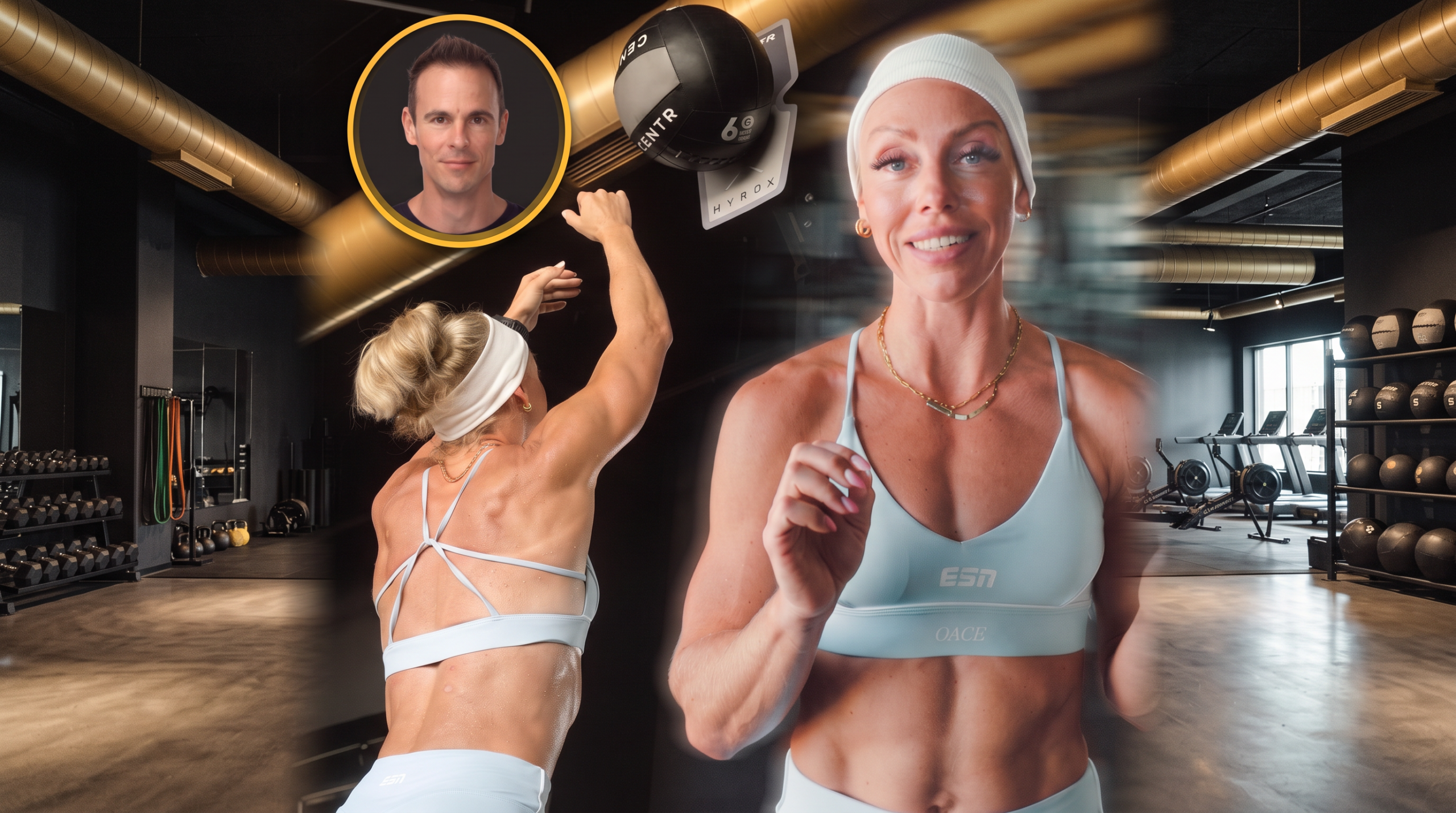
Her advice covers everything from damper settings to penalty-proof footwork.
One strategy quietly connects every station.
Keep reading to find which station she calls her favorite, and which small mistakes cost athletes the most time.
Jump to:
- Station 1: SkiErg, Where Patience Pays
- Station 2: Sled Push Rewards Leverage Over Grit
- Station 3: Sled Pull and the Rope Puzzle
- Station 4: Burpee Broad Jumps, the Gasser
- Station 5: Rower Doubles as Recovery
- Station 6: Farmers Carry and the Pinky Trick
- Station 7: Sandbag Lunges Demand Pacing
- Station 8: Wall Balls, Accuracy Under Fatigue
- One Last Piece: Know the Rulebook
Station 1: SkiErg, Where Patience Pays
Set your damper before the first pull. Only pro categories get it preset, so adjusting later wastes precious seconds.

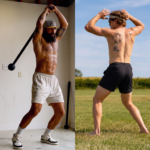
If you want something simple that actually works, this is one of the most effective tools I’ve used to build strength, conditioning, and endurance without needing a full gym setup.
- Full-body training with one weight using swings, squats, and presses
- Solid cast iron build that feels stable and lasts for years
- Comfortable grip that makes high-rep workouts easier to handle
I have mine personally set on a four. You should set it to what you’ve been training in. The lower is probably better.
Start with a couple of quick pulls to spin the fan up, then settle into what Jacobe calls “race face.”
- Hands travel from just above the head to the hips, never way overhead or straight down in front.
- Power sequence: lats, core, then hips at the very end.
- Hinge, don’t squat: slight knee bend, butt pushed back.
If you hear the whoo sound of the fan, how it’s continuous and there’s not that drop off, that’s kind of more optimal regarding your stroke rate.
Her top tip? Stay on the platform until the monitor ticks over, and remember this is only station one.
Station 2: Sled Push Rewards Leverage Over Grit
Hook Grip and Head Position
Rest elbows into the poles so body weight sits slightly over the sled. Turn the head to one side and park a cheek on the pole for a neutral back.
I can really emphasize all areas of my legs, hitting the glutes, using my glutes, my biggest power muscle, and not overextending the calves.
Strategic Braking
Lane one feels easy. Lane four tells the truth.
Outside the Elite 15, almost nobody should push a lane unbroken. Jacobe plans a halfway stop and rests a calculated five to six seconds before restarting.
- Cross the line fully. Front sled edges must clear it, or judges send you back.
- Train on race equipment when possible, since pole height changes head position.
- Adjust load for turf friction when traveling, going heavier or lighter to mimic pro weight.
- Doubles: walk behind the working partner, never beside, and agree on an exit side.
Station 3: Sled Pull and the Rope Puzzle
Jacobe calls this the most technical station because of rope management.
If you want something simple that actually works, this is one of the most effective tools I’ve used to build strength, conditioning, and endurance without needing a full gym setup.
- Full-body training with one weight using swings, squats, and presses
- Solid cast iron build that feels stable and lasts for years
- Comfortable grip that makes high-rep workouts easier to handle
One half of the box essentially is where I’m piling my rope, and the other half is where I’m using it to walk back.
Her weaving method flows well for her, but drop-and-pile is cleaner for beginners. Leave about an inch of wiggle room at both lines, because repeated line touches earn penalties.
Sit back as if into a chair, extend the hips, and walk backward using body weight. Think deadlift hinge, not deep squat.
Then run the transition. Easing effort slightly here can beat long rests later.
In doubles, the partner stays fully outside the box. No rope handoffs allowed: drop it, swap, then the next athlete lifts it.
Station 4: Burpee Broad Jumps, the Gasser
Heart rate spikes hard here. Land soft and low, keep air time short, and swing the arms behind for momentum.
I don’t want anybody commenting on my movements. So, I try to really overexaggerate the standard.
- Solo: step-up method, one foot at a time.
- Doubles: two-foot jump-up is quicker for swaps.
- Chest always touches the floor.
- Land feet near-parallel, with hands close to toes.
- Switch every seven to eight reps, or every five for weaker pairs.
Always finish a started rep. Partners begin with hands where the previous athlete’s feet landed.
If you want something simple that actually works, this is one of the most effective tools I’ve used to build strength, conditioning, and endurance without needing a full gym setup.
- Full-body training with one weight using swings, squats, and presses
- Solid cast iron build that feels stable and lasts for years
- Comfortable grip that makes high-rep workouts easier to handle
Station 5: Rower Doubles as Recovery
Jacobe’s favorite station comes with a catch: set the damper first, since reaching it while strapped in is tough. Hers sits at a five.
Both feet must be on the plates before pulling. Grabbing the handle with one foot up is a penalty.
We recommend you use this a little bit more as a recovery point. We’re sitting down so we can allow our heart rate to come down a little bit.
- Stroke rate under 30, with heart rate floating in the high 150s for her.
- Sequence: legs, core, arms going back; arms, core, legs returning.
- Handle height: around bra line, not up high.
- Body swing: think two o’clock to ten o’clock, with slight forward lean.
- Seat position: keep it away from the heels to preserve leg power.
Solo athletes can strap in. In doubles, skip tightening, because snagged feet wreck transitions.
Her doubles blueprint: stronger runner opens and closes with chunks around 200 to 350 meters, while the other handles a bigger middle block.
Station 6: Farmers Carry and the Pinky Trick
Energy often rebounds here. Handles are slick, so chalk up.
Your pinky is super important when it comes to your grip. And it is the first finger that is going to go when we start losing our grip.
Her mental cue: squeeze your pinkies. Gripping the front curve of the handle eases demand on those fingers.
If you want something simple that actually works, this is one of the most effective tools I’ve used to build strength, conditioning, and endurance without needing a full gym setup.
- Full-body training with one weight using swings, squats, and presses
- Solid cast iron build that feels stable and lasts for years
- Comfortable grip that makes high-rep workouts easier to handle
- Deadlift up with an upright posture and tight core.
- Take short, fast steps without swinging arms.
- Break before forced, since shorter rests follow.
- Doubles elite move: swap bells midair while your partner steps in behind.
Station 7: Sandbag Lunges Demand Pacing
Clean the bag up, then keep arms loose and wide, resting weight on the shoulders. Tight, bent arms restrict blood flow and invite early pump.
Both feet start behind the line. Each rep needs a knee touch.
It’s not about doing the first 20 m as fast as possible and then having to take a lot of breaks.
Jacobe targets roughly one meter per step, using floor markings, and drags the back foot for a slight reprieve. Dropping the bag brings penalties, so doubles partners should duck under and take it directly.
Station 8: Wall Balls, Accuracy Under Fatigue
Hit the center of the target every time. Judges reward precision, not extra-high throws.
- Three points of contact: both hands and chin on the ball, held high and tight.
- Stand about an arm’s length from the wall.
- Start each rep at the top, with hip crease below the knee at depth.
If you break before you are absolutely forced to, this can keep you on a nice break clock and actually get you through this station quicker.
One beginner-friendly scheme: 16 reps, then 15, down to 9. That totals exactly 100, with one fewer rep each set.
Pick a plan and stick to it. Hit a streak of no-reps? Put the ball down, regroup, start fresh.
If you want something simple that actually works, this is one of the most effective tools I’ve used to build strength, conditioning, and endurance without needing a full gym setup.
- Full-body training with one weight using swings, squats, and presses
- Solid cast iron build that feels stable and lasts for years
- Comfortable grip that makes high-rep workouts easier to handle
Doubles partners wait beneath the target. Handing the ball over mid-air speeds swaps, provided the next rep starts from standing.
One Last Piece: Know the Rulebook
Jacobe closes with a nudge toward the official rules. A friend filming admitted not knowing half of them.
It’s great if you can familiarize yourself with the rule book.
Her payoff for finishing strong: a DJ, a Red Bull, and the title of hybrid rockstar.