Strength training doesn’t just build muscle—it builds a longer, healthier, higher-quality life.
And the best part?
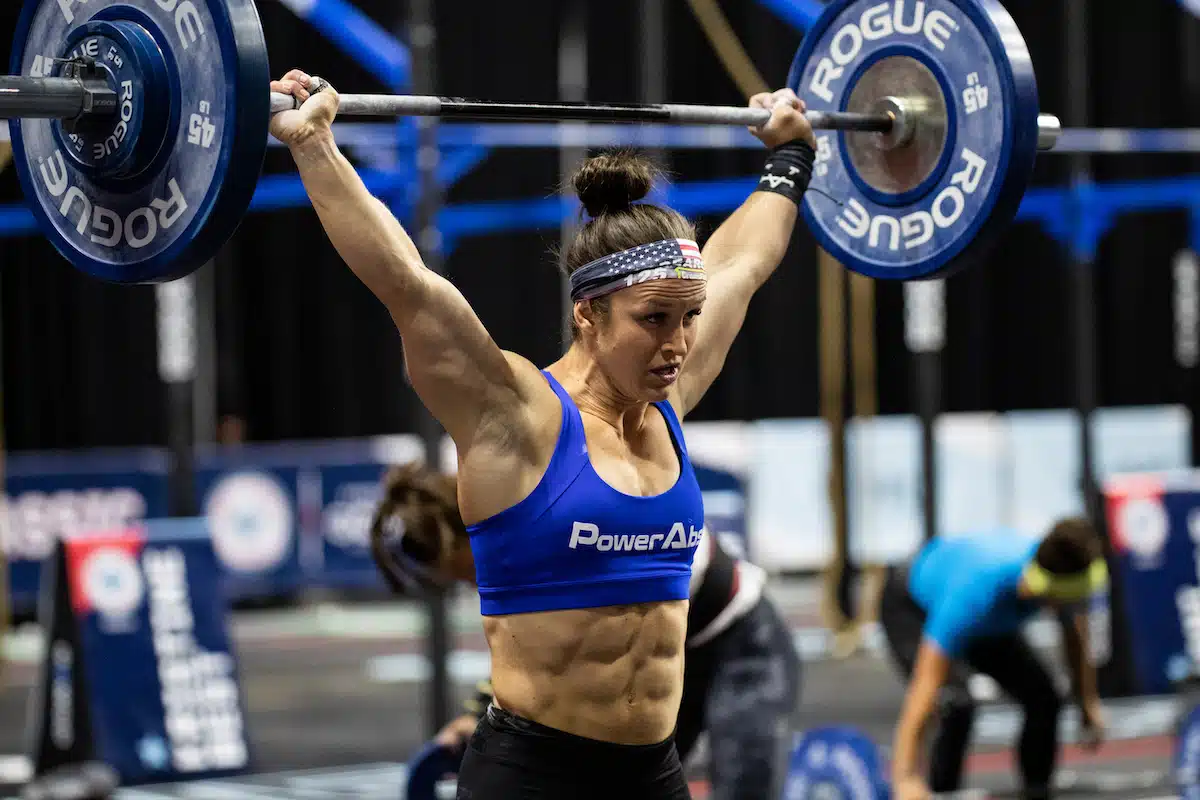
For most people, it only requires as little as 1 to 3 hours per week.
That tiny time commitment provides one of the biggest returns on investment you can make for your health.
In a recent conversation, fitness expert Dr. Mike Israetel broke down this high-yield, low-time-cost paradox of resistance training, and explained why being “too strong” is a problem almost nobody has.
Jump to:
The Value of Strength Training: Small Time, Big Upside
For general health, longevity, and quality of life, strength training is hard to beat—and you don’t need endless hours in the gym to reap the benefits.
“Probably the biggest return on investment the average person can make is to train for roughly half an hour two times a week,” said Dr. Israetel. “If you do it properly, it can comport an unbelievable amount of benefits just across the board.”
The numbers back him up. According to federal guidelines from the U.S. Department of Health and Human Services, just two sessions per week of moderate-to-high intensity muscle-strengthening activity are sufficient for major health benefits.
Compared to endurance training like cycling or running—which may demand 8, 10, or even 30 hours per week depending on goals—resistance training offers an outsized payoff per minute invested.
Why It Doesn’t Take Much
Resistance training works differently than cardio.
Deep physiological changes can happen in as little as an hour or two per week of strategically programmed workouts, largely because strength training relies on high levels of short-term stress to the muscles:
- Heavier weight = greater mechanical tension
- Near-failure training = high metabolic stress
- Fewer sets needed to elicit adaptation
“Resistance training is based on applying high forces and high levels of fatigue,” Dr. Israetel explained. “You don’t need to do it every day. In fact, many people get incredible results from just 1–3 sessions per week, provided the effort level is high.”
The strategy? Go hard, then recover. Your body adapts to that stress during the recovery period—not while you’re in the gym.
Why You Likely Won’t “Overdo” It
One concern that stops some people from starting a lifting routine is fear of becoming “too big” or too muscular.
This, says Dr. Israetel, is an unfounded fear. Becoming extremely muscular is the result of years of focused effort and lifestyle adjustments—not something you stumble into accidentally.
“It’s insanely unrealistic in most cases to wander into that sort of thing,” he said. “The myth of accidental muscle? It’s like saying you woke up tomorrow a billionaire.”
Even for those who do pursue hypertrophy seriously, the threshold for “too much” is typically defined by your own goals and schedule, not by the exercise itself.
Trade-Offs and Time Investment
While there’s no inherent downside to developing more strength or muscle, there is an opportunity cost in time—especially for those training intensely and frequently.
That said, Dr. Israetel points out just how modest the recommended time investment really is.
“On the list of time use for most Americans, two hours a week would probably fall somewhere between #50 and #60. There are a dozen things we do that take more time—scrolling Instagram, watching TV, et cetera,” he noted.
The bottom line: for nearly everyone, strength training’s time cost is minimal—and only becomes significant when your approach becomes elite-level serious.
Why Strength and Endurance aren’t the Same
One reason some people struggle to transition from endurance sports to resistance training is that the physiological principles behind each are fundamentally different.
Dr. Israetel emphasized that strength and hypertrophy training rely on type II muscle fibers, which are faster, stronger, and more powerful—but more easily fatigued.
By contrast, long-distance running or cycling recruits type I fibers, which are slower but extraordinarily fatigue-resistant.
The Role of Effort and Recovery
Submaximal efforts—like those common in endurance training’s “zone 2”—don’t translate well to the weight room.
“Weight training doesn’t really have an equivalent of zone 2,” Dr. Israetel said. “You don’t get much benefit from lifting very light weight far away from muscular failure.”
Instead, weight training must edge close to muscular failure—whether with heavy loads or high reps—to create a meaningful stimulus. This requires:
- High physical stress
- Significant neural drive
- More psychological focus per set
Because of the intensity, fewer sessions are needed—and more rest is required between them.
“You can hop on a bike for an hour and feel fine afterward, maybe even refreshed,” Dr. Israetel noted. “But after 5 hard sets of leg presses? You feel like someone beat the crap out of you.”
Yes, It Gets Hard—But That’s the Point
Muscle doesn’t grow from casual effort.
Strength gains don’t come from comfort.
Like any form of meaningful change, lifting demands intention and effort—but it also gives back plenty.
Those who adapt to it find that the “burn,” the grind, and the recovery become not barriers—but badges of honor, proof of change happening beneath the surface.
The Adaptation Loop of Progress
Train hard. Recover. Adapt. Repeat.
This adaptive cycle is what makes resistance training so potent—not only for muscle growth or strength but for improvements in:
- Insulin sensitivity
- Bone density
- Mental health
- Cardiovascular support
- Mobility and posture
The price isn’t high: just 1 to 3 well-planned, hard sessions per week.
The Final Word: Start Small, Think Big
You won’t accidentally build too much muscle.
You won’t have to live in the gym to see results.
But what you will gain—strength, resilience, functional ability later in life—is invaluable.
“The list of 90-year-olds complaining that they’re too strong and too muscular is a very short list,” Dr. Israetel quipped.
“Most people at the end of life are saying the opposite: ‘I wish I was stronger. I wish I had more muscle.’”
So the real question isn’t: “Do I have time?”
It’s: “Am I willing to give back just a little bit of time to build a stronger future self?”
Because when it comes to resistance training, that’s all it takes.