After age 50, how should women train to significantly extend lifespan and improve health span?
According to Dr. Stacy Sims—exercise physiologist and hormone specialist—the answer challenges decades of conventional advice.
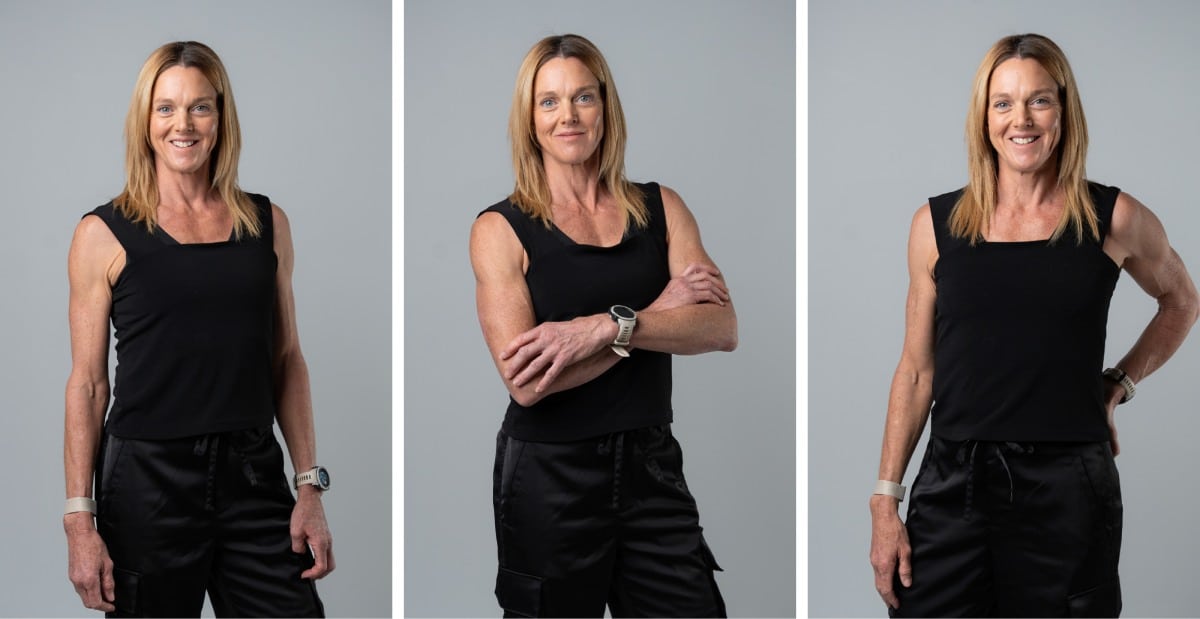
In a conversation with Dr. Andrew Huberman on his podcast, Sims outlines what science now shows as the optimal training approach for women over 50—and how it looks radically different from yoga classes and morning walks.
This new approach empowers aging women to retain strength, bone mass, cognitive function, and independence well into their 80s and 90s.
Here’s how to make that happen—and why starting now could be the key to long-term wellness.
Jump to:
Powerful Stress Yields Resilient Bodies
“We have to turn our brains away from everything that’s been predicated before to this point,” Sims explains.
The key to extending health span isn’t long sessions on cardio machines or low-impact stretching.
Instead, Sims recommends prioritizing three forms of training that deliver high returns on minimal time investment:
- Jump training
- Heavy resistance training
- Sprint interval training
Each one targets a specific area essential for age-resistant fitness: bones, muscles, and metabolic power.
1. Jump Training: Reverse Bone Loss in Minutes
Osteopenia and osteoporosis are massive concerns for postmenopausal women. Without intervention, women can lose up to one-third of their bone mass during menopause.
Jump training offers a potent solution.
This isn’t soft landings or bouncy footwork. Sims emphasizes impact-based movement that stimulates the skeletal system.
“You’re looking at ten minutes, three times a week of jump training,” she says. And according to a colleague of hers, researcher Tracy (surname unmentioned), this protocol has helped some women move from osteopenic to normal bone density in just four months.
2. Strength Training: Fight Sarcopenia and Stay Powerful
As women age, they become more prone to losing muscle—a process known as sarcopenia. Heavy lifting counters it, preserving not only muscle mass but also functional strength.
Sims recommends heavy resistance exercises that challenge major muscle groups. Training to near failure and using progressive overload are key, whether with free weights, machines, or bodyweight resistance.
“The big rock is resistance training,” Sims says. “It doesn’t have to be powerlifting. But it should challenge you enough to cause adaptation.”
3. Sprint Interval Training: Your New Brain Booster
Need another reason to sprint? It might help stave off Alzheimer’s and cognitive decline.
High-intensity intervals lead to lactate production, which the brain uses as fuel. Sims notes that many women have lower exposure to lactate due to their physiologically oxidative nature and a lack of high-effort training throughout life.
“Lactate exposure helps attenuate cognitive decline and reduces plaque development in the brain,” she emphasizes.
The take-home: sprint training isn’t just for sprinters. It’s essential for aging brains.
What Counts As “High-Intensity”?
This term is often misunderstood. According to Sims, it’s not just about being sweaty or exhausted. Instead, it’s defined by work output and recovery.
High-Intensity Interval Training (HIIT)
These sessions consist of moderate-to-hard efforts (80%+ capacity) lasting 1–4 minutes followed by variable recovery.
Examples include:
- Track workouts like 400m or 800m repeats
- Gym EMOM (“every minute on the minute”) sets with kettlebells, thrusters, or deadlifts
Sprint Interval Training (SIT)
This is max effort, short bursts—think 30 seconds or less at 95–100% effort—followed by 2–4 minutes of complete recovery.
Effective options include:
- All-out rowing or Airdyne cycling
- Short hill sprints
- Battle ropes or ski erg sets
“We want you to go all out, and recover well enough to be able to go all out again,” says Sims.
The Role of Nutrition: Protein for Preservation
Training creates the stimulus. Nutrition provides the building blocks.
Sims suggests a protein intake of 1–1.1 grams per pound of body weight per day (roughly 2.2 grams per kg)—far above typical recommendations.
Many women are surprised by that number, but she insists it’s essential: “It is a lot of protein… because we haven’t been conditioned to eat it.”
While animal sources are rich in complete amino acids, variety matters. Beans, lentils, nuts, and whole grains can complement animal protein or stand alone for vegetarians.
Spread intake throughout the day to maintain muscle protein synthesis. Aim for at least 25–30g of protein every meal.
What About Women Under 50?
Younger women also benefit from the same strategies but can afford greater flexibility.
Between ages 20 to 40, the focus should be on enjoying movement while establishing good training habits.
“If you hate running, don’t run,” says Sims. Exercise shouldn’t feel punitive—it should be sustainable and fun.
Training Goals for Younger Women
- Build strength: Prioritize resistance training tailored to your comfort level.
- Maintain glycolytic capacity: Include high-intensity efforts to preserve fast-twitch muscle fibers.
- Protect your brain: Expose the brain to lactate early to reduce dementia risk later.
This creates long-term muscle resilience and neurological protection without requiring perfection or extreme discipline.
A Sample Weekly Framework
For women over 50 looking to optimize health span, here’s a layout Sims endorses:
- 2 sessions: Sprint interval or HIIT training
- 3–4 sessions: Resistance training (upper/lower split or full-body)
- 3 sessions: Jump or impact training (10 min each)
- 1–2 sessions: Active recovery (long walks, yoga, low-intensity movement)
Recovery, sleep, and adequate protein intake complete the picture.
Shifting the Paradigm
Many women still default to long-duration cardio or circuit-style classes for fitness—focusing heavily on external appearance.
Sims argues this model is outdated.
“We’re after creating strong external stress to create adaptations… feeding down to metabolic change,” she explains.
Final Thoughts
Health span isn’t a passive outcome—it’s something women can build with focused, high-value training.
From muscle preservation to bone density to cognitive resilience, 50 is not too late—it’s the perfect time to pivot priorities.
More strength. More impact. More intensity. That’s the formula.