Metabolism doesn’t run on willpower or determination.
It runs on specific nutrients, minerals, and hormones working in precise coordination—and when even one piece of that puzzle is missing, everything slows down.
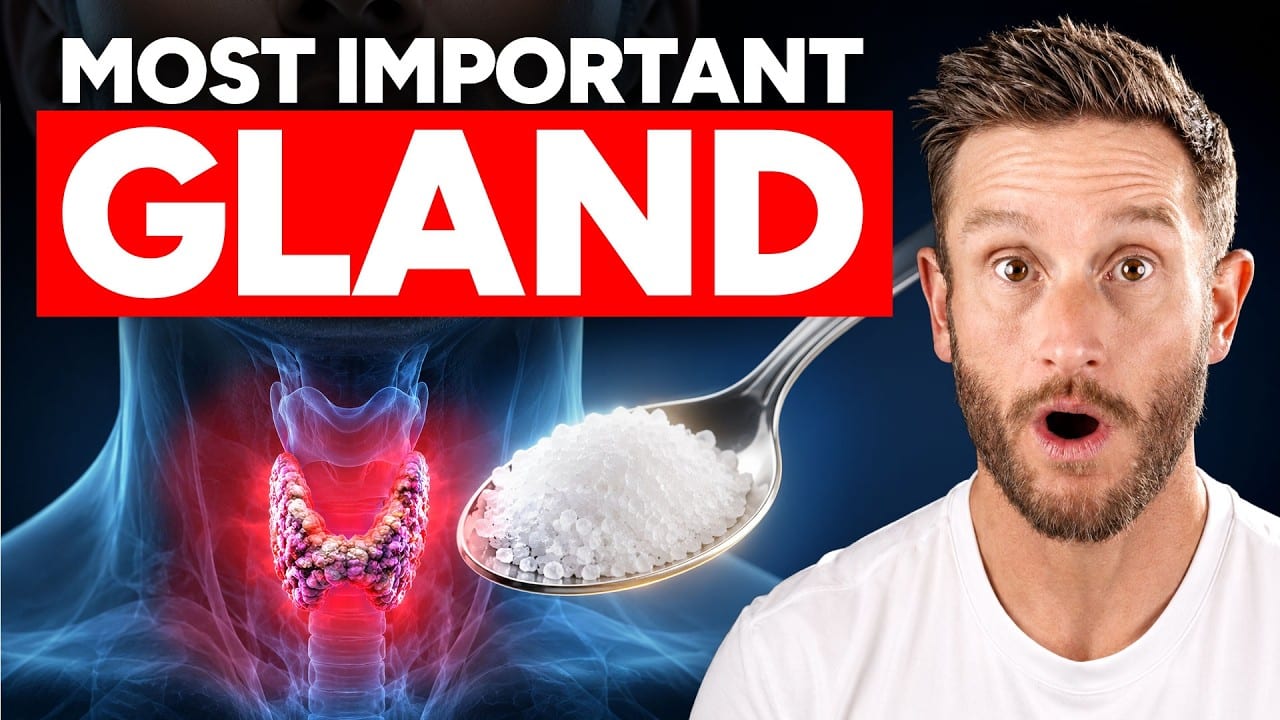
In a recent video, health and fitness expert Thomas DeLauer broke down exactly why so many people struggle with sluggish metabolisms despite “normal” thyroid labs—and revealed a five-step checklist to fix the root cause.
His approach doesn’t require expensive treatments or prescriptions, just strategic nutrition that supports what the thyroid actually needs to function.
Jump to:
- The Thyroid Produces a Hormone It Can’t Even Use
- Step 1: Selenium Builds the Conversion Enzymes
- Step 2: Iodine Supplies the Raw Material
- Step 3: Iron Enables Hormone Production
- Step 4: Vitamin D Regulates Immune Tolerance
- Step 5: Cortisol Management Protects Conversion
- The Complete Thyroid Support Playbook
- Why “Normal” Thyroid Labs Miss the Problem
- Energy Production Beyond Thyroid: The NAD Connection
The Thyroid Produces a Hormone It Can’t Even Use
Most people assume thyroid health is binary: either it works or it doesn’t. But DeLauer explains that the majority of what the thyroid produces is T4, a storage form of thyroid hormone that’s physiologically weak.
T4 must be converted into T3—the active form—before it can regulate metabolic rate, burn fat, increase body temperature, boost energy, or improve mood.

If you want something simple that actually works, this is one of the most effective tools I’ve used to build strength, conditioning, and endurance without needing a full gym setup.
- Full-body training with one weight using swings, squats, and presses
- Solid cast iron build that feels stable and lasts for years
- Comfortable grip that makes high-rep workouts easier to handle
That conversion step is not automatic. It depends on specific inputs, nutrients, minerals.
When that conversion underperforms, standard thyroid panels may look completely normal—but metabolism grinds to a halt. People can even be on thyroid medication like levothyroxine and still feel off because the medication supplies T4 without fixing the conversion problem.
Step 1: Selenium Builds the Conversion Enzymes
Selenium is the linchpin. The enzymes responsible for converting T4 into T3—called deiodinases (DIO1 and DIO2)—are selenoproteins, meaning they literally cannot be built without selenium.
A study published in Clinical Pediatric Endocrinology examined patients who developed selenium deficiencies through dietary restrictions with no prior thyroid disease. Their free T4 to free T3 ratio was significantly elevated compared to controls, indicating impaired conversion.
When they supplemented with selenium, free T4 dropped, free T3 rose, and the ratio returned to balance. The conversion problem was entirely reversible with selenium.
The Brazil Nut Problem
DeLauer warns against relying on Brazil nuts as a daily selenium source. Brazil nuts can contain anywhere from 1 microgram to 500 micrograms of selenium per nut, creating a risk of accidental overdose.
If you get it from Brazil nuts, you need to do like one or two Brazil nuts a week, not a day.
Selenium has a U-shaped dose-response curve—too little impairs thyroid function, but too much can be harmful. If already adequate, adding more selenium won’t help and may hurt. A serum selenium test can clarify baseline levels.
If you want something simple that actually works, this is one of the most effective tools I’ve used to build strength, conditioning, and endurance without needing a full gym setup.
- Full-body training with one weight using swings, squats, and presses
- Solid cast iron build that feels stable and lasts for years
- Comfortable grip that makes high-rep workouts easier to handle
Pro tip: Selenoprotein synthesis shares cellular machinery with sulfur-containing amino acids, so take selenium alongside eggs, meat, or fish for better utilization.
Step 2: Iodine Supplies the Raw Material
Iodine is the building block of thyroid hormone itself. It gets incorporated into thyroglobulin by an enzyme called thyroid peroxidase, generating hydrogen peroxide as a byproduct.
Here’s where selenium and iodine directly interact: selenoproteins neutralize hydrogen peroxide and protect the thyroid gland from oxidative damage while it produces hormones.
Iodine builds the hormones, selenium protects the factory all while it’s doing its job.
High iodine intake with low selenium can actually be damaging—lots of production with no protection. DeLauer recommends only small amounts of iodine from sources like iodized salt or two to four pieces of seaweed—not megadoses.
Step 3: Iron Enables Hormone Production
Iron isn’t just additive; it’s interactive with selenium and iodine. Thyroid peroxidase—the enzyme that incorporates iodine into thyroid hormone—is iron-dependent.
Without adequate iron, hormone production slows before conversion even becomes an issue. A study established that selenium, iodine, and iron form a mechanistic triad for thyroid function.
If you want something simple that actually works, this is one of the most effective tools I’ve used to build strength, conditioning, and endurance without needing a full gym setup.
- Full-body training with one weight using swings, squats, and presses
- Solid cast iron build that feels stable and lasts for years
- Comfortable grip that makes high-rep workouts easier to handle
Iron deficiency is one of the most common nutrient deficiencies, and it doesn’t require full-blown anemia to cause problems. Stores of iron (ferritin) matter as much as serum iron.
Skip the Supplement, Eat the Meat
DeLauer advises against isolated iron supplements, calling them “one of the worst things you could do.” Instead, get iron from red meat, beef liver, and other whole food sources that provide the full nutrient matrix needed to balance absorption and prevent oxidative stress.
Step 4: Vitamin D Regulates Immune Tolerance
Vitamin D plays a unique role in autoimmune thyroid conditions like Hashimoto’s. A randomized controlled trial published in Frontiers in Endocrinology examined 42 people with Graves’ disease who had marginal selenium and vitamin D levels at baseline.
Participants were randomized to receive standard drug treatment alone or drug treatment combined with selenium and vitamin D for six months.
The combo group saw significantly larger reductions in overactive immune cells (NK cells) and exclusive increases in regulatory T cells (T regs). The drug-alone group didn’t achieve these benefits.
T regs act as the immune system’s brake pedal, suppressing autoimmune responses that attack thyroid tissue. Selenium provides antioxidant protection via selenoproteins, while vitamin D drives T reg expansion and suppresses inflammation.
If you want something simple that actually works, this is one of the most effective tools I’ve used to build strength, conditioning, and endurance without needing a full gym setup.
- Full-body training with one weight using swings, squats, and presses
- Solid cast iron build that feels stable and lasts for years
- Comfortable grip that makes high-rep workouts easier to handle
Selenium and vitamin D deficiencies often co-occur, especially in northern climates with low sunlight and selenium-deficient soil.
Step 5: Cortisol Management Protects Conversion
Chronic stress doesn’t just feel metabolically damaging—it literally is. A 2025 study found that cortisol decreases the activity of deiodinase enzymes, directly suppressing thyroid conversion.
With less T3, metabolism slows. Fat burning drops. Thermogenesis declines. Meanwhile, production of reverse T3 increases—a molecule that blocks thyroid receptors and prevents even existing T3 from working.
Over time, this drives visceral fat accumulation as lipolytic enzymes are blunted and lipogenesis ramps up.
Theanine: A Simple Cortisol Pattern Interrupt
A study in Neurology and Therapy found that a 200-mg dose of theanine triggered a 40% decrease in cortisol within one hour.
If you’re dealing with stress and cortisol, theanine is a pretty simple way to kind of like have a pattern interrupt.
Theanine is a non-sedating amino acid found in green tea that promotes relaxation without drowsiness—making it an accessible tool for managing stress-induced metabolic slowdown.
If you want something simple that actually works, this is one of the most effective tools I’ve used to build strength, conditioning, and endurance without needing a full gym setup.
- Full-body training with one weight using swings, squats, and presses
- Solid cast iron build that feels stable and lasts for years
- Comfortable grip that makes high-rep workouts easier to handle
The Complete Thyroid Support Playbook
Here’s DeLauer’s full five-step thyroid optimization checklist:
- Selenium: One to two Brazil nuts per week, or test serum levels and supplement cautiously
- Iodine: Two to four pieces of seaweed or iodized salt—small amounts only
- Iron: Red meat, beef liver, organ meats—avoid isolated supplements
- Vitamin D: Sun exposure when possible, supplementation if deficient (especially important for Hashimoto’s)
- Cortisol management: Consider 200 mg theanine for acute stress support
Bonus synergy: Eat selenium-rich foods alongside sulfur-containing proteins like eggs and meat to enhance selenoprotein synthesis.
Why “Normal” Thyroid Labs Miss the Problem
Standard thyroid panels typically measure TSH and sometimes free T4. But if conversion from T4 to T3 is impaired due to nutrient deficiencies or chronic stress, labs can appear normal while metabolism remains broken.
People on levothyroxine often report persistent fatigue, weight gain, and brain fog—not because the medication doesn’t work, but because it only supplies T4. Without adequate selenium, iron, and managed cortisol, that T4 never becomes usable T3.
DeLauer’s approach doesn’t replace medical treatment but addresses the nutritional foundation that determines whether thyroid hormone—endogenous or supplemental—can actually do its job.
Energy Production Beyond Thyroid: The NAD Connection
DeLauer also highlighted the role of NAD (nicotinamide adenine dinucleotide) in energy production at the mitochondrial level. NAD is an electron carrier essential for extracting energy from food.
If you want something simple that actually works, this is one of the most effective tools I’ve used to build strength, conditioning, and endurance without needing a full gym setup.
- Full-body training with one weight using swings, squats, and presses
- Solid cast iron build that feels stable and lasts for years
- Comfortable grip that makes high-rep workouts easier to handle
As we age, NAD levels decline, contributing to fatigue. While NAD infusions are expensive and inconvenient, liposomal NAD offers significantly better oral absorption due to its phospholipid bilayer that protects the molecule through digestion.
For me, this is one thing that I have legit noticed within minutes, my energy goes up.
While NAD supplementation addresses energy at the cellular level, thyroid optimization ensures that metabolic signaling from hormones supports that energy production system.
Metabolism isn’t a mystery—it’s a machine. And like any machine, it needs the right inputs to run smoothly. Selenium builds conversion enzymes. Iodine supplies raw materials. Iron enables production. Vitamin D regulates immune tolerance. Cortisol management protects the entire system. Together, these five steps form a complete thyroid support strategy grounded in mechanism, not guesswork.