CrossFit can feel like chaos when starting out.
But there’s actually a clear roadmap from beginner to RX—and understanding it changes everything.
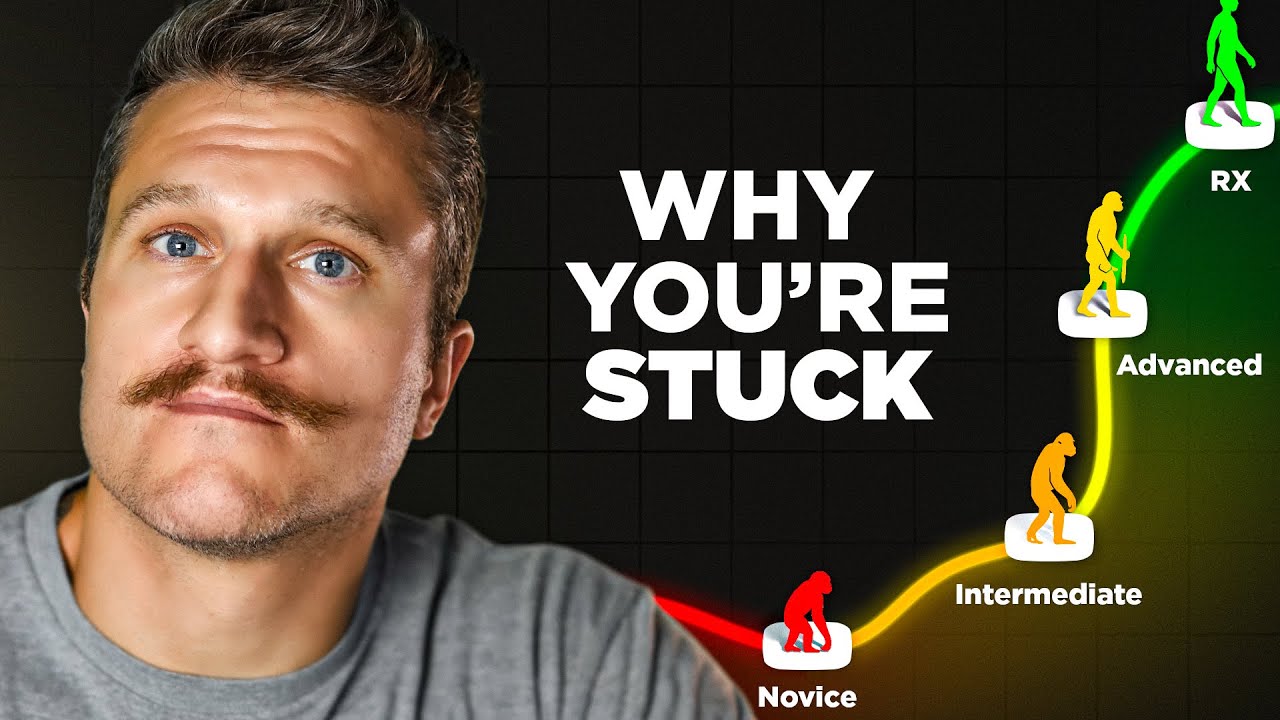
Coach and affiliate owner with 13 years of experience has broken down the journey into four distinct levels: novice, intermediate, advanced, and RX.
Each level builds on the last, with specific cornerstone movements that unlock progress across multiple skills at once.
Jump to:
Why Getting to RX Transforms Your CrossFit Experience
Reaching RX level isn’t just about bragging rights.
It fundamentally changes how CrossFit feels. Instead of constantly modifying workouts and wrestling with movements you can’t quite do, training becomes about overall stimulus and varied challenges.
If you can get to RX, CrossFit becomes a whole lot more fun. It becomes less about this movement and that movement and more just about the overall stimulus from the training.
How long does it take? That depends entirely on your dedication.
Some athletes make it in months. Others need years. Age, genetics, and life circumstances matter, but obsession with the process matters more.
Novice Level: Building Your Foundation
Starting CrossFit feels random and overwhelming for most people.
The first day I showed up at a CrossFit gym, the workout was filthy 50, which is 50 reps of 10 different movements. Almost all of them I had never heard of. I was so lost and it all made no sense.
Your first goal? Complete one rep of every single movement.
Show up consistently—four to five days weekly for four to five weeks—and dramatic progress happens naturally.
The Nine Foundational Movements
Novice-level movements represent basic human capabilities everyone needs for health, not just fitness:
- Air squat (below parallel)
- Push-up
- Pull-up (or progression toward one)
- Deadlift
- Front squat
- Press
- Box jump
- Running (400-800m)
- Jump rope
The cornerstone movement? The pull-up.
Most beginners face strength deficits, especially in shoulder strength. Building strict pull-up capability creates foundation for countless advanced movements later.
Many athletes make critical mistakes here—attempting toes-to-bar or other advanced gymnastics without first developing strict pulling strength. This creates plateaus and injury risk down the line.
Intermediate Level: The House Takes Shape
Intermediate is where athletes start “drinking the Kool-Aid.”
You’ve discovered movements you’re good at. Consistency is paying off. Body composition changes become visible.
This level introduces two cornerstone movements: handstand hold and toes-to-bar.
Key Intermediate Skills
- Toes-to-bar (10+ unbroken)
- Handstand hold (freestanding)
- Back squat (bodyweight)
- Power clean
- Thruster
- Double-unders
- Kipping pull-ups
- Chest-to-bar pull-ups
- Running (longer distances)
Toes-to-bar requires both strength and skill—specifically, understanding tension transfer between hollow and arch positions while closing shoulder angle effectively.
The Biggest Mistake Intermediates Make
Excitement accelerates progress, and intensity feels incredible. But losing control of technique destroys long-term development.
Push yourself hard on the simple movements, but if it feels like you’re being sloppy, you’re being sloppy, and don’t do that. Proper movement is efficient and efficient movement is safer and more effective.
Become a student of technique. Film your lifts. Watch them back. Obsess over moving better.
Going so heavy you can’t squat below parallel? Stop immediately. This habit prevents advancement past intermediate level.
Advanced Level: Where Athletes Get Stuck
Advanced level focuses heavily on weightlifting skill requiring exceptional flexibility and positional strength.
Lifestyle factors become major limiters here. CrossFit loses novelty. Frustration builds when confronted with persistent weaknesses.
Athletes willingly do anything inside the gym—drills, stretches, accessory work—but won’t do necessary work outside training sessions.
Two Cornerstone Movements
Strict handstand push-up and bodyweight overhead squat unlock this level.
Overhead squatting bodyweight typically means you can power snatch bodyweight and definitely power clean it. Lacking mobility and strength here limits everything above.
Strict handstand push-ups require incredibly specific strength.
The strict handstand push-up is actually the hardest movement for me. It is just so specific. I have not found that anything besides strict handstand push-up, strict upside down pressing your body weight, helps develop that movement.
Avoid the common mistake of stacking AbMats to shorten range of motion. This creates strong lockouts without raw pressing power—a recipe for stagnation.
Additional Advanced Skills
- Power snatch
- Clean and jerk
- Front squat (1.5x bodyweight)
- Kipping handstand push-up
- Bar muscle-up
Most athletes possess raw strength for these lifts after completing intermediate movements. They simply lack skill or mobility.
RX Level: Where CrossFit Gets Really Fun
RX isn’t the finish line—it’s when training truly begins.
Achieving RX means completing most workouts as written, which transforms how every session feels. Movements become varied challenges rather than frustrating obstacles.
Two cornerstone movements: handstand walk and ring muscle-up.
The Muscle-Up Prerequisite
When I started CrossFit, my coach told me, I’m not allowed to learn how to do a kipping muscle up until I can do one strict muscle up first. And I just took that as that’s the way it is.
Within weeks of achieving strict muscle-ups, kipping sets came easily. Building safe, strong shoulders first accelerated progress toward bar muscle-ups.
Handstand walks require consistent practice—three to four weekly sessions of five minutes creates rapid improvement when built upon solid freestanding holds.
Less Common RX Movements
- Rope climb (mostly skill-based)
- GHD sit-up (requires gradual volume increase)
- Pistol squat (demands flexibility, strength, balance)
GHD sit-ups need careful progression—start with three sets of five, gradually building to higher volumes over months.
The Ultimate Lesson: Scaling Isn’t Failure
Even at RX level, scaling remains essential.
Any workout can be written beyond current capacity. Smart athletes scale to meet intended stimulus regardless of capability level.
At my gym, RX is what it is. If you scale up or you scale down, it just doesn’t matter. It is scaled. Scaling is not a bad thing. It just means you didn’t do the workout as it was written up on the board.
What got you here won’t get you to next level. Each progression requires different approaches, different focus, different dedication.
The challenge of reaching RX teaches more about personal capability than most imagine possible. Build your house of fitness methodically—foundation first, then framing, then finishing touches.
Master basics before attempting advanced skills. Address weaknesses outside the gym. Stay obsessed with technique at every level.
This roadmap works—but only when followed with patience and precision.