Exercise science content floods social media daily, but according to performance coach Jud Linhard, much of it misses the mark for everyday fitness enthusiasts.
In a recent conversation, Linhard didn’t hold back about where conventional exercise science advice falls short.
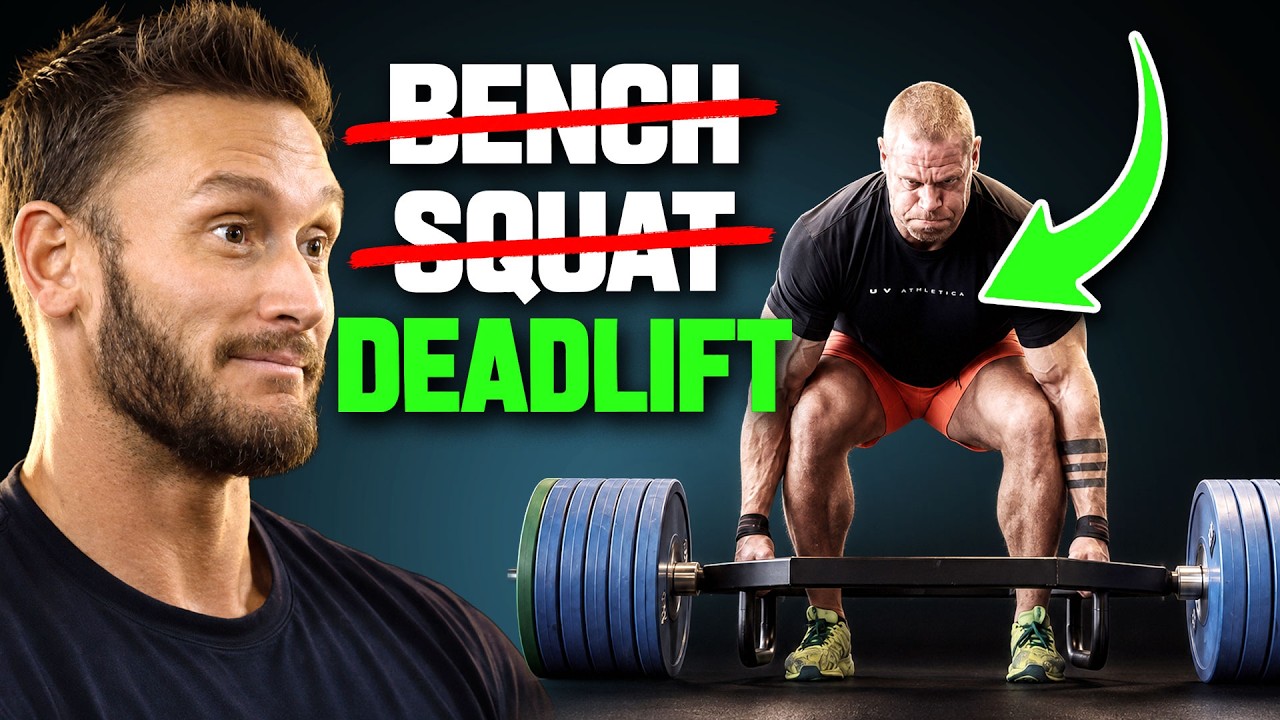
His perspective challenges rigid dogma that’s been circulating for years, offering a more nuanced approach that considers individual context over one-size-fits-all rules.
For anyone tired of conflicting fitness advice, his insights might just change how you approach your training.
Jump to:
The Context Problem in Exercise Science
Linhard’s primary critique centers on context—or rather, the lack of it in popular exercise advice.
I feel like they’re much too cut and dry and draw much too strong of conclusions from studies that have probably been completely outdated by now. You don’t prove something with a study.
He points out that many exercise scientists still reference outdated research conducted on elite performers, then apply those findings broadly to the general population. That’s problematic because most people aren’t Olympic athletes trying to squeeze out an extra half-percent of performance.

If you want something simple that actually works, this is one of the most effective tools I’ve used to build strength, conditioning, and endurance without needing a full gym setup.
- Full-body training with one weight using swings, squats, and presses
- Solid cast iron build that feels stable and lasts for years
- Comfortable grip that makes high-rep workouts easier to handle
They’re regular individuals with jobs, families, and varying fitness goals.
The Cardio Before Weights Myth
One example Linhard highlights is the persistent belief that doing cardio before lifting weights will “kill your gains.”
People thought if you walked on a treadmill for like 10 minutes it’s going to like ruin your lifts. Common sense says like that doesn’t really make a lot of sense but people were just like you broke a sweat, all your gains are gone now.
The reality? For someone preparing for a powerlifting competition, yes, extensive cardio beforehand might reduce performance by a minuscule percentage. But for the average gym-goer trying to build strength and improve cardiovascular health simultaneously, 10 minutes of moderate cardio won’t sabotage muscle growth.
In fact, that brief warm-up might be the only cardio that person does that day, making it far more valuable than skipping it entirely to preserve theoretical gains.
Training Order Isn’t Universal
Another area where rigid thinking causes problems is training order—specifically, the recommendation to always perform power and speed work before strength and hypertrophy training.
We have to take into account different populations. They have to warm up for a lot longer, like older populations before they’re ready to jump and sprint.
For young athletes, performing explosive movements first makes sense. But for older individuals or those with joint concerns, doing some hypertrophy work first can prepare the body for more demanding movements later.
If you want something simple that actually works, this is one of the most effective tools I’ve used to build strength, conditioning, and endurance without needing a full gym setup.
- Full-body training with one weight using swings, squats, and presses
- Solid cast iron build that feels stable and lasts for years
- Comfortable grip that makes high-rep workouts easier to handle
Linhard practices what he preaches. In his 40s, he often performs push-ups, pull-ups, and chin-ups before power movements like hang cleans. This ensures his joints feel ready for explosive work, even if it slightly reduces his power output.
Why One Size Doesn’t Fit All
The fundamental issue is applying isolated research findings across diverse populations without considering individual circumstances.
- Training age matters: Beginners require different approaches than advanced lifters
- Recovery capacity varies: Age, sleep quality, and stress levels all factor in
- Goals differ: Optimizing performance isn’t the same as general health improvement
- Time constraints are real: Some training is better than “perfect” training you never do
Equipment Dogma That Needs to Die
Beyond training methodology, Linhard takes issue with absolutist positions on training equipment.
Lifting Straps Aren’t Cheating
The fitness community has long vilified lifting straps with the mantra “you shouldn’t lift what you can’t hold.”
If my grip fatigues and it affects movement speed at different ranges of motion just based on my grip, that’s my weak link. If I fatigue my grip throughout the week, that’s going to affect my CNS. Maybe we should consider using straps strategically.
Using straps strategically allows you to focus on the primary movement pattern without grip strength becoming the limiting factor. This is particularly valuable when working with athletes who need to concentrate on lifting mechanics rather than holding onto the bar.
Lifting Belts Have Their Place
Similarly, lifting belts have been demonized as crutches that weaken core strength. Linhard disagrees, noting that belts can actually be used strategically to improve core strength by providing feedback and allowing heavier loads that challenge the entire system.
If you want something simple that actually works, this is one of the most effective tools I’ve used to build strength, conditioning, and endurance without needing a full gym setup.
- Full-body training with one weight using swings, squats, and presses
- Solid cast iron build that feels stable and lasts for years
- Comfortable grip that makes high-rep workouts easier to handle
Even if belts do provide some stabilization, the ability to move heavier weights safely offers its own benefits for overall strength development.
Movement Myths That Limit Progress
Some of the most damaging advice involves rigid rules about body positioning during exercises.
The Flat Back Fallacy
The “always keep a flat back” directive has been drilled into gym-goers for decades. Linhard argues this oversimplifies spinal mechanics and can actually limit functional strength development.
If you want to build your bicep strength, you don’t just always have it flex. You let it extend and then you flex it. So why don’t we do that with our spines?
He encourages athletes to strategically train with spinal flexion under controlled conditions to build strength throughout the full range of motion—just as they would with any other joint.
Heels Must Stay Planted… Or Must They?
Another rigid rule is keeping heels on the ground during movements. While this makes sense for certain lifts, it creates problems when applied universally.
In athletic movements, the heel rarely stays planted. The knee needs to turn, the hip needs to rotate, and these movements require the heel to lift. Teaching young athletes to keep their heels down at all costs can actually wire in dysfunctional movement patterns.
If you want something simple that actually works, this is one of the most effective tools I’ve used to build strength, conditioning, and endurance without needing a full gym setup.
- Full-body training with one weight using swings, squats, and presses
- Solid cast iron build that feels stable and lasts for years
- Comfortable grip that makes high-rep workouts easier to handle
Full Range of Motion Isn’t Always Full
The insistence on “full range of motion” for every exercise ignores individual biomechanics and current capabilities.
What is this person’s full range of motion? Maybe that’s that person’s comfortable and safe range of motion right now. You can have a good movement pattern with a partial range of motion.
Someone with long arms attempting a “textbook” deadlift setup may need to round their back slightly to get into position. Forcing a flat back might actually compromise hip positioning and create more problems than it solves.
The body adapts to individual structure, and those adaptations aren’t necessarily wrong—they’re often necessary compensations that allow the system to function optimally.
Cross-Pattern Training for Real-World Strength
One area where Linhard’s approach differs significantly from conventional training is his emphasis on cross-pattern movements—exercises where opposite sides of the body perform different actions simultaneously.
While traditional compound movements like squats, deadlifts, and bench presses certainly build strength, they lock you into linear movement patterns that don’t always translate to real-world function.
Why Cross Patterning Matters
It’s movement strategy. If you practice some of those movements, your brain will kind of figure out how to create torque and leverage, adjust center of mass. You just see people that never do that kind of stuff and when they are made to do that kind of stuff, they just seem awkward.
Cross patterning teaches the body to create stability while managing opposing forces. This develops movement strategies that help you get more out of your strength in real-world situations.
If you want something simple that actually works, this is one of the most effective tools I’ve used to build strength, conditioning, and endurance without needing a full gym setup.
- Full-body training with one weight using swings, squats, and presses
- Solid cast iron build that feels stable and lasts for years
- Comfortable grip that makes high-rep workouts easier to handle
Think of the farmer who couldn’t bench 200 pounds but could throw a hay bale 15 feet in the air. That’s movement strategy in action—using patterns, leverage, and torque to maximize force output.
Simple Cross-Pattern Exercises
You don’t need complex equipment to incorporate cross patterning. Here are accessible options:
- Half-kneeling positions: Performing exercises from a half-kneeling stance activates the core far more than sitting on a bench
- Renegade rows: Push-up position rows naturally create cross-pattern stability demands
- Oppositional pressing and pulling: Chest press with one arm while rowing with the other
- Isometric opposition: Pulling down on a bar while pressing overhead with the opposite arm
For desk workers who lack functional movement in daily life, these exercises provide essential athletic development that pure strength training alone won’t deliver.
The Case for Resistance Bands
Perhaps nothing in Linhard’s training philosophy draws more skepticism than his extensive use of resistance bands. Yet his reasoning is backed by both biomechanics and practical results.
Why Bands Work
Accommodating resistance: As bands stretch, tension increases. This matches human biomechanics perfectly—you’re strongest when your limbs are extended, which is exactly when band tension peaks.
Freedom of movement: Unlike barbells or fixed machines, bands allow free rotation of the hands and wrists. This lets you find comfortable movement paths that don’t aggravate existing injuries or mobility limitations.
If you want something simple that actually works, this is one of the most effective tools I’ve used to build strength, conditioning, and endurance without needing a full gym setup.
- Full-body training with one weight using swings, squats, and presses
- Solid cast iron build that feels stable and lasts for years
- Comfortable grip that makes high-rep workouts easier to handle
Gradual tension development: Bands don’t jerk joints the way free weights can. Tension builds progressively, making them easier on connective tissue while eliminating momentum that can reduce exercise effectiveness.
Portability: Bands travel anywhere and attach to anything, making them ideal for hotel workouts or limited equipment situations.
Combining Bands with Traditional Loads
The most effective use of bands may be combining them with conventional weights.
You can put a band on anything and instantly make it an accommodated lift. It allows you to push on as much weight as you possibly can.
With a standard barbell squat, you’re limited by your weakest position—the bottom. Add bands, and you can load the bar heavier because the bands reduce tension at the bottom while increasing it at the top where you’re strongest.
This works in reverse too. Attach bands from above (reverse band setup), and they assist at the bottom while providing full resistance at the top. Powerlifters have used this technique for years to overload the lockout portion of lifts.
Bands for Overspeed Training
One unique application involves using bands to create overspeed conditions—moving limbs faster than the nervous system can typically manage under voluntary control alone.
If you want something simple that actually works, this is one of the most effective tools I’ve used to build strength, conditioning, and endurance without needing a full gym setup.
- Full-body training with one weight using swings, squats, and presses
- Solid cast iron build that feels stable and lasts for years
- Comfortable grip that makes high-rep workouts easier to handle
Setting up bands to create rapid oscillation forces the nervous system to adapt to higher movement speeds. This type of training, often used with special forces operators, creates neural fatigue before muscular fatigue—a completely different training stimulus.
Enhanced Isometrics
Bands also excel for isometric training. When pushing or pulling against a band, any reduction in force becomes immediately apparent through movement or shaking. This constant feedback makes it impossible to slack off during isometric holds—something that easily happens when pushing against an immovable object.
Barbell Worship Needs to Stop
While Linhard acknowledges the value of barbells, he rejects the notion that they’re essential for building strength or muscle.
Barbells aren’t my staple. I love what barbells bring to the table, but they are not the table. You can get very very strong having a barbell free workout program.
He notes that many NFL athletes he trains rarely touch barbells. Dumbbells, kettlebells, bands, and cables provide greater freedom of movement and reduce the constraint of fixed bar paths.
For intermediate lifters, barbells occupy a sweet spot. But for both beginners learning movement patterns and advanced athletes requiring sport-specific development, barbells become just one tool among many—not the foundation of training.
The Bottom Line
Exercise science provides valuable insights, but the fitness community often bastardizes research into rigid rules that ignore context, individual differences, and practical application.
If you want something simple that actually works, this is one of the most effective tools I’ve used to build strength, conditioning, and endurance without needing a full gym setup.
- Full-body training with one weight using swings, squats, and presses
- Solid cast iron build that feels stable and lasts for years
- Comfortable grip that makes high-rep workouts easier to handle
The biggest takeaway from Linhard’s perspective? Whenever you hear “always” or “never” in fitness advice, hit the brakes.
Training principles should guide decisions, not dictate them. What works for an Olympic athlete preparing for competition may be counterproductive for a 45-year-old desk worker trying to stay healthy. What’s optimal in isolation often becomes impractical when considering real-world constraints.
The goal isn’t perfect training—it’s sustainable training that fits your life, respects your body’s current capabilities, and moves you toward your specific goals. That might involve cardio before lifting, straps during deadlifts, bands instead of barbells, or any number of “unconventional” approaches that work for your situation.
Context matters more than dogma. Individual needs trump universal rules. And sometimes, the best exercise science is the kind that helps you keep showing up, stay healthy, and make consistent progress—even if it doesn’t look like what studies say is “optimal.”