Comments made by U.S. Secretary of War Pete Hegseth are sparking widespread reactions across military and public health circles.
His push for stringent new physical fitness standards has reignited a contentious debate: Should physical appearance dictate readiness in modern service?
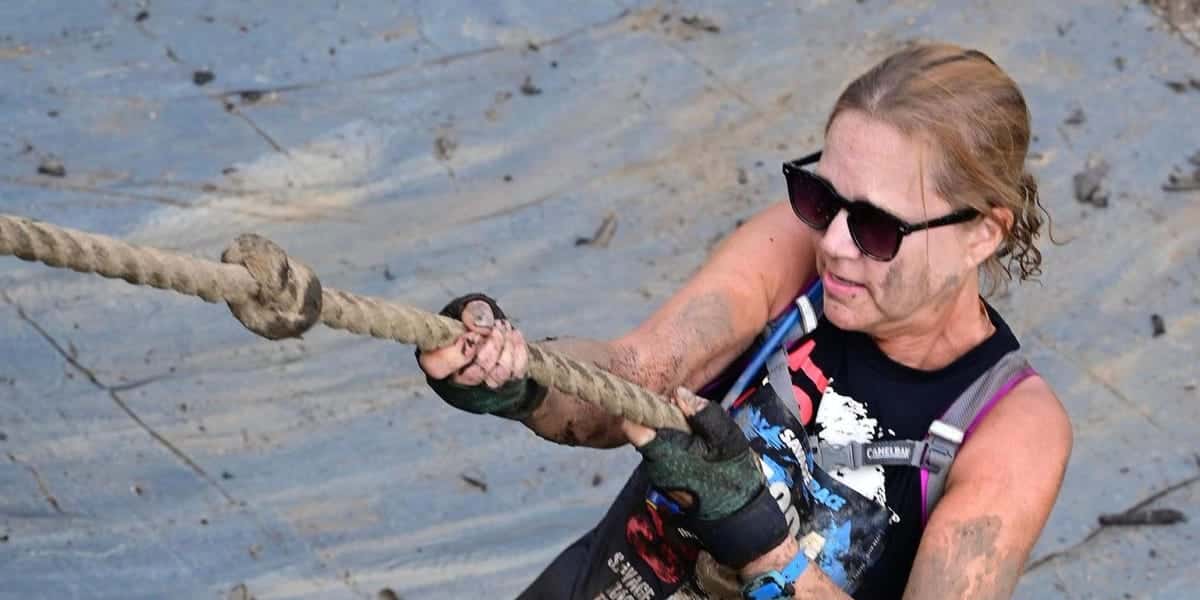
Hegseth’s stark language wasn’t just symbolic — real policies on body weight, gender roles in combat, and daily exercise routines are now rolling out across the armed forces. But what’s the science behind it all?
Here’s a closer look at what the new military standards mean, why they’re controversial, and how weight and performance actually intersect when it comes to combat readiness.
Jump to:
- Hegseth’s Fitness Mandate: New Rules for Every Service Member
- Combat Roles Face a Gender Shift: ‘Highest Male Standard Only’
- The Science Behind Weight Standards and Physical Readiness
- Impact on Troop Morale and Military Culture
- What This Means for Military Recruits and Veterans
- The Bottom Line: Strong Rhetoric, Lasting Changes
Hegseth’s Fitness Mandate: New Rules for Every Service Member
At a recent gathering of military brass in Quantico, Virginia, Secretary of War Pete Hegseth delivered a blunt message: “It is completely unacceptable to see fat generals and admirals in the halls of the Pentagon.”
Hegseth announced sweeping changes requiring all service members — from new recruits to four-star generals — to undergo height and weight checks and pass a physical training (PT) test twice per year.
“If the Secretary of War can do regular hard PT, so can every member of our joint force,” Hegseth declared. He also mandated daily physical training across the military, stating, “It should be common. Most units do that already.”
Combat Roles Face a Gender Shift: ‘Highest Male Standard Only’
Arguably the most controversial policy Hegseth introduced is the removal of gender-specific standards for physically demanding combat roles.
“This is not about preventing women from serving,” he said. “But when it comes to any job that requires physical power to perform in combat, those physical standards must be high and gender neutral.”
He clarified that only those — male or female — who meet elite physical benchmarks would be allowed into those roles. “If women can make it, excellent. If not, it is what it is.”
The Science Behind Weight Standards and Physical Readiness
While weight and military readiness can intersect, experts caution against using appearance alone to assess fitness levels.
“Body composition doesn’t always correspond with performance,” says Dr. Mark Stephenson, PhD, a kinesiology expert at George Mason University. “A soldier may have a high BMI but still crush fitness tests, especially in strength-based domains.”
The military has used various body-fat estimation methods over the years, but many have been criticized for inaccuracy and gender bias. Efforts to modernize testing — such as replacing outdated tape tests with body scans and performance-based evaluations — have been slowly rolling out.
As of early 2024, the Army Combat Fitness Test (ACFT) was already a step forward. It includes:
- Deadlifts
- Push-ups while raising the arms
- Medicine ball throws
- Sprint-drag-carry drills
- Leg tucks or planks
- Two-mile run
However, abandoning body-neutral assessments in favor of a strict external metric like weight alone could backfire physiologically and psychologically, some argue.
Impact on Troop Morale and Military Culture
Hegseth’s remarks, especially phrases like “dudes in dresses” and opposition to inclusive military policies, drew sharp reactions from within and outside the ranks.
Military leadership has struggled for decades to accommodate a diverse and capable force, while also maintaining discipline and effectiveness. Injuries, aging, operational stress, and genetics all influence body size — not just laziness or lack of training.
“Leadership by fear and public shaming rarely produces long-term improvement,” said a retired Marine colonel who asked to remain anonymous. “Policies need to be empowering and evidence-based, not headline-driven.”
What This Means for Military Recruits and Veterans
Future service members should anticipate more rigorous fitness enforcement, especially as the Department of War emphasizes “warrior-first” culture.
For older veterans or those transitioning out of service with injuries or disabilities, the rhetoric can sound dismissive — even hostile — to the sacrifices made in wearing the uniform.
Meanwhile, female troops competing for combat positions are now faced with an “all or none” benchmark. While some view this as a legitimate merit-based challenge, others argue it opens the door for systematic exclusion.
In contrast, nations like Israel and Norway employ tiered standards or mixed-gender training units with proven battlefield success.
The Bottom Line: Strong Rhetoric, Lasting Changes
Whether or not one agrees with Pete Hegseth’s delivery, his directives are reshaping the culture and expectations of the U.S. military.
Demanding twice-yearly fitness tests, shifting to male-elite combat standards, and purging controversial diversity programs mark a turning point — one that will ripple through recruitment, policy, public health, and international perception.
But as the military ramps up its physical expectations, the real test may be whether performance — not appearance — truly becomes the standard for military excellence.