Peptides are having a moment.
Two years after a controversial ban, these powerful compounds are suddenly dominating health conversations across social media, clinical practices, and policy debates.
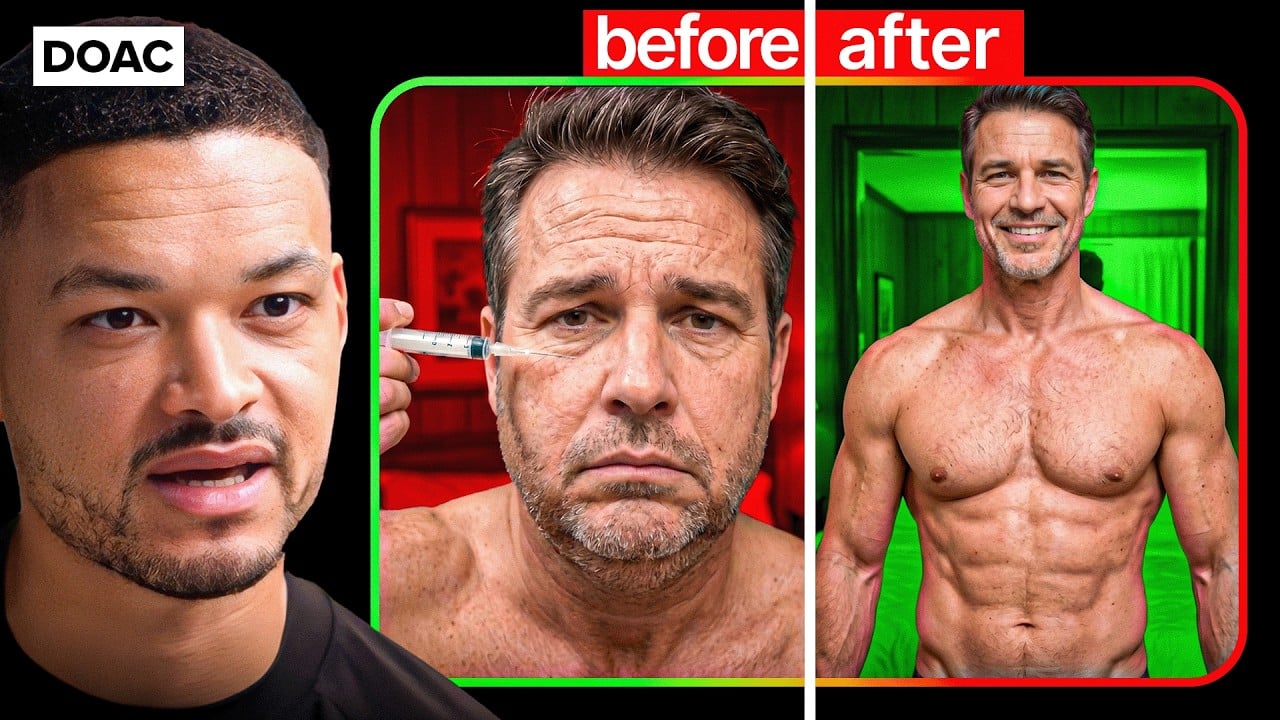
But what’s driving this resurgence—and more importantly, what can these “apps for your body” actually do for your health?
In a recent interview, Dr. Matthew Binnicker, a physician specializing in metabolic health and hormone optimization, revealed the remarkable potential of peptides and explained why both patients and pharmaceutical giants are racing to embrace them.
Jump to:
- The Forbidden Fruit Effect
- From Infertility to Complete Life Transformation
- Think of Peptides as Apps for Your Body
- Breaking News: Seven Peptides May Become Legal Again
- The Gray Market Problem
- How Are Peptides Actually Taken?
- The Billion-Dollar Battle Over Compounded GLP-1s
- What Does a Doctor Actually Take?
- Debunking Muscle-Building Myths
- Metabolic Disorders and Insulin Resistance
- Cognitive Enhancement for Peak Performance
- Anti-Aging Creams That Actually Work
- The Future Is Peptide-Powered
The Forbidden Fruit Effect
When peptides were banned in 2023, something unexpected happened. Instead of disappearing quietly, demand exploded.
I think what we’re seeing is the forbidden fruit effect because this was banned and all of a sudden, oh, well, why’d they ban it? Well, they wouldn’t have banned it if it weren’t working, right?
Dr. Binnicker attributes the renewed interest to several converging factors: the ban itself creating curiosity, viral spread through TikTok and short-form content, and new emphasis from administration leadership including RFK Jr.
Meanwhile, pharmaceutical companies have quietly signed multi-billion-dollar deals focused on peptide development aided by artificial intelligence.
From Infertility to Complete Life Transformation
When asked about peptides’ most incredible impact, Dr. Binnicker shared a powerful story about treating male infertility.
Young men with morbid obesity often develop low sperm counts because their endocrine systems become damaged. Traditional medications can stimulate testosterone production, but they don’t address root causes.
I just saw a patient last week who increased his sperm count 10 times over and is now in a normal range because he’s lost 100 pounds due to using tirzepatide, exercising, and improving his diet. And he has totally changed his life.
That transformation started with a single peptide: tirzepatide, a GLP-1 medication better known by brand names like Mounjaro.
Think of Peptides as Apps for Your Body
Dr. Binnicker offers a brilliant analogy for understanding peptides’ versatility.
Peptides are almost like an app on your phone. Imagine before we had apps. Like I’m old enough to remember trying to log on and do my banking online before we had apps, and gosh, it was so painful, right?
Just as smartphone apps can accomplish nearly any digital task, peptides can target specific biological processes with remarkable precision.
What Different Peptides Can Do
- GLP-1 drugs (semaglutide, tirzepatide): Powerful weight loss and metabolic improvement
- BPC-157: Gut healing, particularly effective for ulcerative colitis
- TB-500: Improved blood flow to injured areas, tissue repair
- GHK-Cu: Enhanced skin quality, increased collagen and elastin
- MOTS-c: Improved VO2 max and exercise tolerance (“exercise in a vial”)
- Semax: Enhanced cognitive function and focus
- Dihexa and Epitalon: Sleep regulation and recovery
The question isn’t, you know, what can peptides do? It’s kind of, well, what can’t they do?
Breaking News: Seven Peptides May Become Legal Again
On April 15th, significant news emerged. The FDA announced plans to consider removing seven peptides from restricted status back to legal availability in July.
Heavy hitters on that list include:
- BPC-157: Tissue repair and injury healing
- TB-500: Enhanced blood flow and cellular rebuilding
- KPV: Angiogenesis and tissue repair
- MOTS-c: Energy pathway optimization
- Dihexa, Epitalon, and Semax: Cognitive enhancement and sleep regulation
The Gray Market Problem
When peptides were banned, underground markets immediately filled demand gaps. Companies began selling “research use only” products—technically outside FDA jurisdiction.
It’s kind of like getting gas station sushi. Like, yeah, you can do it, but you don’t really know if it’s sushi and it may not end very well for you.
Without quality control or standardization, consumers face significant risks. Moving peptides back into legal 503A compounding frameworks would ensure safety and consistency.
How Are Peptides Actually Taken?
Here’s something crucial: most peptides cannot be taken orally.
Because peptides are chains of amino acids—essentially small proteins—your digestive system breaks them down just like chicken or any other protein source.
Your gut is designed to break up any sort of protein that you ingest orally into these little pieces. And so, if you were to say, I don’t know, drink some of, you know, this TB-500, your body wouldn’t be able to tell the difference between that and a piece of chicken.
Most peptides must be administered either subcutaneously (just under skin) or intramuscularly. Some exceptions exist, like intranasal Semax and topical GHK-Cu.
Injection Methods
Auto-injector pens (like Mounjaro) offer convenience with pre-measured doses—just pinch skin and press.
Traditional vials require drawing medication with syringes, allowing custom dosing flexibility but requiring more knowledge.
The Billion-Dollar Battle Over Compounded GLP-1s
Perhaps nothing illustrates peptides’ disruptive potential more than the fight over compounded tirzepatide.
Brand-name Mounjaro from Eli Lilly offers standardized weekly dosing. Compounded versions provide identical molecules with crucial differences: customizable dosing schedules and significantly lower costs.
Instead of doing a full dose once a week, you could do multiple mini doses throughout the week with this formulation and with this presentation of the medication.
This flexibility matters tremendously. Many patients experience returning hunger by week’s end on standard dosing, losing progress. Microdosing throughout the week prevents this while reducing side effects.
But there’s a massive financial incentive for pharmaceutical companies to eliminate competition.
If you spend however much money on this, you’re not giving it to Lilly. And so as a result, we have seen an unprecedented crackdown in the United States from the FDA in trying to shut down compounding pharmacies.
Dr. Binnicker noted FDA Commissioner Marty Makary has tweeted more about cracking down on compounded GLP-1 medications than about diabetes or heart disease combined during his tenure.
What Does a Doctor Actually Take?
Dr. Binnicker practices what he preaches—to a point. Currently, he uses only tirzepatide because it’s legally accessible.
Back uh couple of couple of months ago I was probably close to about 240 or so and I was into powerlifting, you know, I still am. But you know, it’s really great to be able to deadlift 500 lb, but then stairs become really hard when you’re trying to walk up.
At very low doses, he found tirzepatide incredibly potent and tolerable for supporting longevity goals.
If They Were Legal? His Wish List
I will tell you once you get over 35, man, that is brutal, all right? I sleep on my neck in a wrong way and I need like a freaking brace for like two weeks.
BPC-157 and TB-500 top his list for managing training injuries, particularly a finicky shoulder that sidelines him for weeks after heavy bench pressing.
GHK-Cu would address his persistent rosacea—facial redness that makes him look perpetually sunburned.
Debunking Muscle-Building Myths
Social media claims peptides build muscle effortlessly. Dr. Binnicker sets the record straight.
IGF-1 LR3—a longer-lasting version of growth hormone’s downstream effect—might contribute to muscle mass in higher doses. But independent muscle building? Not happening.
You still have to go to the gym. You still have to go to the gym, believe it or not. And guess what? I have so many patients that think that they can just take testosterone and just put on muscle naturally. And it doesn’t work that way.
Stimulus matters. Peptides optimize biology—they don’t replace fundamentals like training, nutrition, and recovery.
Metabolic Disorders and Insulin Resistance
For insulin sensitivity and glucose control, GLP-1 drugs remain unmatched.
These peptides slow gastric emptying, spreading food absorption over longer periods and preventing glucose spikes. This significantly increases insulin sensitivity.
Important caveat: Some peptides that boost growth hormone or IGF-1 can actually increase serum glucose—counterproductive for insulin sensitivity goals.
Cognitive Enhancement for Peak Performance
For podcasters, executives, or anyone needing sustained mental performance, intranasal Semax shows promise.
Originally studied in Russia following traumatic brain injuries and strokes, Semax appears to upregulate factors supporting cognition and neural connectivity.
It’s one of few peptides available intranasally—absorbed through mucous membranes directly where needed.
Anti-Aging Creams That Actually Work
Dr. Binnicker admits former skepticism about anti-aging products. But topical GHK-Cu changed his perspective.
This copper tripeptide naturally decreases with age. Applied topically, it regenerates skin quality by increasing collagen and elastin—proteins keeping skin taut and youthful.
Believe it or not, yeah, there are creams that can slow the process of aging at least from a visual standpoint when it comes to your skin.
Topical GHK-Cu remains legally available because it’s regulated differently than injectable forms.
The Future Is Peptide-Powered
Peptides represent a fundamental shift in medicine—from treating symptoms to optimizing biological systems with precision.
Whether July’s FDA decision relegalizes key compounds or pharmaceutical companies continue consolidating control, one thing seems certain: peptides aren’t going anywhere.
The question isn’t whether peptides will transform healthcare—it’s who will control access and at what cost.