Combat mobility training is gaining serious traction in fitness circles, and for good reason.
This unique approach combines functional movement patterns with flexibility work, creating a training style that builds both strength and range of motion simultaneously.
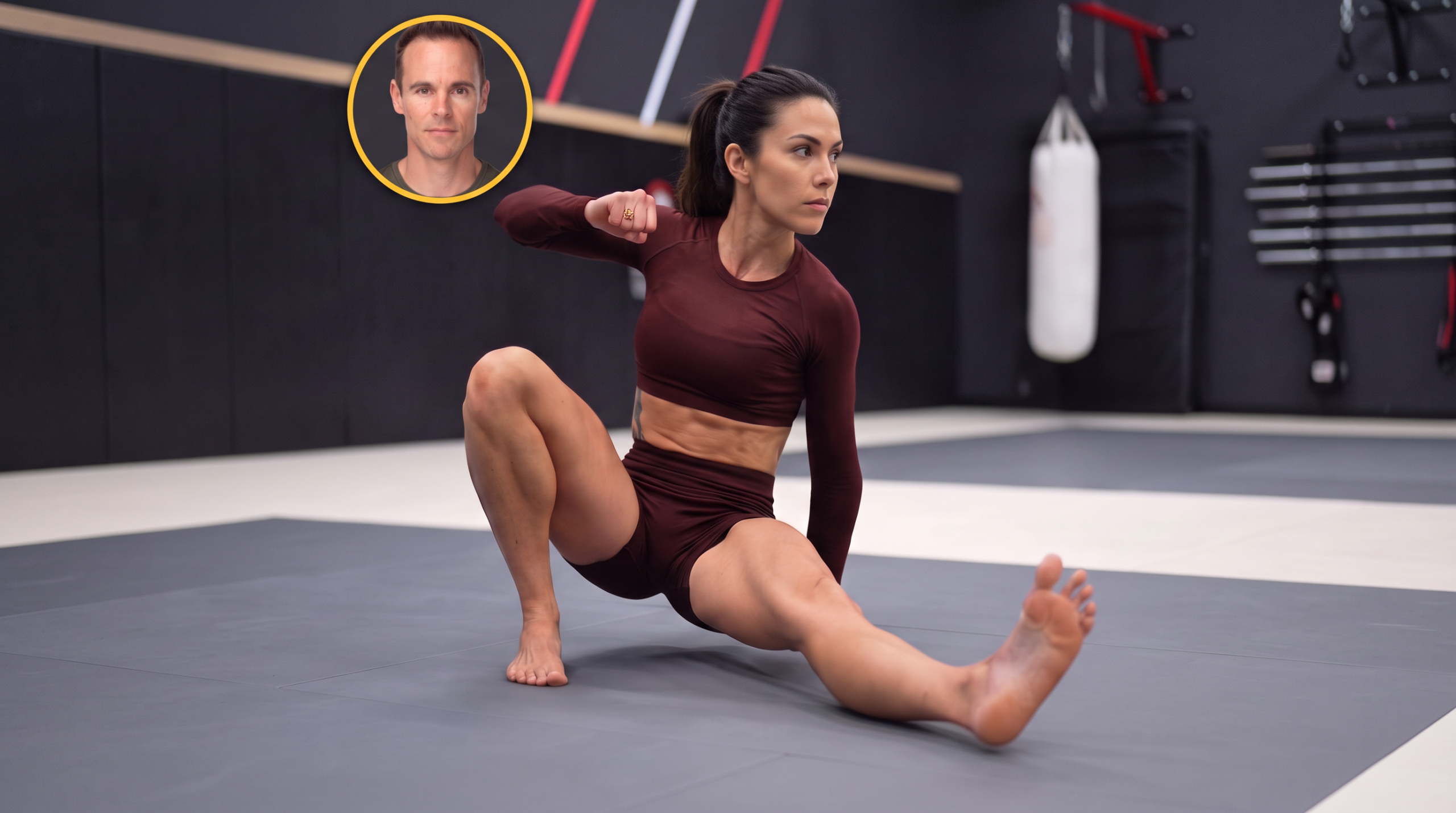
The workout sequence described breaks down complex, full-body movements into digestible coaching cues that anyone can follow along with at home.
Each exercise targets multiple muscle groups while improving joint mobility, balance, and body control in ways traditional strength training often overlooks.
Jump to:
The Modified Sumo Squat to Kneeling Position
This opening movement sets the foundation for everything that follows. Unlike traditional sumo squats, this variation emphasizes maintaining a vertical spine with shoulders stacked directly above hips.
The stance begins wider than hip-width, with toes turned out at 45 degrees. This positioning allows for deeper hip mobility work while protecting knee alignment.
As you lower into the squat, the knees track in line with the feet while actively pushing outward. This active external rotation engages the glutes and hip stabilizers more effectively than passive squatting.
The kneeling transition introduces controlled lowering of one knee to the ground. The calf and foot rest gently on the floor while hips and chest remain square to the front.
This isn’t just mobility work. It’s building the neuromuscular control needed for ground-based movements and quick directional changes.
The Hip Peel and Torso Rotation Sequence
Starting face-down on the floor, this movement challenges thoracic mobility and hip extension in ways most people desperately need.
One heel kicks up as the corresponding hip peels off the floor. The bent leg crosses over to touch down on the opposite side of the extended leg, creating a rotational load through the entire kinetic chain.
As the foot plants, the chest rises and the torso rotates to face the extended leg. The free arm reaches straight up while hips drive into extension.
This coordinated sequence mirrors movements found in martial arts and combat sports, where transitioning from prone to standing happens in a fraction of a second.
The return journey matters just as much. Lowering back down with control builds eccentric strength and reinforces proper movement patterning.
Mountain Climber to L-Sit Transition
This complex movement starts in a mountain climber position with one leg forward and the back leg fully extended, driving through the heel.
For those with longer limbs or limited mobility, stepping slightly to the side of the hand creates necessary clearance. This small adjustment prevents compensation patterns that undermine the exercise’s benefits.
The magic happens when the back leg lifts and swings through to extend directly forward. The same-side arm draws back, fist clenched and aligned with the chest.
In this L-sit position, hips and chest face forward with the extended leg in line with the hip—not drifting to the side. The foot flexes hard, activating the entire posterior chain.
Core engagement here is non-negotiable. The stabilizer hand stays close to the hip for support while the entire midsection works to maintain that strong L shape.
Fighter Stance Integration
From the L-sit, stepping back into a fighter stance bridges mobility work with combat-specific positioning. The free hand protects the face while the chest stays low.
This isn’t just aesthetic. It’s training the body to move efficiently between ground positions and defensive stances.
The sprawl follows naturally—hands plant, legs extend back with hips dipping, landing lightly on the toes. Arms remain straight throughout to maintain shoulder stability.
Wide Mountain Climber with Lat Stretch
Starting in a wide mountain climber, one foot plants next to the same-side hand. The knee aligns with toes while the back leg extends behind, resting on the knee.
Pushing back into a piked position shifts the movement’s focus entirely. Grabbing the opposite ankle and pulling away creates a deep lat stretch that most people rarely access.
Both legs and the stabilizer arm stay straight, creating a tripod of stability. This position stretches the lats, improves shoulder mobility, and reinforces proper scapular positioning simultaneously.
The alternating pattern ensures balanced development. One side stretches while the other stabilizes, then roles reverse.
Shinbox Transition to Backward Roll
This sequence represents the most technically demanding portion of combat mobility work. The shinbox position—both knees to one side, foot touching the opposite knee at 45 degrees—challenges hip internal and external rotation.
Lifting and placing both knees to the opposite side requires coordinated hip mobility. Staying tall through the crown of the head maintains proper spinal alignment.
Placing hands on either side of the front knee, the chest lowers toward the floor. As this happens, legs extend behind by sliding the knee underneath in perfect timing.
The Pivot and Extension
Pushing up from center, then lowering back down brings the same knee forward. The opposite leg lifts and extends, creating momentum to pivot hips square to the front in a seated position.
This flowing transition teaches the body to move efficiently through multiple planes of motion without pausing or resetting.
Backward Roll Execution
From the seated position, the arm of the shoulder being rolled over extends fully out to the side. Looking in the direction where feet will land is absolutely critical—this visual cue dictates movement quality and safety.
Rolling back over that shoulder with head tucked eliminates any neck weight. Zero pressure should touch the cervical spine.
The opposite arm acts as a tripod, supporting body weight and keeping hips squared off. Feet land first with hips still elevated, creating a brief pause before slowly lowering the hips and untucking the head.
Resetting requires tucking the head back into the chest or armpit, then hiking hips up using core strength. Using the tops of the feet allows smoother gliding as you roll carefully back over the same shoulder.
Why Combat Mobility Matters for Everyone
Traditional fitness programs often isolate muscle groups or movement patterns. Combat mobility takes the opposite approach, integrating strength, flexibility, and coordination into unified sequences.
Research consistently shows that functional movement training improves daily life activities more effectively than isolated exercises. Moving through multiple planes of motion while maintaining control builds resilience against injury.
These movement patterns also enhance proprioception—your body’s awareness of its position in space. Better proprioception translates to improved balance, quicker reflexes, and more confident movement in all activities.
Practical Applications Beyond Combat
You don’t need to train for fighting to benefit from combat mobility work. The skills developed transfer directly to:
- Playing with children or grandchildren on the floor without struggle
- Recovering from slips or trips before they become falls
- Maintaining independence as you age through improved ground-to-standing transitions
- Reducing chronic pain by addressing movement compensations and restrictions
- Enhancing sports performance across virtually any athletic discipline
Programming Combat Mobility Training
This style of training works best when performed 2-3 times per week. Each session can last anywhere from 15 to 30 minutes, depending on your current fitness level.
Beginners should focus on movement quality over speed. Take time to understand each position before flowing into the next transition.
As proficiency improves, gradually increase tempo while maintaining control. The goal isn’t to rush through movements but to move with fluid efficiency.
Combat mobility sequences also serve as excellent warm-ups before strength training or high-intensity workouts. They activate stabilizer muscles and prepare joints for loaded movement.
Common Modifications and Progressions
Not everyone will immediately access every position. That’s expected and perfectly fine.
For tight hips in the shinbox position, sitting on a yoga block or folded towel reduces the range of motion demand. Gradually decrease height as mobility improves.
The backward roll can be practiced first on a soft surface or with assistance. Focus on the head tuck and tripod arm positioning before adding momentum.
Mountain climber variations can start with hands elevated on a bench or box. This modification reduces hip flexion requirements while building strength and familiarity with the movement pattern.
Breathing and Mental Focus
Breath control separates good movement from great movement. Each transition should coordinate with intentional breathing—exhaling during exertion, inhaling during easier phases.
Combat mobility also demands present-moment awareness. Unlike scrolling through your phone on a treadmill, these sequences require complete mental engagement.
This mindful movement practice offers stress-reduction benefits similar to yoga while building functional strength and mobility.
Treating each session as moving meditation rather than just another workout deepens the practice and enhances both physical and mental benefits.