Nutrition advice on social media has become a minefield of contradictions, leaving millions confused and fearful of everyday foods.
One person with a PhD in aging and nutrition is cutting through the noise with five simple principles that transform how we think about diet and health.
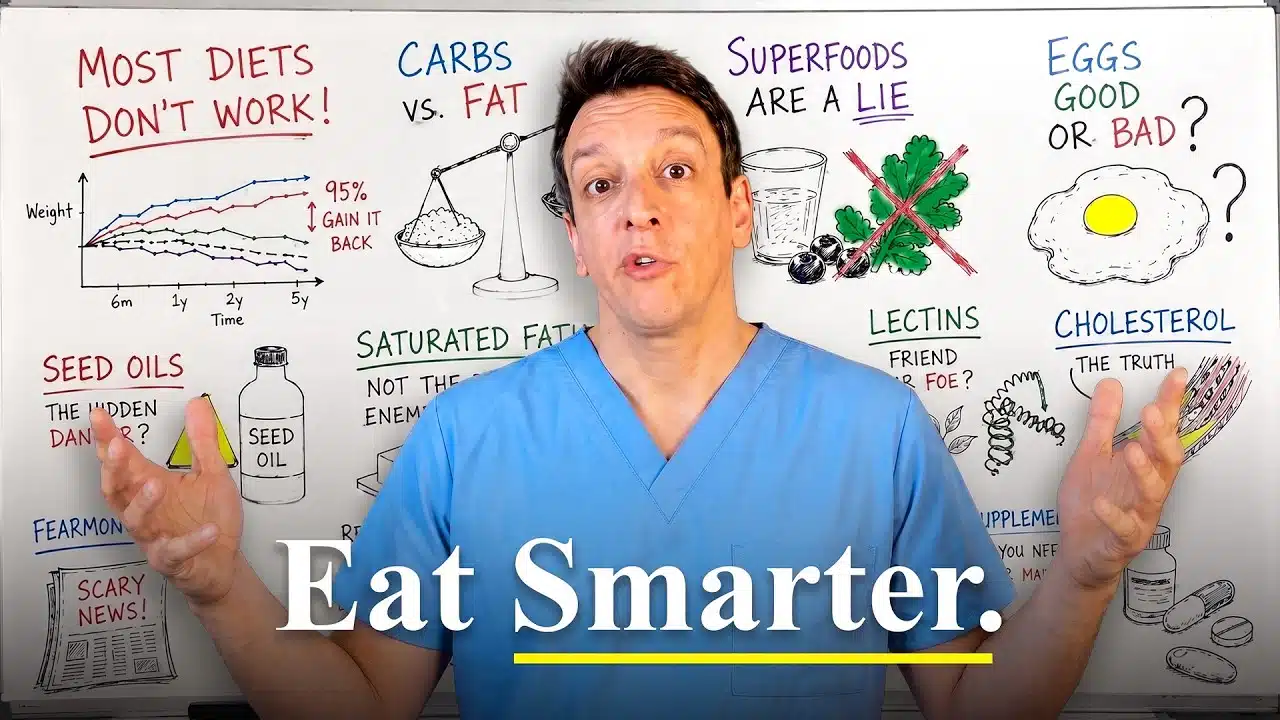
These aren’t complicated rules requiring constant calculation or restriction.
Instead, they offer a framework for making confident food choices while ignoring fear-mongering that dominates online nutrition discussions.
Jump to:
- Foods Are Complex Packages, Not Single Nutrients
- Why Bean and Oat Fears Don’t Hold Up
- The Carb and Fat Debate Misses the Point
- Protein Panic and Plant Versus Animal Wars
- Personal Intolerances Don’t Apply to Everyone
- Temporary Changes Aren’t Disease States
- Context Matters: Compared to What?
- Consistency Matters More Than Perfection
- Filling Nutritional Gaps
Foods Are Complex Packages, Not Single Nutrients
The first and perhaps most powerful principle challenges how most people evaluate foods. A food isn’t just one nutrient—it’s a combination of many different components packed together in a specific structure.
Take an avocado. It’s not simply fat. Avocados contain vitamins, minerals, zeaxanthin for eye health, and scopoletin with anti-cancer activity.
An apple delivers more than carbohydrates. You’re also consuming quercetin to fight inflammation, anthocyanins for heart health, different fiber types, and various vitamins.
Even olive oil—which many assume is pure fat—contains vitamins, carotenoids, and phytonutrients. Oleocanthal forms in olive oil and provides anti-inflammatory benefits.
The health effect of the whole food is the combination of the specific effects of each of these molecules. And trying to guess the health effect of a food from one isolated nutrient in a vacuum gets things wrong all the time.
This concept resembles the parable of blind men describing an elephant. Each touches one part and draws conclusions about the whole animal, missing the complete picture entirely.
Why Bean and Oat Fears Don’t Hold Up
Should everyone avoid beans because they contain lectins? This question misses the bigger picture completely.
Beans also deliver minerals, diverse fiber types, and phytonutrients. Research on actual human consumption reveals better blood sugar control, lower cholesterol, weight loss, reduced heart disease, and longer lifespans among people eating more beans.
Heat from normal cooking eliminates the problematic lectins anyway. Theory versus reality shows dramatically different pictures.
Oats face similar criticism for containing phytates, glyphosate, and other compounds. Yet hundreds of studies show people consuming oats experience lower blood pressure, reduced cholesterol, less body fat, and decreased diabetes risk.
I eat oats all the time, almost every day. I give them to my family. The children in my family eat oats all the time because the health effects we see are overwhelmingly positive.
The Carb and Fat Debate Misses the Point
Asking whether carbohydrates or fats are inherently good or bad represents fundamentally flawed thinking about nutrition.
Whole carbohydrate sources like fruit, vegetables, and legumes consistently show positive health effects. Highly refined carbohydrates like soda, gummy bears, and muffins demonstrate concerning outcomes.
The difference isn’t the carbohydrates themselves. It’s the complete package—fiber types, resistant starches, phytonutrients, minerals, and vitamins that processing often strips away.
The same logic applies to fats:
- Salmon, yogurt, kefir, dark chocolate, and olive oil contain saturated fat yet show positive health effects
- Butter, tallow, and large amounts of coconut oil demonstrate more concerning outcomes
- Saturated fat exists on a spectrum depending on food source and accompanying nutrients
The Seed Oil Controversy
Canola oil generates particular panic online due to omega-6 content, hexane, double bonds, and erucic acid. Systematic review of dozens of human studies tells another story entirely.
Research participants consuming canola oil show improved blood work, lower cholesterol, positive triglyceride changes when they occur, reduced liver fat, decreased heart disease mortality, lower cancer death rates, and reduced overall mortality—even among people cooking with canola oil after adjusting for exercise and smoking.
Protein Panic and Plant Versus Animal Wars
Endless debates rage about optimal protein intake: 0.8, 1.1, or 1.45 grams per kilogram body weight? Most Westerners already consume plenty of protein without counting grams.
The plant versus animal protein battles create tribal thinking that obscures actual evidence. Fatty fish like salmon, fermented dairy like kefir, legumes including beans and lentils, and nuts all demonstrate excellent health outcomes.
Some come from plants, others from animals. Source doesn’t determine health impact—the complete nutritional package does.
Personal Intolerances Don’t Apply to Everyone
The second fundamental principle addresses how individual conditions create unnecessary fear for healthy populations.
Some people have legitimate gluten intolerance, including celiac disease. That doesn’t make gluten problematic for 99% of humans.
Certain individuals form kidney stones composed of oxalates and need specific dietary strategies. Healthy people without stone formation don’t need oxalate restriction.
IBS and IBD sufferers require personalized approaches. Those limitations don’t extend to individuals without gastrointestinal conditions.
Individual Responses Vary Significantly
Eggs illustrate personal variation perfectly. Some people experience cholesterol spikes from dietary cholesterol. Most see modest increases around seven points.
Salt sensitivity differs dramatically between individuals. Blood pressure response to sodium varies enough to warrant personalization based on actual measurements.
Temporary Changes Aren’t Disease States
The third principle explains why glucose spike panic confuses millions unnecessarily.
Bodies constantly change through homeostasis. Blood pressure and heart rate increase during exercise. Fats enter bloodstream after meals, raising triglycerides. Carbohydrates elevate blood sugar temporarily.
These acute changes differ fundamentally from chronic elevation. High fasting blood pressure indicates hypertension. Elevated fasting triglycerides or glucose signal metabolic problems.
A blood test going up after an activity or during an activity is not the same as that blood value being high all the time in the context of a disease.
Context Matters: Compared to What?
The fourth principle eliminates false dichotomies about “good” and “bad” foods. Everything in nutrition exists on a spectrum of comparison.
Any food appears beneficial or harmful depending on alternatives. Butter compared to white bread shows minimal heart disease difference. Butter versus olive oil, brown rice, or steel-cut oats reveals significant health disparities.
Thinking in absolutes makes people vulnerable to manipulation. Contextual comparison provides accurate assessment.
Consistency Matters More Than Perfection
The fifth principle offers the most liberation. Health outcomes reflect consistent eating patterns, not occasional indulgences.
Having potato chips at family gatherings or ice cream with children on weekends doesn’t undermine an otherwise healthy diet. Problems arise from daily consumption of ultra-processed foods.
Traditional Mediterranean diet demonstrates this principle with extensive evidence:
- Reduced heart disease, diabetes, and certain cancers
- Lower mortality rates
- Better mental health outcomes
- Based on fruits, vegetables, legumes, whole grains, olive oil, fish, seafood, dairy, and lean meats
- Low in ultra-processed foods
This serves as a flexible template, not rigid prescription. Personalization for preferences, intolerances, or dietary philosophies works perfectly within these principles.
Filling Nutritional Gaps
Most healthy adults eating diverse diets obtain all necessary macronutrients, micronutrients, vitamins, and minerals without supplementation.
Specific dietary patterns require attention to potential deficiencies. Vegan diets need B12 supplementation. People avoiding fish, seafood, dairy, and reducing salt should ensure adequate iodine intake.
Regular blood work, blood pressure monitoring, and physical assessment enable data-driven personalization. This approach proves far more powerful than memorizing individual nutrients or following restrictive rules.
When someone promotes fear around isolated molecules, ask what the whole elephant looks like. When spikes after eating cause concern, consider long-term significance and disease-specific contexts. Occasional treats fit comfortably within consistently healthy patterns.
These five principles transform nutrition from a source of anxiety into straightforward decision-making. One viewer reported being “terrified of her lunch” after consuming contradictory advice from multiple influencers. Understanding these basic concepts eliminated imaginary fears and restored peaceful eating.
That transformation represents nutrition’s proper role—supporting health and wellbeing without generating constant panic over foods that pose no actual threat.