Spending hours perfecting pull-ups and crushing dips might be sabotaging your posture.
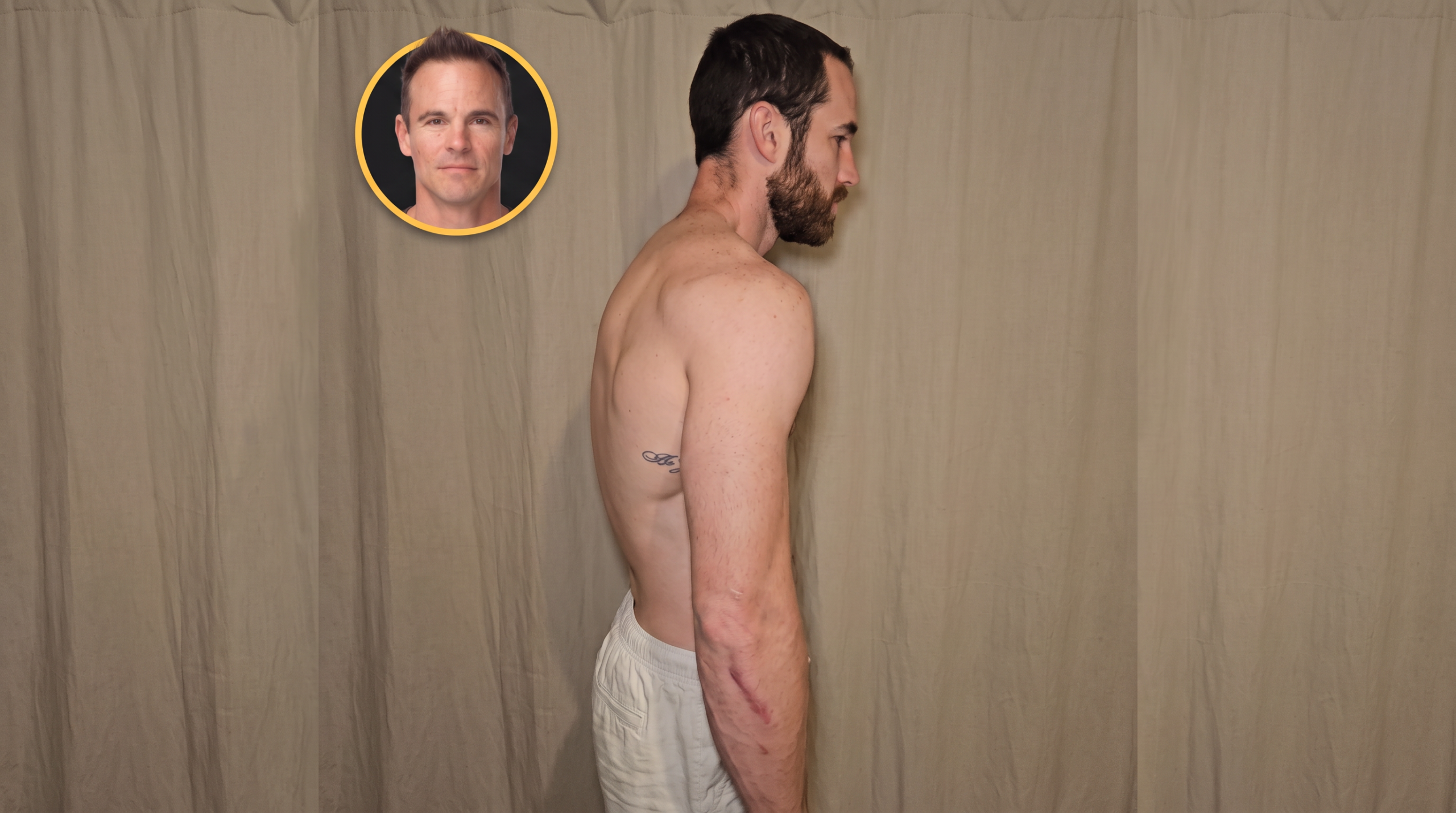
These classic exercises build impressive strength, but they share a hidden flaw that can slowly pull your shoulders forward into a rounded, hunched position.
The solution lies in a movement pattern many gym-goers overlook entirely—and adding it could be the difference between building a balanced physique and developing chronic shoulder issues.
Here’s what you need to know about horizontal pulling and why your training program can’t afford to skip it.
Jump to:
- The Pull-Up and Dip Problem Nobody Talks About
- Why Your Shoulders Need Opposing Forces
- The Missing Movement Pattern
- Signs Your Program Needs More Horizontal Pulling
- Beyond Aesthetics: Functional Consequences
- Creating Balanced Programming
- Technique Matters More Than Weight
- Prevention Beats Correction
- Sources
The Pull-Up and Dip Problem Nobody Talks About
Pull-ups and dips are staples in strength training routines worldwide. They build muscle, require minimal equipment, and deliver results.
But both movements share a common mechanical action: they rotate your shoulders inward. Pull-ups hammer the lats, while dips target the pecs—and both muscle groups are powerful internal rotators of the shoulder joint.
When these muscles become dominant without opposition, they gradually pull your shoulders forward. Over time, this imbalance manifests as rounded shoulders, a forward head position, and that characteristic “hunched” look.
The anatomical reality is straightforward: the latissimus dorsi and pectoralis major both perform internal rotation of the humerus. Strengthen them without balancing forces, and your posture pays the price.
Why Your Shoulders Need Opposing Forces
Muscles work in pairs and groups, creating balance around joints. When one set becomes significantly stronger than its opposing group, the stronger muscles win the tug-of-war.
Your shoulder girdle relies on equilibrium between muscles that pull forward and those that pull back. Neglect one side, and mechanical dysfunction follows.
The muscles that suffer most from this imbalance include:
- Rhomboids: responsible for pulling shoulder blades together
- Middle trapezius: stabilizes and retracts the scapulae
- Posterior deltoids: provide external rotation force
- Lower trapezius: depresses and stabilizes shoulder blades
These muscles become lengthened and weak when constantly overpowered by dominant lats and pecs. The result isn’t just aesthetic—it’s functional.
Weak scapular retractors compromise shoulder stability during pressing movements, increase injury risk, and create compensatory movement patterns that affect everything from bench press form to daily activities like reaching overhead.
The Missing Movement Pattern
Horizontal pulling exercises specifically target those neglected upper back muscles that counteract shoulder internal rotation.
Unlike pull-ups (vertical pulling), horizontal pulls involve rowing motions where you pull resistance toward your torso while your upper arms move roughly perpendicular to your body.
This movement pattern emphasizes scapular retraction—the act of squeezing your shoulder blades together—which directly opposes the forward shoulder pull created by lats and pecs.
Best Horizontal Pulling Exercises
Programming horizontal pulls doesn’t require fancy equipment or complicated techniques. These movements deliver results:
- Barbell rows: classic mass builder for the entire upper back
- Dumbbell rows: allow unilateral training and address imbalances
- Cable rows: provide constant tension throughout the movement
- Inverted rows: bodyweight option that mirrors the pull-up
- Face pulls: target rear delts and scapular retractors with precision
- Chest-supported rows: eliminate lower back stress and isolate upper back
Each variation offers unique benefits, but all share the fundamental horizontal pulling pattern that strengthens scapular retractors.
Programming Horizontal Pulls Effectively
Balance doesn’t mean equality. Because vertical pressing (overhead press) and vertical pulling (pull-ups) already exist in most programs, horizontal pulls often need extra volume to compensate for accumulated forward shoulder stress.
A practical ratio to follow: for every vertical push or pull, include at least one horizontal pull. If you’re performing pull-ups and dips regularly, consider a 1:1.5 or even 1:2 ratio favoring horizontal pulling.
Frequency matters too. Spreading horizontal pulling across multiple sessions throughout the week provides consistent stimulus for those postural muscles without overtaxing them.
Signs Your Program Needs More Horizontal Pulling
Your body provides clear feedback when muscle imbalances develop. Watch for these indicators:
- Shoulders visibly rounded forward when standing relaxed
- Difficulty maintaining upright posture without conscious effort
- Shoulder discomfort during or after pressing exercises
- Limited external rotation range of motion
- Upper back feels chronically tight or knotted
- Pronounced forward head position
These symptoms don’t appear overnight. They develop gradually as muscular imbalance compounds week after week, month after month.
Catching imbalances early makes correction straightforward. Waiting until pain or significant dysfunction appears requires more intensive intervention.
Beyond Aesthetics: Functional Consequences
Rounded shoulders aren’t just a cosmetic concern. This postural deviation creates mechanical disadvantages that affect athletic performance and daily function.
Shoulder impingement risk increases when the humeral head sits in abnormal position relative to the scapula. Rotator cuff muscles work overtime compensating for unstable scapular positioning.
Bench press strength suffers because proper scapular retraction—essential for stable pressing—becomes difficult when retractor muscles are weak. The same applies to overhead pressing.
Even neck pain can stem from forward shoulder positioning, as the head drifts forward to maintain eye level, straining cervical muscles and compressing cervical discs.
The Breathing Connection
Rounded shoulders limit thoracic extension, reducing rib cage mobility. This restriction affects breathing mechanics, particularly during intense exercise when oxygen demands spike.
Athletes with pronounced forward shoulder posture often rely excessively on accessory breathing muscles (neck and upper traps) rather than optimal diaphragmatic breathing. This creates additional neck tension and reduces respiratory efficiency.
Creating Balanced Programming
Fixing the imbalance requires intentional program design. Simply adding random rows won’t necessarily solve the problem if volume, intensity, and exercise selection remain unbalanced.
Start by auditing your current program: Count sets per week for each movement pattern. Include vertical pushes (overhead press, dips), vertical pulls (pull-ups, lat pulldowns), horizontal pushes (bench press variations), and horizontal pulls (row variations).
If horizontal pulling volume significantly lags behind other patterns—especially vertical pulling—you’ve identified the gap.
Sample Balanced Upper Body Framework
A balanced weekly upper body program might include:
- 8-12 sets horizontal pulling (various row variations, face pulls)
- 6-9 sets vertical pulling (pull-ups, pulldowns)
- 6-9 sets horizontal pressing (bench press variations)
- 4-6 sets vertical pressing (overhead press variations)
- 3-6 sets direct rear delt and external rotation work
Notice horizontal pulling receives the highest volume. This deliberately counteracts modern lifestyle factors (sitting, phone use, driving) that already bias shoulders forward.
Technique Matters More Than Weight
Horizontal pulling exercises only deliver benefits when performed correctly. Poor technique—common when chasing heavy weight—defeats the purpose entirely.
The key technical element is scapular retraction. Each rep should include a deliberate squeeze, pulling shoulder blades together at the end of the pulling motion.
Using momentum, excessive body English, or incomplete range of motion might move more weight, but it won’t strengthen the exact muscles responsible for maintaining proper shoulder position.
Control the eccentric (lowering) phase. Allow your shoulder blades to protract (spread apart) as you extend your arms, then actively retract them as you pull. This full range scapular motion maximizes training effect for postural muscles.
Prevention Beats Correction
Addressing muscle imbalances before they create postural problems requires far less effort than correcting established dysfunction.
If you currently train pull-ups and dips without equivalent horizontal pulling volume, start incorporating rows and face pulls immediately. Your future shoulder health depends on it.
For those already experiencing rounded shoulders, the path forward involves temporarily emphasizing horizontal pulling even more aggressively while potentially reducing vertical pulling and pressing volume until balance restores.
Consistency delivers results. A few weeks of balanced training won’t undo years of imbalanced loading, but several months of properly programmed horizontal pulling can produce remarkable postural improvements.
Your shoulders will thank you—not just in how they look, but in how they feel and function for decades to come.
Sources
- Physiopedia – Latissimus Dorsi anatomy and shoulder internal rotation
- American Council on Exercise (ACE) – Muscle imbalances and postural compensation
- National Academy of Sports Medicine (NASM) – Scapular retraction and horizontal pulling patterns
- Journal of Physical Therapy Science – Muscle imbalances and shoulder positioning studies