Some of the best muscle builders ever invented have quietly vanished from modern gyms.
In a recent YouTube video, the fitness creator behind the Muscle Monsters channel dragged five of them back into the spotlight.
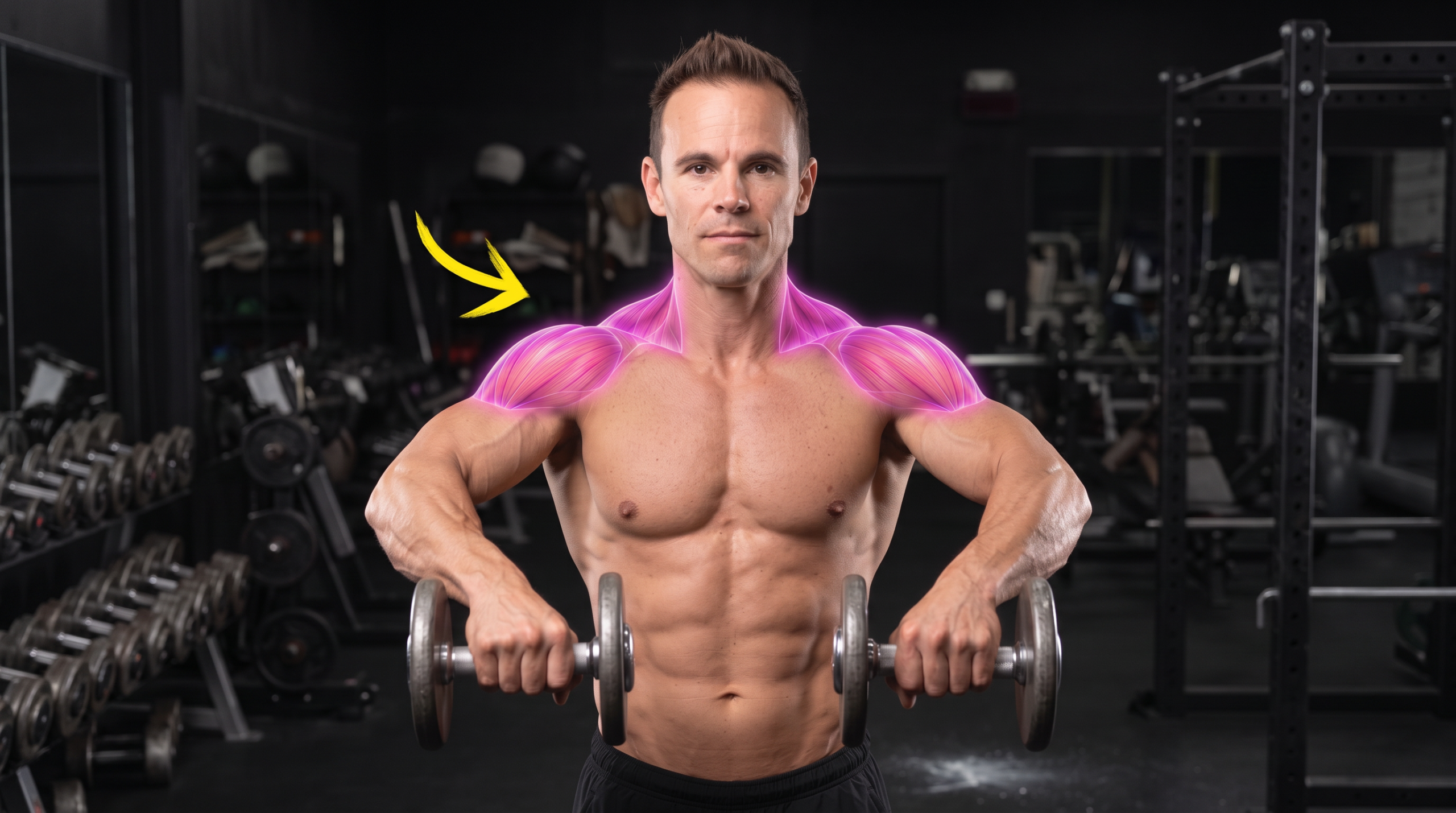
One, he says, deserves credit for much of his own shoulder and trap development.
Another looks like a knee-wrecker, yet it targets a quad muscle that regular squats largely miss.
Ready to find out which old-school lifts are worth reviving?
Jump to:
1. Dumbbell Pullover: A Chest Move in Disguise
Golden-era bodybuilders like Arnold used pullovers to build their chests. Some even believed the move could expand the rib cage.

If you want something simple that actually works, this is one of the most effective tools I’ve used to build strength, conditioning, and endurance without needing a full gym setup.
- Full-body training with one weight using swings, squats, and presses
- Solid cast iron build that feels stable and lasts for years
- Comfortable grip that makes high-rep workouts easier to handle
Now, we know that last part is untrue, but what about building muscle?
Today, pullovers get filed under back training. He argues that label sells them short, pointing to a 2018 EMG study reporting substantially greater pec activation than lat activation.
Anatomy offers a plausible explanation. Lower chest fibers help extend the shoulder when arms are overhead, so they stretch under load as the dumbbell lowers behind your head.
Keep in mind that muscle activation on an EMG does not automatically equal muscle growth. Think of the pullover as a complement to presses, not a replacement.
The Tension Trick
Gravity supplies the resistance, so the set gets easier as the dumbbell travels directly over your chest.
- Stop slightly short of the top position
- Keep the working range where the load feels heaviest
- Expect both chest and lats to contribute
2. Upright Row: Rescued From Its Bad Reputation
This was once the go-to move for bigger shoulders and traps. Then came the warnings.
Narrow-grip versions combine shoulder elevation with internal rotation, which can irritate shoulders, especially when elbows climb too high. Plenty of lifters ditched the exercise entirely.
If you want something simple that actually works, this is one of the most effective tools I’ve used to build strength, conditioning, and endurance without needing a full gym setup.
- Full-body training with one weight using swings, squats, and presses
- Solid cast iron build that feels stable and lasts for years
- Comfortable grip that makes high-rep workouts easier to handle
With a few simple modifications, upright rows can still be a great exercise for building your shoulders and traps.
He cites a 2013 study comparing three grip widths. Wider grips generally increased activation of the lateral delts and traps.
His Dumbbell Version
Dumbbells let your arms move freely rather than locking into a fixed bar path. He compares the result to a controlled dumbbell high pull.
- Hold a dumbbell in each hand, keeping weights close to your body.
- Pull upward, driving elbows out to the sides so the dumbbells drift apart.
- Near chest height, slightly externally rotate your shoulders, bringing wrists level with elbows.
Because shoulders are not forced into internal rotation throughout, some lifters may find this version more comfortable. Use a controlled weight and stay in a pain-free range.
3. Sissy Squat: The Quad Builder That Looks Scary
Yes, it looks like it would destroy your knees. Still, it may train a part of your quads that traditional squats neglect.
Your quadriceps contain four muscles. Three work heavily in conventional squats, but rectus femoris plays by different rules.
Unlike the other three, the rectus femoris crosses both your hip and knee joints.
Hips and knees move together in a regular squat, so this muscle barely changes length. He notes research showing relatively little rectus femoris growth from conventional squats compared with the other quad muscles.
If you want something simple that actually works, this is one of the most effective tools I’ve used to build strength, conditioning, and endurance without needing a full gym setup.
- Full-body training with one weight using swings, squats, and presses
- Solid cast iron build that feels stable and lasts for years
- Comfortable grip that makes high-rep workouts easier to handle
Keeping hips relatively extended and moving mostly at the knees challenges the muscle at longer lengths.
Make It Practical
- Use a sissy squat machine, which secures your lower legs and removes most balance demands
- Begin with a comfortable range, then gradually deepen it
- Expect bodyweight to feel surprisingly brutal
- Hold a weight plate against your chest once bodyweight gets easy
4. JM Press: Triceps Hybrid Worth Trying
Picture a close-grip bench press crossed with a skull crusher. Named after powerlifter JM Blakely, it was designed to strengthen triceps for bigger bench numbers.
Close-grip bench presses and dips load both shoulders and elbows, so chest and front delts share the work. The JM press limits shoulder movement and shifts emphasis to elbow extension and flexion.
The result is an exercise that combines some of the loading potential of a press with the more direct triceps emphasis of an extension.
His tweak: swap the free barbell for a Smith machine. The fixed bar path adds stability, which helps most when approaching failure.
Start light. The movement takes some getting used to and places substantial demands on your elbows.
5. Good Morning: Not the Spine-Wrecker Its Reputation Suggests
Lifters abandoned this one over fears about their lower backs. Despite the intimidating look, it can build hamstrings, glutes and spinal erectors.
If you want something simple that actually works, this is one of the most effective tools I’ve used to build strength, conditioning, and endurance without needing a full gym setup.
- Full-body training with one weight using swings, squats, and presses
- Solid cast iron build that feels stable and lasts for years
- Comfortable grip that makes high-rep workouts easier to handle
Mechanically, it resembles a Romanian deadlift. The difference is bar position: across your upper back like a squat, rather than hanging in your hands.
- Hamstrings and glutes: control the descent, then drive you upright
- Spinal erectors and upper back: hold position and resist excessive rounding
Just because an exercise places stress on your lower back doesn’t automatically make it dangerous.
Spinal erectors are muscles, and progressive training strengthens them like any other. Managing that stress is the key.
Bar placement means you generally need far less weight than with an RDL. Start light, master the hip hinge, then add load gradually.
He is clear that good mornings are not necessarily better than Romanian deadlifts. They simply offer another effective option for the posterior chain.
Putting These Forgotten Lifts to Work
While these five exercises might have fallen out of favor, it doesn’t mean they can’t be effective tools for building muscle.
Programming matters as much as exercise selection. For a structured option, he points to his free Mass 40 program.
It is a six-week training guide built for men over 40 who want maximum muscle growth without endless gym hours. Access comes instantly after entering a name and email via the video description.
If you want something simple that actually works, this is one of the most effective tools I’ve used to build strength, conditioning, and endurance without needing a full gym setup.
- Full-body training with one weight using swings, squats, and presses
- Solid cast iron build that feels stable and lasts for years
- Comfortable grip that makes high-rep workouts easier to handle
As always, check with a qualified healthcare provider before starting a new training program, especially if you have shoulder, knee or back concerns.