Legendary strongman George Hackenschmidt could reportedly jump over chairs at age 80.
At 56, he cleared a 4’6″ board ten times in succession.
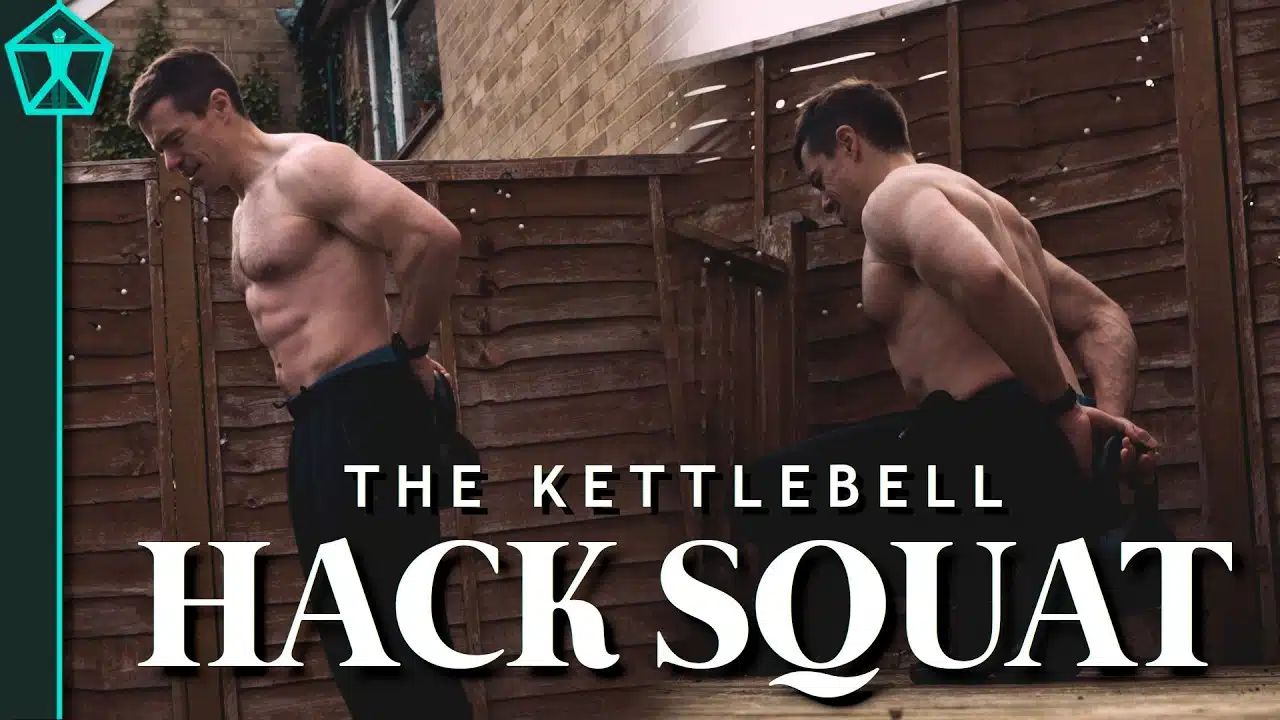
His secret weapon? An exercise most modern gyms have completely forgotten—one that builds explosive power, bulletproof knees, and athletic longevity like nothing else.
Popular fitness YouTuber The Bioneer recently explored why the kettlebell hack squat deserves a comeback in modern training programs.
Jump to:
- The Forgotten Exercise That Built a Legend
- Why This Movement Trains You Differently
- The Barbell Problem
- The Kettlebell Solution
- How to Perform the Kettlebell Hack Squat
- Building Up Safely: The Hindu Squat Progression
- Why High Reps Still Build Serious Strength
- Advanced Variation: The Sissy Squat
- The VMO Advantage: Aesthetics Meets Athletics
- Training for Longevity, Not Just Performance
- Tendon Strength: Your Injury Insurance Policy
- Ankle and Foot Benefits
- The Dumbbell Alternative
- Why Modern Training Needs Old-School Movements
The Forgotten Exercise That Built a Legend
Hackenschmidt once lifted a small horse and held numerous strength records, including one for the hack squat—an exercise many associate with his name.
Ironically, he probably didn’t invent it. Evidence suggests the movement predated him, and the name likely derives from “hacke,” the German word for heel, rather than the strongman himself.
Nevertheless, Hackenschmidt popularized this movement throughout the strength training world. Many experts believe this single exercise granted him those extraordinary athletic abilities well into old age.
Why This Movement Trains You Differently
The hack squat strengthens muscles and movement patterns that conventional exercises miss entirely.
It’s brilliant for developing the VMO (vastus medialis oblique)—one of the muscles most associated with athletic performance. It builds incredibly strong, resilient knees that maintain their integrity as you age.
Despite being one of the most functional squat variations available, it’s practically extinct in commercial gyms.
The Barbell Problem
Traditional hack squats involve lifting a barbell from behind your body—an awkward, fiddly setup that creates multiple barriers.
First, you need gym access and a barbell. Then you must squat down awkwardly, grip the bar behind you, and stand back up while maintaining balance.
Dumbbells offer an alternative, but they’re equally awkward. The Bioneer discovered this firsthand:
It doesn’t look it until you try and pass a dumbbell around behind yourself and then you realize that there’s nothing to grip onto and you drop it and shatter a floor tile.
These old-time exercises emerged during an era without power racks, meaning every lift started from floor level. Modern training has abandoned many of these movements in favor of “optimized” alternatives.
But optimization comes with a cost—easier movements mean less functional carryover to real-world athleticism.
The Kettlebell Solution
Kettlebells transform this awkward movement into an accessible home exercise.
The large handle makes positioning behind your body significantly easier. You don’t need massive loads—higher rep ranges work exceptionally well for building both strength and athleticism.
Perfect for home training without requiring expensive equipment or gym memberships.
How to Perform the Kettlebell Hack Squat
The execution is surprisingly straightforward once you understand proper positioning.
- Move your kettlebell around behind your body, gripping with both hands
- Pull your arms slightly apart to raise the kettlebell so it rests against your glutes
- Rise onto your toes
- Squat straight down while staying on your toes
- Lean forward slightly to assist with balance
- Push straight back up to standing
Toes can point outward slightly, but knees must track in line—no inward caving. Some prefer standing on heels at the top and rising onto toes at the bottom, similar to Hindu squat variations.
Start with lighter weight than you think necessary. This movement challenges balance and coordination more than anticipated.
Building Up Safely: The Hindu Squat Progression
If the loaded version feels unstable or your knees aren’t ready, bodyweight progressions build necessary strength safely.
Hindu squats—performed entirely on your toes—develop knee strength and balance without external load. You can either stay on toes throughout the movement or return to heels at the top.
This variation strengthens knees and improves proprioception, ensuring your joints won’t “explode” when progressing to weighted versions.
For those with current knee weakness, holding onto support while performing partial ranges creates an even gentler introduction. These modifications excel as rehabilitation tools.
Why High Reps Still Build Serious Strength
Traditional Hindu squats often involve hundreds of repetitions—a time commitment many people resist.
Kettlebell hack squats add just enough resistance to create overload without requiring barbell-level loading. Training in the 20-30 rep range builds both strength and size when taken near failure.
The metabolic buildup and pump from higher rep ranges translate directly to muscle growth, regardless of outdated training dogma suggesting otherwise.
Advanced Variation: The Sissy Squat
For those seeking greater challenge, sissy squats represent the next progression level.
Despite the unfortunate name (actually referring to Sisyphus pushing his boulder uphill), this movement involves leaning backward during toe squats. It creates tremendous quad stretch and force generation through increased leverage.
Balance demands make it extraordinarily difficult—another reason hack squats serve as an ideal middle ground.
The VMO Advantage: Aesthetics Meets Athletics
The vastus medialis oblique creates that coveted “teardrop” appearance on the inner thigh.
Beyond aesthetics, this muscle dramatically improves sprinting speed and jumping height. Research demonstrates its role in protecting knee joints and reducing pain.
Consider your position at the bottom of a hack squat: knees over toes, leg bent, weight on the ball of your foot. This mirrors exactly where your body positions itself during sprinting and single-leg jumping.
Generating power and absorbing shock in this position translates directly to athletic performance in ways traditional squats cannot replicate.
Training for Longevity, Not Just Performance
Even non-athletes benefit enormously from this movement pattern.
Most people squat on their toes during daily activities—picking objects off floors, playing with children, gardening. This position allows center of gravity to stack more efficiently than deep heel squats.
Training this pattern ensures you’ll maintain mobility and strength for decades. Moving well in your 70s and 80s requires preparing your body now.
Tendon Strength: Your Injury Insurance Policy
Tendons outperform muscle in durability—they’re your long-term protection against injury and degradation.
Hack squats create significant knee tendon emphasis by extending knees forward, increasing lever arm length. This controlled stress strengthens connective tissue in ways that protect joints as you age.
Ankle and Foot Benefits
Training on your toes develops ankle stiffness and reduces hysteresis—the energy lost during ground contact.
Better energy return means faster running and sprinting. Stronger ankles mean dramatically reduced injury risk during landing and cutting movements.
The Dumbbell Alternative
No kettlebell? Two dumbbells hanging at your sides create similar training effects.
This variation builds excellent quad strength but slightly reduces knee-specific loading because weight positions closer to joints, shortening lever arms. You’ll need heavier loads for equivalent joint strengthening.
For pure knee and tendon development, kettlebell positioning behind your body remains superior.
Why Modern Training Needs Old-School Movements
Contemporary strength training prioritizes efficiency and isolation—valuable qualities, but incomplete.
These “awkward” historical exercises developed legendary athletes for good reason. They trained balance, coordination, tendon strength, and movement patterns that modern variations neglect.
Hackenschmidt jumping over chairs at 80 wasn’t genetic luck. It resulted from decades of training movements that built comprehensive, functional strength.
Adding kettlebell hack squats won’t replace your main strength work, but incorporating them addresses gaps conventional training leaves wide open—particularly for knee health, VMO development, and athletic movement quality.
Whether chasing performance goals or simply wanting to move well for life, this forgotten exercise deserves reconsideration in modern programming.