Frustrated because deadlifts and rows aren’t building thick, impressive traps?
You’re not alone—and there’s a specific reason traditional exercises might be failing your upper back.
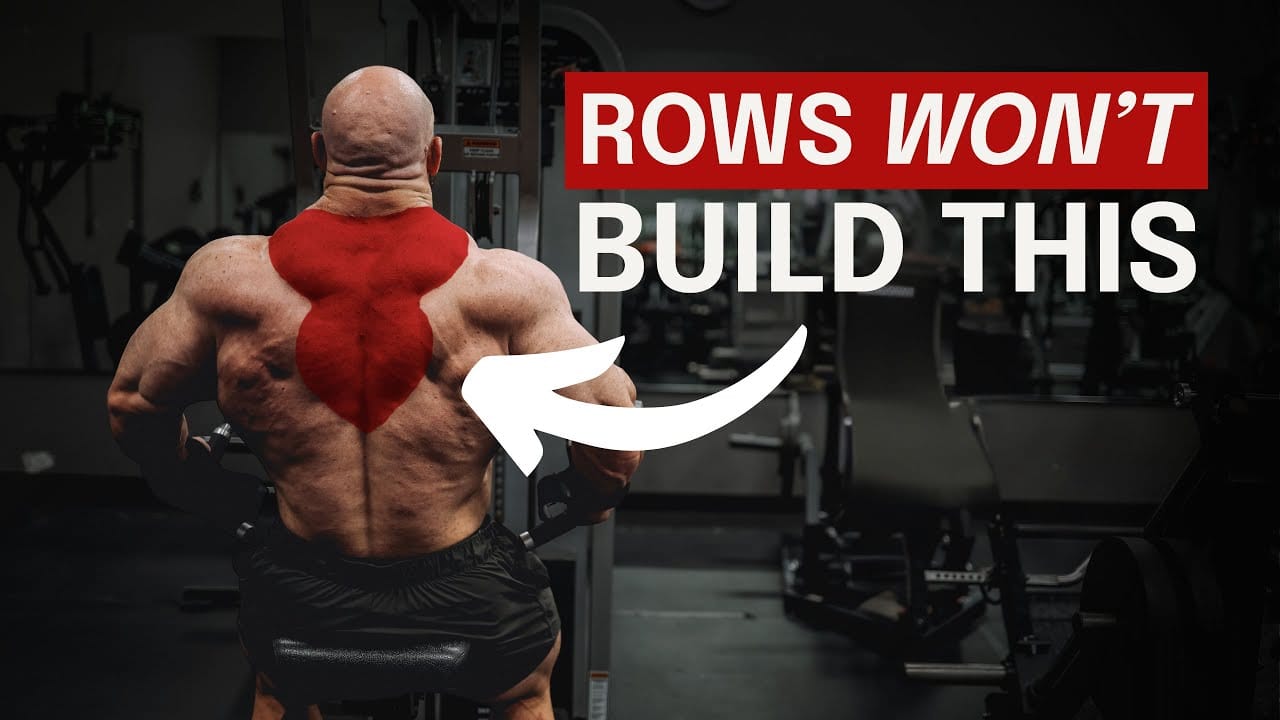
In a recent video, John Jewett from J3 University breaks down why conventional trap training often misses the mark and reveals a powerful alternative that targets all sections of this critical muscle group.
If you want that thickness in your rear double bicep and rear lat spread, keep reading.
Jump to:
Why Traditional Lifts Fail Your Traps
Most lifters assume deadlifts and rows provide enough stimulus for complete trap development. For some, that’s true—but many find these movements inadequate for building truly impressive upper back thickness.
Jewett identifies three key problems with relying solely on traditional movements.

If you want something simple that actually works, this is one of the most effective tools I’ve used to build strength, conditioning, and endurance without needing a full gym setup.
- Full-body training with one weight using swings, squats, and presses
- Solid cast iron build that feels stable and lasts for years
- Comfortable grip that makes high-rep workouts easier to handle
Deadlifts Keep Traps Under Constant Tension
During deadlifts, traps function primarily through isometric contraction. You’re not moving through active contractile range, which means limited muscle-building stimulus despite the heavy weight.
Static holds build strength, but they’re suboptimal for hypertrophy when used exclusively.
Rows Hit Arms Before Traps
Rows absolutely engage traps as your scapula retracts and protracts. However, arm musculature often reaches failure before traps receive adequate fatigue.
You could easily reach a failure point in the arm musculature before the traps are adequately fatigued and actually reach their failure point.
This explains why some lifters develop impressive arms but lack proportional back development. If you’re not moving through full retraction and protraction, you’re missing critical trap activation.
Dumbbell Shrugs Miss Most Trap Fibers
Standard dumbbell shrugs only target upper trap fibers and the levator scapulae muscle underneath. You’re training a small segment while neglecting mid and lower trap fibers entirely.
That limited range severely restricts overall trap development and back thickness.
If you want something simple that actually works, this is one of the most effective tools I’ve used to build strength, conditioning, and endurance without needing a full gym setup.
- Full-body training with one weight using swings, squats, and presses
- Solid cast iron build that feels stable and lasts for years
- Comfortable grip that makes high-rep workouts easier to handle
Understanding Complete Trap Anatomy
Traps consist of three distinct sections: upper, middle, and lower fibers. Each section contributes to scapular movement in different planes.
General trap functions include:
- Scapular retraction toward the spine
- Upward elevation of the shoulder blade
- Depression and downward movement
Jewett emphasizes that retraction occurs with arms in a row position—horizontal to the body. This position activates mid and lower trap fibers most effectively.
Upward elevation (like standard shrugs) primarily hits upper fibers plus the levator scapulae and sternocleidomastoid muscles. Effective for targeted upper trap work, but incomplete for total development.
Underneath traps lie rhomboid muscles, which also assist retraction and elevation. Any horizontal retraction movement trains both traps and rhomboids simultaneously, maximizing upper back stimulation.
Enter the Kelso Shrug
This specialized movement directly addresses the limitations of traditional trap training. Named after Paul Kelso, who documented the technique in his 2002 book Kelso’s Shrugs, this exercise has long been a powerlifting staple.
If you want something simple that actually works, this is one of the most effective tools I’ve used to build strength, conditioning, and endurance without needing a full gym setup.
- Full-body training with one weight using swings, squats, and presses
- Solid cast iron build that feels stable and lasts for years
- Comfortable grip that makes high-rep workouts easier to handle
Kelso shrugs involve horizontal retraction and protraction of the scapula while maintaining a slight elbow bend. You’re moving the shoulder blades together and apart without actively rowing.
How to Perform Kelso Shrugs
Jewett demonstrates on a T-bar row, though multiple equipment options work effectively.
- Position yourself with upper arms approximately 90 degrees from your torso (or 45 degrees for variation)
- Maintain a slight elbow bend throughout the movement
- Focus solely on retracting and protracting your scapula
- Squeeze shoulder blades together at peak contraction
- Control the protraction phase as shoulder blades move apart
Once you reach your failure point on your T-bar row, all you simply need to do is keep a slight elbow bend and just go through retraction and protraction of the scapula.
You’ll complete additional reps beyond your rowing failure point because you’ve isolated scapular movement.
Best Equipment Options
- T-bar rows: Excellent angle and natural horizontal plane
- Seated cable rows: Lean back slightly for optimal positioning
- Back machines: Many allow 45-degree upper arm positioning
- Supported chest row machines: Remove lower back fatigue as limiting factor
Programming Kelso Shrugs for Maximum Growth
Strategic implementation determines whether this movement transforms your back or becomes another wasted exercise.
Immediate Integration Method
Perform Kelso shrugs immediately after reaching failure on your rowing movements. Your arms are exhausted, but traps remain relatively fresh—perfect timing for direct stimulation.
This approach requires zero additional time and creates a brutal superset effect.
If you want something simple that actually works, this is one of the most effective tools I’ve used to build strength, conditioning, and endurance without needing a full gym setup.
- Full-body training with one weight using swings, squats, and presses
- Solid cast iron build that feels stable and lasts for years
- Comfortable grip that makes high-rep workouts easier to handle
Standalone Movement Approach
Treat Kelso shrugs as their own distinct exercise within your back session. Perform them fresh after completing all rowing work for maximum load and contraction quality.
If back development is a priority, position this movement early in your session when energy and focus are highest.
Volume Recommendations
Starting point: Three sets per session if you’ve never performed Kelso shrugs
Progression: Add a second back session with three additional sets (six total weekly sets of direct trap work)
Assessment period: Evaluate recovery and progress after eight weeks
Advanced volume: Increase to six sets twice weekly if recovery allows
If you want something simple that actually works, this is one of the most effective tools I’ve used to build strength, conditioning, and endurance without needing a full gym setup.
- Full-body training with one weight using swings, squats, and presses
- Solid cast iron build that feels stable and lasts for years
- Comfortable grip that makes high-rep workouts easier to handle
This volume sits on top of your existing back training, not as a replacement.
Session Structure Options
Option 1 – Balanced approach:
- Session A: Start with lat work, then trap-focused movements
- Session B: Begin with trap work, follow with lat exercises
Option 2 – Priority trap development:
- Perform rows transitioning into Kelso shrugs as your first exercise
- Maximum energy applied to weakpoint training
Signs You Need Direct Trap Work
Not everyone requires specialized trap training. Some respond excellently to standard compound movements alone.
Consider adding Kelso shrugs if you experience:
- Weak rear double bicep poses lacking upper back thickness
- Disproportionate arm development compared to back muscularity
- Minimal trap soreness despite heavy rowing and deadlifting
- Visible gaps in upper back density when flexing
- Stalled progress in back width despite strength gains
Your traditional lifts provide foundational stimulus, but inadequate targeted work for complete development.
If you want something simple that actually works, this is one of the most effective tools I’ve used to build strength, conditioning, and endurance without needing a full gym setup.
- Full-body training with one weight using swings, squats, and presses
- Solid cast iron build that feels stable and lasts for years
- Comfortable grip that makes high-rep workouts easier to handle
Beyond Basic Execution
Proper setup and cueing separate effective trap training from wasted effort. Body positioning determines which muscle fibers receive maximum tension.
Focus on feeling the contraction rather than moving maximum weight. Traps respond exceptionally well to controlled tempo and peak squeeze.
Experiment with arm angles between 45 and 90 degrees to find your optimal fiber recruitment. Individual leverages and insertion points create variation in ideal positioning.
Recovery capacity matters significantly with direct trap work. These muscles assist nearly every upper body movement, making them prone to accumulated fatigue.
Monitor performance on overhead presses and pulling movements as volume indicators. Declining strength signals excessive trap training frequency or volume.
Building Complete Upper Back Thickness
Kelso shrugs fill the gap between standard compound movements and complete trap development. They provide targeted stimulus to mid and lower fibers that standard shrugs completely miss.
If you want something simple that actually works, this is one of the most effective tools I’ve used to build strength, conditioning, and endurance without needing a full gym setup.
- Full-body training with one weight using swings, squats, and presses
- Solid cast iron build that feels stable and lasts for years
- Comfortable grip that makes high-rep workouts easier to handle
Start conservatively with three sets per session, assess your response, then adjust volume based on recovery and visual progress. Most lifters see noticeable improvements within 6-8 weeks of consistent implementation.
Traditional deadlifts and rows remain foundational movements—Kelso shrugs simply enhance their effectiveness for stubborn upper back development.