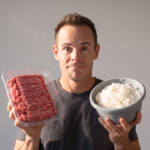
Former professional bodybuilder turned longevity advocate shares his complete anti-aging protocol at 39.
After spending a decade destroying his body with steroids, alcohol, and recreational drugs during his competitive years, he found himself 100 pounds overweight and “more medicated than most guys in their 70s” by age 30.

Now, nearly a decade later, he claims to be in the best shape of his life—and he’s revealing exactly what’s in his stack.
From compounds he runs continuously to those he cycles strategically throughout the year, his approach combines pharmaceutical-grade interventions with meticulous blood work monitoring.
Jump to:
- Testosterone: The Foundation of Everything
- Human Growth Hormone: Repairing Years of Damage
- The Wolverine Peptide Combination
- GHK-Cu: Beyond Skin Deep
- Retatrutide and MOTS-C: Metabolic Optimization
- Epithalon and Pinealon: The Telomere Protocol
- The Unglamorous Truth About Supplements
- Nutrition Without Tracking
- The Bigger Message
Testosterone: The Foundation of Everything
He calls testosterone “the most underrated anti-aging compound that’s been around for almost 100 years.”
For men experiencing early signs of decline—low energy, poor recovery, brain fog, diminished motivation—he insists this is where to start.
Testosterone pulls more levers at once than anything else in that stack I just showed you and anything else you could put in your body. There is nothing you can convince me that works better as a fundamental medication than testosterone.
His protocol is straightforward: 100 mg of testosterone cypionate weekly, split into two intramuscular injections. He chose cypionate specifically for its longer half-life—approximately 8 days—meaning fewer injections compared to shorter esters.
Staying lean year-round has dramatically reduced his aromatization, so he uses minimal anastrozole—just a quarter to half milligram once or twice weekly, always the day after injections.
Blood Work Is Non-Negotiable
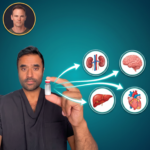
Every 3 to 4 months, he gets comprehensive panels covering liver, heart, kidneys, pancreas, pituitary, digestive system, and reproductive system.
This isn’t optional monitoring—it’s the entire feedback loop.
He doesn’t cycle testosterone anymore. Running therapeutic replacement therapy means there’s no reason to come off or “restart.”
People love to talk about, are you guys ready? Resetting your receptors. That’s a myth when it comes to TRT.
Human Growth Hormone: Repairing Years of Damage
Alongside testosterone sits human growth hormone, his second highest-leverage compound.
Years of professional bodybuilding permanently damaged his pituitary gland. Natural production? Essentially nonexistent.
After trying to come off HGH for several years, he eventually made the decision to return for good. The difference was undeniable—both in how he felt and how he looked.
His current dosing: 2 to 3 units daily, roughly equivalent to 1 mg per day or 7 mg weekly. That’s enough to keep his IGF-1 levels well over 300.
Very low and consistent beats high and aggressive every time.
He specifically uses somatropin formulations like Serostim or Genotropin, avoiding others that cause excessive water retention or fatigue. Different GH products were originally formulated for various medical conditions—dwarfism, cancer treatment, burn victims—and each behaves differently in the body.
During his competitive days, he ran dramatically higher doses: over 10 IUs daily, sometimes as high as 20. The result? Severe insulin resistance, water retention, sleep disruption, joint problems.
He’s emphatic: don’t replicate that approach.
The Wolverine Peptide Combination
BPC-157 and TB-500 form his favorite cycling protocol throughout the year.
BPC-157, derived from a stomach protein that protects gut lining, has earned its “Wolverine peptide” nickname through reputation alone. TB-500—thymosin beta-4—is found in nearly every cell, concentrated especially in wound fluid.
Together, they target repair, recovery, and inflammation reduction. He’s used this combination countless times, including after tearing his pec close to a bodybuilding show over 15 years ago.
His Exact Dosing Protocol
For BPC-157, he starts with an aggressive loading phase if he hasn’t used it recently:
- Loading phase: 1 mg daily for 21-30 days
- Maintenance phase: 250-500 mcg daily
TB-500 runs differently: 2.5 mg twice weekly.
BPC-157 handles gut health, systemic inflammation, joints, tendons, ligaments, and drives collagen synthesis plus angiogenesis—the body’s creation of new blood vessels. TB-500 accelerates muscle and tissue repair while reducing inflammation and improving flexibility.
The catch? Results compound over time. This isn’t an instant transformation.
GHK-Cu: Beyond Skin Deep
Most people know GHK-Cu for skin and hair benefits. He insists that’s only 20% of the picture.
This copper peptide, naturally found in plasma, saliva, and urine, declines dramatically with age. That decline corresponds directly with tissue degradation people accept as “normal aging.”
Copper itself is essential for enzymatic processes throughout the body: tissue repair, energy production, antioxidant function. GHK-Cu delivers copper in a highly bioavailable form.
I’ve legitimately had people tell me they’ve got a wedding in 3 months and they want to run GHK-Cu to look younger. That’s not how it works, buddy. Sorry.
His first cycle took 3 months before he noticed anything beyond surface-level changes. Past the 90-day mark, everything shifted—training improved, recovery accelerated, joints felt like “hydraulics,” and sleep quality dramatically increased.
Starting dosage: 1-2 mg daily, 5 days weekly, subcutaneous injection, morning fasted. Run for 60-90 days minimum before adjusting anything.
Retatrutide and MOTS-C: Metabolic Optimization
He doesn’t run retatrutide for weight loss—staying lean year-round eliminates that need.
Instead, he values what happens beneath the surface: improved liver markers, enhanced insulin sensitivity, reduced systemic inflammation.
His dosing starts conservatively: 0.5 mg weekly, slowly titrating up to a maximum of 2-3 mg weekly.
MOTS-C, a mitochondria-derived peptide, activates metabolic pathways similar to exercise—earning its description as an “exercise mimetic.” Benefits include better insulin sensitivity and metabolic regulation.
Some experience fatigue when starting MOTS-C. His solution? Begin with SS-31 instead.
The Machine Repair Strategy
SS-31 targets cardiolipin, stabilizing mitochondrial membrane structure that produces cellular energy. Think of SS-31 as repairing the machine; MOTS-C turns it on.
- MOTS-C: 5-10 mg weekly, split into two doses
- SS-31: 5-10 mg weekly, same dosing schedule
When cycling together, he runs SS-31 alone for 2-4 weeks first, then layers MOTS-C on top.
Epithalon and Pinealon: The Telomere Protocol
These compounds only get touched once or twice yearly in very short cycles.
Epithalon, researched extensively by Soviet scientists, works to reactivate telomerase—the enzyme rebuilding protective caps on chromosomes. It also stimulates the pineal gland, regulating melatonin and circadian rhythm.
The most noticeable effect? Dramatically improved sleep quality.
Protocol: 5-10 mg daily, subcutaneous injection right before bed, for 21-30 days straight. Then completely off for 6 months minimum.
Pinealon complements epithalon by working directly on brain tissue, reducing oxidative stress and protecting neurons from damage accumulated through training, poor sleep, and chronic stress.
Effects manifest slowly, typically showing up in sleep tracking data before subjective awareness. He wears a Whoop, Apple Watch, and Oura Ring while sleeping on an Eight Sleep mattress—tracking from every possible angle.
The Unglamorous Truth About Supplements
His over-the-counter supplement use is minimal. Some magnesium occasionally. Detox protocols a couple times yearly. Epigenetic testing. That’s essentially it.
I get most of my—well all of my minerals and vitamins through whole foods.
Unless blood work reveals specific deficiencies, he questions why anyone maintains cabinets full of supplements. Usually it indicates foundational nutrition is off.
Nutrition Without Tracking
At 39, he doesn’t follow strict diet plans or track macros.
Instead, he eats instinctively based on years of experience: dairy-free, gluten-free, processed food-free, sugar-free. Protein intake is remarkably low by bodybuilding standards—maybe 0.4 grams per pound of lean body mass.
I’m not trying to build more muscle, guys. I’m 240 lb at 6 ft. It won’t go anywhere.
Training has shifted entirely away from heavy isolation work. Now the focus is technique, mobility, and conditioning—particularly cardiovascular work, which he genuinely enjoys.
The Bigger Message
His entire protocol demonstrates one principle: aging doesn’t require accepting decline.
With proper tools, monitoring, and medical supervision, optimization is achievable well into middle age and beyond.
He emphasizes there’s no medal for “staying natural” or suffering unnecessarily toward physique goals in your 40s and 50s. Modern interventions exist precisely to extend quality of life.
Critical caveat: Nothing discussed constitutes medical advice. Anyone considering similar protocols must work under direct supervision from qualified medical professionals with comprehensive blood work monitoring.
His transformation from overweight and over-medicated at 30 to optimized at 39 required years of experimentation, adjustment, and learning what works specifically for his damaged physiology.
Individual responses vary dramatically based on health history, current condition, and biological factors.