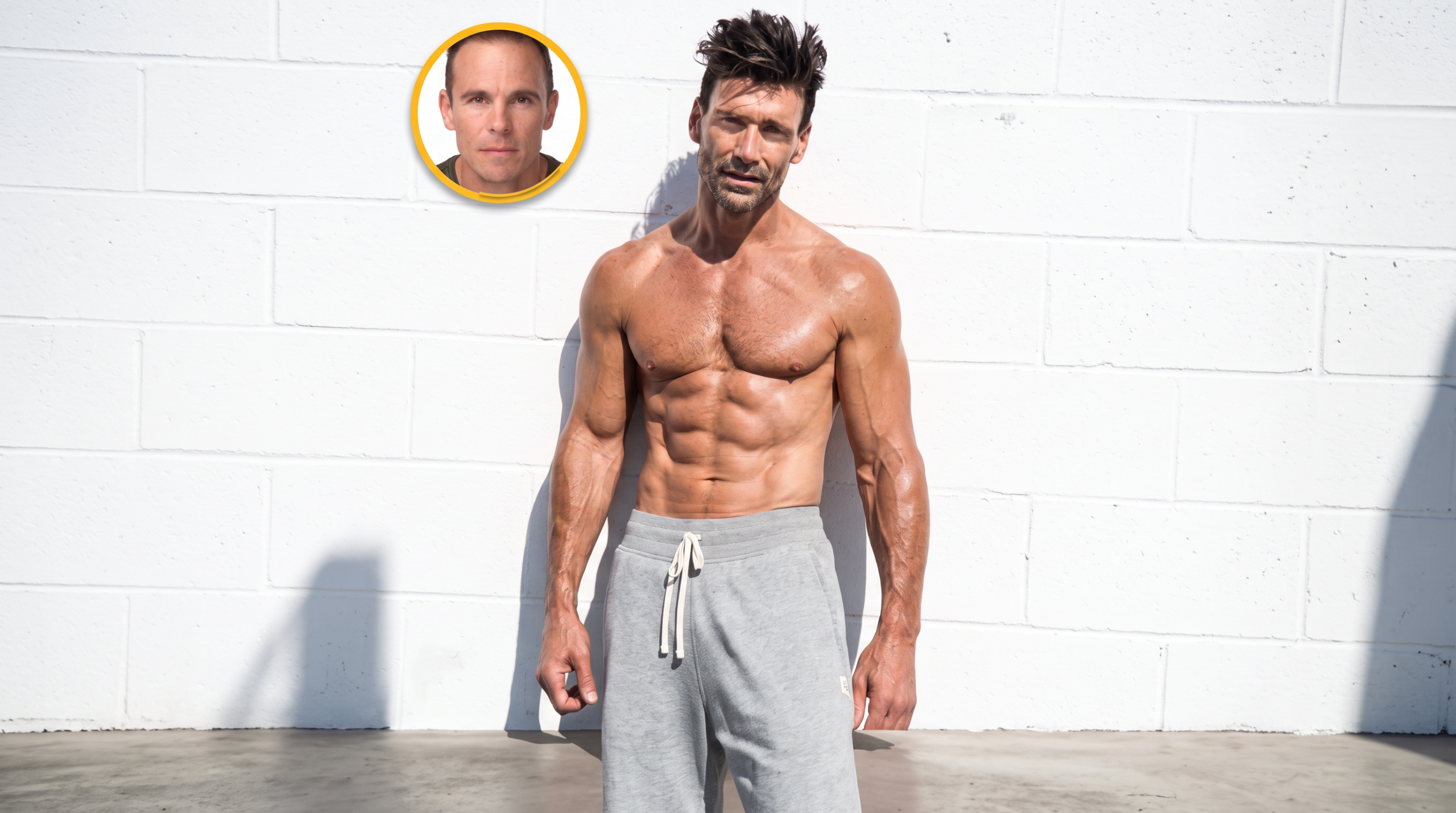
Frank Grillo doesn’t take days off from training, and at 61, his physique proves consistency pays dividends.
The Tulsa King star combines daily boxing sessions with heavy strength work, delivering a training philosophy rooted in compound lifts rather than the isolation exercises that dominate many bodybuilding routines.
His approach reveals a pragmatic shift in how mature athletes think about longevity and performance.
Grillo’s regimen isn’t about chasing aesthetics alone—it’s about staying capable, powerful, and resilient as the years stack up.
Jump to:
Daily Boxing Keeps Grillo Sharp
Every single day, without exception, Grillo dedicates 90 minutes to boxing training.
Shadow boxing, pad work, and sparring sessions keep his cardiovascular system humming and his reflexes razor-sharp. This non-negotiable commitment forms the cardiovascular backbone of his fitness routine, ensuring he maintains explosive power and stamina that translates directly to his physically demanding roles.
No products found.
Playing Bill Bevilaqua—a volatile Kansas City mob boss—opposite Sylvester Stallone in Tulsa King requires more than just screen presence. The character’s physical intensity demands real-world conditioning, and Grillo’s boxing background delivers exactly that.
Compound Lifts Over Vanity Muscles
While many actors gravitate toward isolation movements to sculpt specific muscle groups, Grillo takes the opposite approach.
He trains five to six days per week at Gold’s Gym Venice—the legendary California facility where Arnold Schwarzenegger forged his iconic physique during bodybuilding’s golden era. But Grillo’s sessions look dramatically different from classic bodybuilding splits.
I don’t do biceps, I don’t do triceps. I do core and heavy exercises on the chest, shoulders, squats and deadlifts, but as far as the vanity muscles, it’s not something [I focus on] – it’s actually a hindrance to do biceps and triceps the regular way a bodybuilder does.
Instead of curls and extensions, Grillo prioritizes big compound movements that recruit multiple muscle groups simultaneously.
- Squats build lower body strength and power
- Deadlifts develop posterior chain resilience
- Heavy chest and shoulder presses maintain upper body pressing strength
- Core work stabilizes everything and prevents injury
This strategy keeps him functional and strong rather than just aesthetically carved. Each hour-long session emphasizes movements that translate to real-world capability—lifting, pushing, pulling, and stabilizing under load.
Arnold’s Influence on Fitness Culture
Grillo openly admires Arnold Schwarzenegger’s impact on mainstream fitness culture.
No products found.
I love fitness. I love fit bodies. Arnold changed fitness. He really did in the ’70s and ’80s. He made it mainstream and really made it a household sport.
Training at the same Venice gym where Schwarzenegger trained connects Grillo to that legacy. Yet his training philosophy diverges from traditional bodybuilding methodologies, focusing instead on performance longevity over pure hypertrophy.
The Muscle-Building Challenge for Boss Level
Grillo’s commitment to physical transformation reached new heights during preparation for the 2020 film Boss Level.
Working with trainer Brendan Johnson, he gained 11 kilograms of muscle in just five months using a powerlifting-style training protocol. The aggressive bulk required heavy lifting, strategic nutrition, and relentless consistency to pack on mass quickly without sacrificing strength or mobility.
After filming wrapped, Grillo spent an additional year shedding the extra weight to return to his preferred walking-around physique. That extended cut demonstrates his dedication—not just to preparing for roles, but to maintaining long-term health rather than staying perpetually bulked up.
Testosterone Replacement Therapy Changed Recovery
A few years ago, blood tests revealed Grillo’s testosterone levels had dropped to 6.94 nmol/L—well below the healthy range of 12-30 nmol/L for men.
After medical consultation, he began testosterone replacement therapy (TRT), which he credits with dramatically improving his energy levels and recovery capacity.
No products found.
I don’t expect to train like I did when I was 25. But there’s a certain level I know I can maintain.
Grillo emphasizes that TRT isn’t a casual decision or a shortcut for recreational lifters. He stresses the importance of medical supervision and proper diagnosis before considering hormone therapy.
You have to make sure that you are a candidate for it.
Since starting TRT, Grillo reports significantly better recovery between his daily boxing sessions and frequent strength workouts. The therapy allows him to maintain training intensity without burning out or accumulating injuries—a critical factor when training multiple hours every day well into his sixties.
Training Philosophy for Aging Athletes
Grillo’s approach offers valuable lessons for anyone navigating fitness in middle age and beyond.
Rather than clinging to training methods from his twenties, he adapted his program around sustainability, functionality, and recovery. His rejection of isolation work in favor of compound movements reflects modern strength science—multi-joint exercises deliver superior hormonal responses, burn more calories, and build practical strength that transfers outside the gym.
The daily boxing commitment ensures cardiovascular fitness remains sharp without relying solely on traditional steady-state cardio. High-intensity interval training through boxing drills creates metabolic demands that complement his strength work beautifully.
Prioritizing recovery through medical optimization (when appropriate) allows mature athletes to train harder and more frequently than declining hormone levels would otherwise permit. Grillo’s openness about TRT normalizes conversations around age-related hormonal decline and evidence-based interventions.
No products found.
Key Takeaways from Grillo’s Training
Grillo’s physique at 61 didn’t happen by accident—it’s the product of intelligent programming and unwavering consistency.
- Daily movement matters: His 90-minute boxing sessions happen every single day without exception
- Compound lifts deliver results: Squats, deadlifts, and heavy presses build functional strength efficiently
- Skip the fluff: Isolation exercises for arms take a back seat to movements that recruit multiple muscle groups
- Adapt intelligently: Medical interventions like TRT can support training when hormone levels drop below healthy ranges
- Recovery enables consistency: Better recovery allows more frequent training without injury or burnout
Grillo’s training evolution demonstrates that aging athletes don’t need to accept steady decline. With smart programming, proper recovery strategies, and medical support when needed, maintaining impressive strength and conditioning well into your sixties remains entirely achievable.
His emphasis on core stability and heavy compound movements provides a blueprint for anyone looking to train effectively as they age—prioritizing capability over appearance, and sustainability over short-term gains.