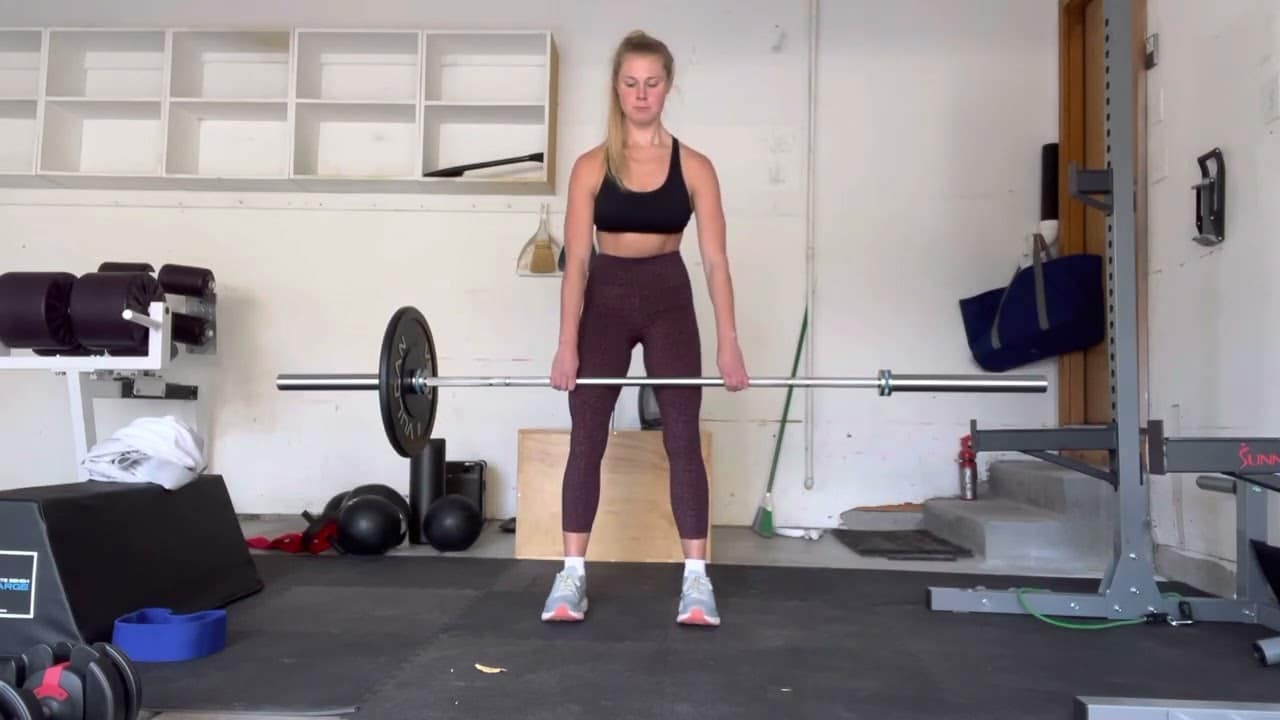
A barbell with weight on only one side might look like a gym mistake—but it’s actually one of the most effective tools for core development and movement control.
The fulcrum deadlift, also known as the offset or asymmetrical deadlift, is gaining popularity among strength athletes and functional fitness enthusiasts.
It’s a deceptively simple lift that forces your core to engage in ways few other exercises do.
This article breaks down everything you need to know about fulcrum deadlifts—from how to perform them safely to why they’re a must-have in your training plan if you care about core strength, balance, and injury prevention.
Jump to:
What Is a Fulcrum Deadlift?
At its core, a fulcrum deadlift is an offset-loaded hip hinge movement where a barbell is weighted on only one side. Unlike the traditional deadlift, which loads the bar symmetrically, the fulcrum version intentionally creates imbalance.
This off-kilter setup forces your body—especially your core—to fight rotational forces, maintain posture, and stabilize throughout the movement.
There are two main types:
- Offset-loaded Deadlift: One side of the bar has weight, the other remains empty.
- Elevated Fulcrum Deadlift: The barbell is placed on blocks to change leverage and reduce stress on the lower back.
Despite the naming overlap, the offset version is the one most commonly associated with the term “fulcrum deadlift” in functional training.
Why It Matters: Key Benefits
Builds Unmatched Core Stability
This exercise pushes your core to do more than just brace—it has to actively resist rotation and twisting, a task that challenges deep stabilizers like the transversus abdominis, obliques, multifidus, and quadratus lumborum.
“There’s no rest for the core in this movement,” noted Jess Robinson in a recent breakdown of the exercise. “The constant asymmetrical load keeps the muscles firing the entire time.”
Exposes and Corrects Imbalances
Offset loading instantly reveals if one side of your body is stronger or more coordinated than the other. If you struggle to keep the bar level or find one side harder than the other, there’s likely an imbalance that conventional lifts may not expose.
This makes the fulcrum deadlift a smart tool for athletes who rely heavily on one side—think tennis players, rowers, or hockey athletes.
Strengthens Posterior Chain
Though it’s a core-dominant lift, you’ll also fire up the glutes, hamstrings, lats, and erector spinae. The movement pattern mirrors a conventional deadlift but demands more control, especially from the trapezius and latissimus dorsi, to keep the bar steady.
Improves Functional Strength
Most real-world strength challenges don’t come with perfect symmetry. Carrying groceries, lifting odd-shaped boxes, or shoveling snow—all require your body to stabilize against uneven forces.
Training with a fulcrum deadlift translates directly to daily life, making you more resilient and less prone to injury.
How to Perform a Fulcrum Deadlift (Step-by-Step)
Equipment Needed:
- Barbell
- Bumper plates (preferably rubber)
- Lifting platform or open gym space
Setup
- Load the barbell on one side only.
- Stand in the center of the barbell, feet shoulder-width apart.
Execution
- Take a deep breath and brace your core.
- Hinge at the hips and bend your knees to grasp the bar with a neutral or mixed grip.
- Lift the bar slowly and with control, keeping your arms straight and the barbell parallel to the floor.
- Exhale as you reach the top.
- Lower the bar under control, maintaining core tension and posture.
✅ Coach’s Tip: Use a mirror to monitor barbell position. If the bar dips or rotates, reduce weight and improve control before progressing.
Sets and Reps
- 3–4 sets of 5–8 reps per side
- Use it as an accessory lift or a warm-up drill in your deadlift session.
Are Fulcrum Deadlifts Safe?
Yes—but only if performed with proper technique and a base of deadlift experience. Because the offset load can easily compromise form, it’s crucial to:
- Start light (even just 5–10 kg on one side)
- Focus on control and barbell alignment
- Master the conventional deadlift first
As always, seek guidance from a certified coach if you’re unsure of your technique.
Who Should Use Fulcrum Deadlifts?
Fulcrum deadlifts are ideal for:
- Experienced lifters looking to enhance core control
- Athletes who favor one side in their sport (e.g., golfers, baseball players)
- Rehabilitation clients needing to re-establish postural control
- Anyone bored with planks and crunches looking for a fresh, dynamic core challenge
Beginners should instead start with alternatives like the offset barbell hold or suitcase deadlift before progressing to full fulcrum deadlifts.
Alternatives for Similar Benefits
If fulcrum deadlifts feel too advanced, these exercises also build unilateral strength and core control:
Offset-Loaded Hold
Just hold an unbalanced barbell without lifting it. Focus on resisting the urge to rotate.
Suitcase Deadlift
Hold a dumbbell or kettlebell in one hand. Similar core demand, easier setup.
Single Arm Farmer’s Carry
Carry a weight in one hand and walk. Great for grip, posture, and core strength.
Single-Leg RDL
Hold weight in one hand, lift the opposite leg behind you. Excellent for balance and posterior chain strength.
Final Thoughts
Fulcrum deadlifts are one of the most underutilized tools for building bulletproof core strength and better control over your body’s movement. They’re awkward, humbling, and incredibly effective.
Used correctly, this offset-loaded variation can level up your deadlift mechanics, reveal asymmetries, and add fresh intensity to your accessory work. Whether you’re training for sport, performance, or general strength, don’t overlook this unbalanced powerhouse.
Just remember: go light, go slow, and keep that bar parallel.