In a recent YouTube video, physician Dr. Stanfield sketched a bold future where heart attacks fade into a history lesson.
His case rests on one striking idea.
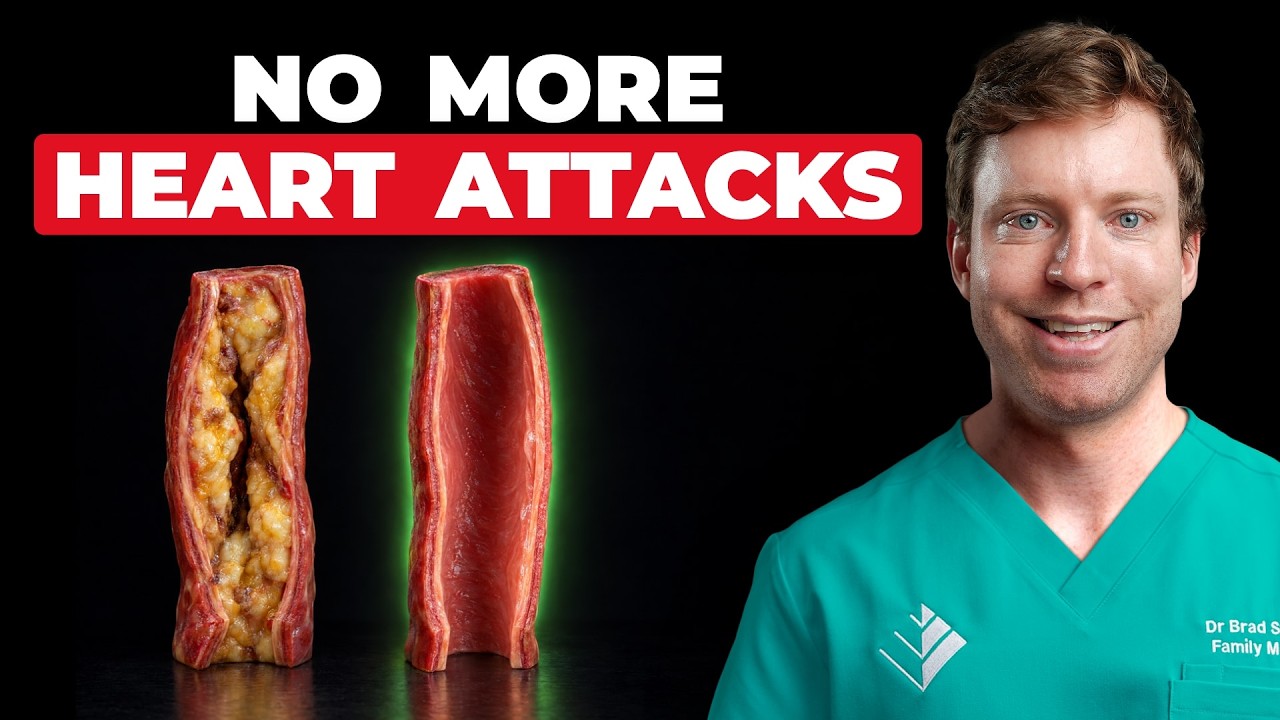
Nearly every major driver of heart attacks now has a workable fix.
One fix, he says, gets far less attention than it deserves.
Which one? Read on.
Jump to:
- The Big Idea: Heart Attacks Are Increasingly Preventable
- From Eisenhower’s Hospital Bed to Modern Prevention
- Smoking and Blood Pressure: The First Big Wins
- Fats: What the CORDIOPREV Trial Found
- The Gila Monster Twist That Changed Weight Loss
- Cholesterol: The Missing Piece
- Why ApoB Beats LDL
- The Next-Generation Toolkit
- Do You Need a Calcium Scan?
The Big Idea: Heart Attacks Are Increasingly Preventable
Dr. Stanfield argues that risk factors have been identified and largely solved. His checklist:
- Smoking: avoid it
- Blood pressure: systolic below 120 for most people
- Diet: rich in fiber, potassium, unsaturated fats
- Exercise: regular
- Obesity: treatable with GLP-1 therapies
- ApoB: kept as low as possible
Heart disease still ranks among the leading killers worldwide, so consider his vision a trajectory, not a finished story.
From Eisenhower’s Hospital Bed to Modern Prevention
Everything changed publicly on September 23, 1955. President Dwight Eisenhower, mid-golf game in Denver, blamed stomach pain on a hamburger.
Hours later, the truth emerged: a heart attack. The best care on Earth meant an oxygen tent, morphine, and nearly seven weeks in bed.
Cardiologist Dr. Paul Dudley White then did something rare. Facing 150 reporters, he explained coronary thrombosis and floated possible causes: diet, alcohol, tobacco, exercise, family history.
It was a radical idea at the time that heart attacks may have causes, and that we could do something about them.
Dr. Stanfield cites a 72.6 percent drop in heart disease deaths between 1950 and 2019. Progress came one risk factor at a time.
Smoking and Blood Pressure: The First Big Wins
America’s cigarette consumption peaked in 1963. The Surgeon General tied smoking to heart disease in January 1964, and by 2011 the average adult smoked 72 percent less.
Blood pressure came next. Franklin Roosevelt died in 1945 with a reading of 300 over 190, once dismissed as normal for his age.
Congress funded the Framingham Heart Study in 1948, tracking roughly 5,000 residents. High blood pressure carried 2.6 times the coronary risk in men aged 40 to 59.
Framingham only observed, though. A 1967 Veterans Administration trial of 143 men with very high diastolic pressure tested treatment directly.
- Placebo group: 27 severe events, four deaths
- Treatment group: two severe events, zero deaths
Researchers halted that trial early. Later, SPRINT enrolled over 9,000 people, comparing a systolic target below 120 against 140. Cardiovascular events fell by about a quarter, and deaths dropped 27 percent.
Caveats Worth Knowing
- Measure at home, relaxed, with your own cuff
- Frail people, or anyone dizzy on standing, may need higher targets
- Medication isn’t the only route
The DASH trial fed 459 people a diet heavy on fruits, vegetables, fiber, potassium, and low-fat dairy. Systolic pressure fell about 5.5 points, and adding low salt pushed the drop to 8.9 points.
Fats: What the CORDIOPREV Trial Found
CORDIOPREV followed 1,002 people with existing coronary disease for seven years. Those eating a Mediterranean diet rich in unsaturated fats had about 25 percent fewer heart events than a low-fat group.
Think extra virgin olive oil, avocados, fish, nuts, seeds. Saturated fats? Not so much.
The Gila Monster Twist That Changed Weight Loss
Obesity climbed from 23 percent in the early 1990s to about four in ten adults today, and for decades nothing reliably worked. Then help arrived from a desert lizard.
Endocrinologist John Eng isolated exendin-4 from Gila monster venom in 1992. Resembling human GLP-1, it lasts hours instead of minutes.
The first GLP-1 drug won FDA approval in 2005, though modest. Semaglutide at 2.4 mg later delivered roughly 15 percent body weight loss.
The 2023 SELECT trial enrolled over 17,000 people with heart disease and excess weight, but no diabetes. Major cardiovascular events hit 6.5 percent on semaglutide versus 8 percent on placebo: a fifth fewer relatively, 1.5 in 100 absolutely.
Tirzepatide’s top dose took off 21 percent. Retatrutide, still in trials, reached 28 percent. Rule of thumb: each kilogram lost lowers systolic pressure about one point.
Cholesterol: The Missing Piece
Plenty of lean, non-smoking, active people with great blood pressure still suffer heart attacks. Dr. Stanfield points to cholesterol.
In the 1990s, geneticist Catherine Boileau’s Paris team helped uncover PCSK9, a gene that sends cholesterol skyrocketing when overactive. Broken copies turn up in about 1 in 50 Americans and run LDL roughly 40 percent lower.
Tracking nearly 13,000 Americans for 15 years, researchers found striking numbers:
- Black participants with the broken gene: 28 percent lower LDL, 88 percent lower coronary risk
- White participants with a milder version: 15 percent lower LDL, 47 percent less coronary disease
So, nature ran the experiment for us in thousands of people.
Across 200 studies and over 2 million people, every LDL-lowering route cut heart attacks in proportion to the drop.
Why “Normal” Cholesterol Still Isn’t Safe
A 2009 analysis of 136,000 hospitalized Americans found half had LDL under 100. Spain’s PESA study scanned over 1,700 healthy adults aged 40 to 54, and plaque tracked LDL, vanishing only below roughly 50 to 60.
This spring’s trial of over 3,000 people compared LDL targets of 55 and 70, adding cheap ezetimibe to a statin. The lower-target group had about a third fewer events, three per 100 patients in absolute terms.
Does Lowering Cholesterol Hurt the Brain?
Brain cells make their own cholesterol, so blood levels don’t starve them. In 1,200 people on a PCSK9 antibody, memory tests showed no difference even with LDL below 30.
Among 132,000 Danes with new diabetes, statin starters had about 15 percent less dementia.
Why ApoB Beats LDL
So, apoB is a particle count, and that count does the damage.
Every cholesterol-carrying particle able to enter artery walls carries one apoB protein. Newborns sit around 20 to 40, and Dr. Stanfield wants adults near that birth level.
Statin backlash carries real costs. After negative Danish news stories, people who quit statins had more heart attacks than those who kept going.
The Next-Generation Toolkit
Rosuvastatin plus ezetimibe is cheap and effective. Muscle aches affect about one to two in 100 users, and placebo groups report aches just as often.
PCSK9 antibodies, FDA-approved in 2015, mimic the broken gene. The Vesalius CV study cut heart attacks, strokes, and coronary deaths by about a quarter.
Timing matters. Genetic studies of 312,000 people suggest a lifetime of lower LDL cuts coronary disease roughly three times more per unit than starting a statin mid-life.
Dr. Stanfield also describes an approved daily PCSK9 pill cutting LDL about 56 percent. Details here deserve scrutiny, since inclisiran is typically described as a twice-yearly injection, so confirm current approvals with a doctor.
Further out, an early gene therapy in 35 people cut LDL 62 percent for a year and a half after one infusion. Phase one, so promising but preliminary.
Do You Need a Calcium Scan?
Dr. Stanfield sees little point if risk factors are already treated maximally. His main use: helping undecided patients choose cholesterol medication.
Action Steps to Discuss With Your Doctor
- Ask about apoB alongside standard cholesterol panels
- Check blood pressure at home with a validated cuff
- Favor Mediterranean-style eating: olive oil, fish, beans, lentils, nuts
- Raise fiber gradually, and consult a doctor first with IBS or inflammatory bowel disease
- Never quit a statin alone; ezetimibe, which Dr. Stanfield calls “criminally underrated,” may help