A 57-year-old type 1 diabetic just wrapped his first week on MOTS-c, a mitochondrial peptide nicknamed “exercise in a bottle.”
In a recent video, David shared daily recordings of what he felt.
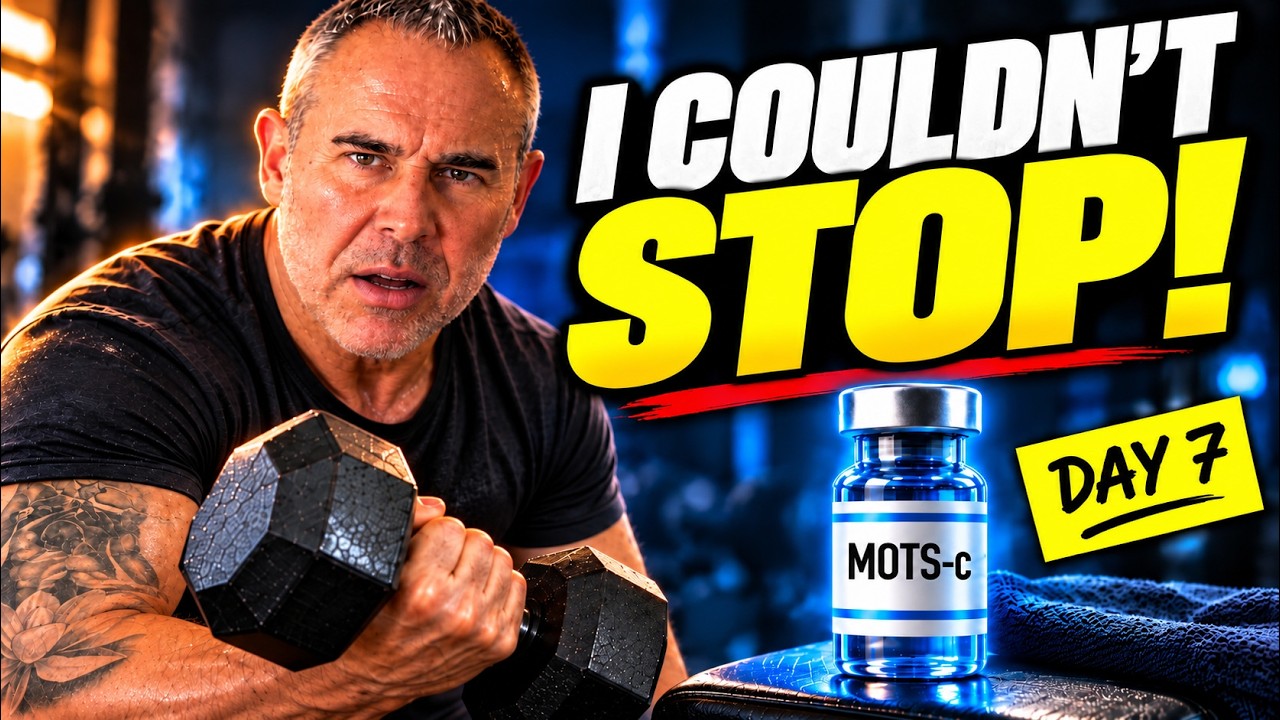
His biggest surprise? Pulling himself out of the gym.
Blood sugar shifts, a mental clarity boost, and a dosing dilemma all made his log.
Does science back up any of it?
Keep reading, because the research story is just as interesting as the personal one.
Jump to:
The Headline Result: Workouts He Didn’t Want to End
David’s main takeaway was simple. Training felt better, and stopping felt harder.
This past week I had a hard time stopping my workouts. I was actually running behind in my morning tasks.
Nothing dramatic, he stressed. He was never late for anything, only behind his normal schedule, and not just one day.
His protocol: 1 mg daily for 5 days, totaling 5 mg for the week. He skipped recording on day one to rule out excitement or placebo.
Day-by-Day: What He Reported
Day Two: A Placebo Check Passes
After finishing a workout, David felt confident the effect was real.
I don’t want to stop working out.
Age mattered to him here. He noted that low-grade energy has crept in over the years, so a boost might feel bigger than it would for someone in their 40s.
Day Three: Clearer Head, Less Fatigue
After 30 minutes on a bicycle, David said he still felt like training more. He also noticed a mental shift.
The other thing I’m noticing is like a clarity in the head, and I think that’s because there’s less fatigue going on.
His job is physically demanding. After several days of harder gym effort, he would normally feel it in his knees and back, yet he didn’t.
Days Four and Five: Cellular Energy, Not Caffeine
Still feeling that extra energy, not caffeinated energy, but physical cellular energy pushing through the workouts.
Day five began with some fatigue, since work was extra busy. Once he got moving, the familiar pull returned.
I wasn’t waking up feeling like Superman, but once I got moving, more energy became available.
His verdict stayed modest: “Nothing crazy though, so I don’t want to lead you guys in a wrong direction.” He did say he felt like he had the energy from a few years back.
The Blood Sugar Question
For anyone with type 1 diabetes, glucose is the main storyline. Animal studies suggest MOTS-c may influence insulin sensitivity, so David watched his numbers closely.
Early on, little changed. Post-workout readings stayed in the 120s to 140s, and he needed no glucose pills in the first days.
Then came a small wrinkle. Late on day four, he dipped to about 85 and took a glucose tablet.
I just don’t like running that low when I’m out and about working.
Next morning, he woke at 108. Was it MOTS-c? Maybe. David admitted a good bedtime correction could explain it just as well.
That honesty matters. One person’s glucose log cannot separate a peptide effect from insulin timing, meals, or training intensity.
What Is MOTS-c, Exactly?
MOTS-c is a small peptide the body produces naturally. Researchers have studied its potential links to metabolism, insulin sensitivity, and physical performance.
Production is thought to rise with exercise, and the peptide may activate AMPK, an enzyme tied to cellular energy and nutrient handling.
The Mouse Studies David Cited
- 2015 study: Mice on a high-fat diet received MOTS-c or nothing. Calorie intake matched, yet treated mice gained less weight and stored less liver fat.
- Fatty liver research: Another study reported improvements in liver inflammation and fibrosis.
- 2021 Nature Communications study: MOTS-c improved physical performance in mice, including older animals.
Those findings are intriguing. They are also animal data, which David was careful to flag.
This doesn’t mean that MOTS-c is proven for anything.
The Fuller Picture on “Exercise in a Bottle”
Catchy nicknames promise more than evidence delivers. Mouse results often fail to carry over to people, and solid human evidence is still missing, as David himself acknowledged.
Expectation can also shape how a workout feels well past day one. Skipping the first recording was a smart instinct, yet it cannot fully eliminate placebo.
Consider also his routine. He already trains daily, so consistency, sleep, and a busy job all influence energy levels.
Week Two: Dose Decisions and Real Numbers
David is weighing whether to raise his dose or repeat 1 mg. He has heard anecdotes of people reaching 20 mg weekly, but also that more isn’t necessarily better.
His bigger goal is data over feelings:
- Workout performance measured over time
- Recovery after hard training days
- Glucose patterns across the week
- Total insulin use tracked daily
If I’m going to share this experiment with you guys, I want to give you more than just how I feel.
Takeaways for Curious Readers
- Treat personal stories as stories. One 57-year-old’s week is a data point, not proof.
- Talk with a doctor first, especially with diabetes or any condition involving insulin.
- Track objective numbers like workout loads, glucose readings, and insulin doses.
- Remember the foundations: consistent training, sleep, and nutrition already boost mitochondrial health.
MOTS-c remains a fascinating molecule with promising animal research. Whether it delivers meaningful benefits in people is still an open question, and week two of David’s experiment may add useful clues.