Carl Spilman discovered his calling through one of fitness’s most misunderstood tools: the kettlebell.
The Liverpool-born fitness entrepreneur, who once signed as a professional footballer at 17, now runs Shredfast, a kettlebell-focused training program that’s transforming lives across Europe.
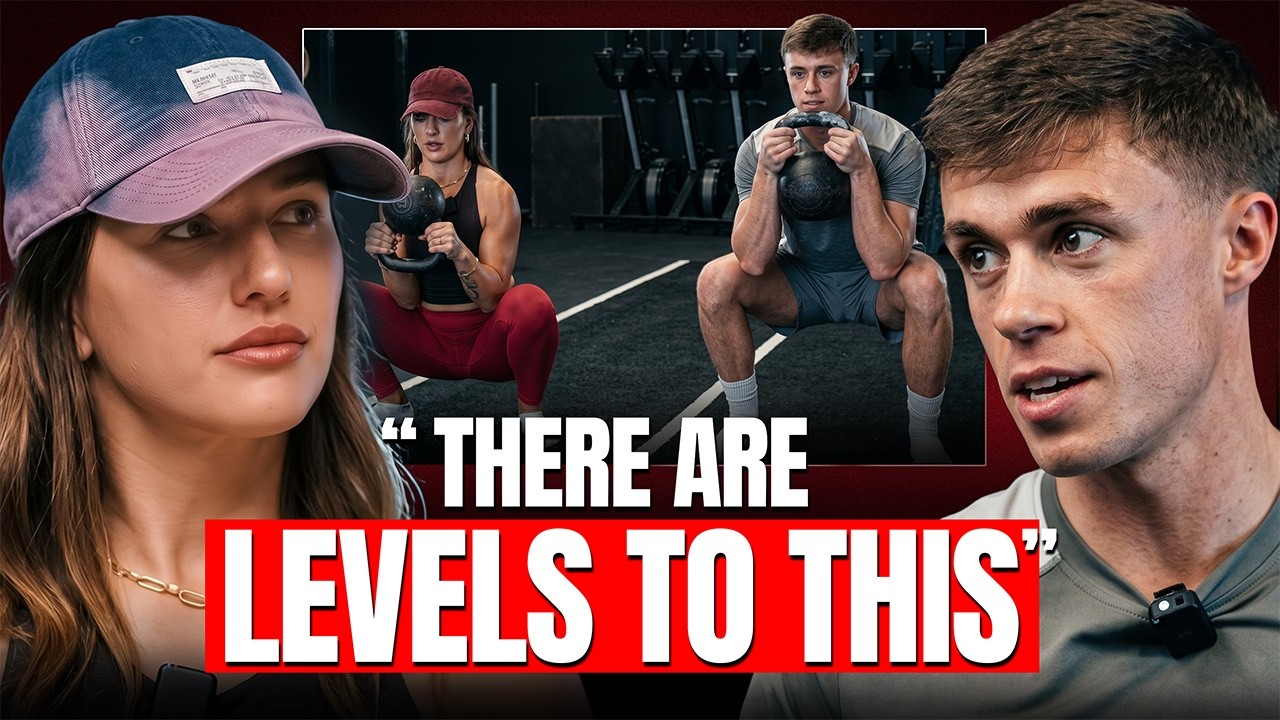
But his journey from the football pitch to becoming a sought-after trainer—even working with billionaires—wasn’t the smooth success story you might expect.
It was born from loss, identity crisis, and the raw determination to rebuild himself from scratch.
Jump to:
- From Football Dreams to Rock Bottom
- Why Kettlebells Work: The Science Behind the Tool
- A Typical Shredfast Workout: Simple But Brutal
- The Strength-Mobility Gap: Where Spilman Got Humbled
- Training Billionaires and Building Community
- The Discipline Paradox: Loving What You Don’t Want to Do
- Faith, Purpose, and the Greater Power
- Liverpool Grit Meets Marbella Lifestyle
- The Best Advice: Do the Right Thing
- Building the Perfect Birdhouse
- The 10-Year Vision: Better in Every Metric
- The Takeaway: Two Kettlebells Can Change Everything
- Sources
From Football Dreams to Rock Bottom
Getting released from professional football shattered Spilman’s world.
A bit lost to be honest. Once I finished football, didn’t know what to do with me life. I was stuck. I was me whole personality what people thought of me my vision in me head you this football player that’s the left and then what was I now
That identity crisis is something countless former athletes face. When the thing that defined you disappears, who are you?
For Spilman, it took three years to stop calling himself a footballer. Three years of searching, struggling, and eventually finding salvation in an unlikely place: two pieces of cast iron.
Why Kettlebells Work: The Science Behind the Tool
Kettlebells aren’t just another fitness fad. Their unique design—a weight with an offset center of gravity—forces your body to stabilize in ways traditional dumbbells don’t.
The result? Full-body engagement in nearly every movement.
Everything we do fast with the kettlebells, it’s all full body. So, from a burpee to a press to a high pull to a squat. You are using every single bit of muscle.
Research supports kettlebell training’s efficiency. Studies show that kettlebell exercises can significantly improve strength, power, and cardiovascular fitness simultaneously—something few training modalities achieve.
A 2010 study published in the Journal of Strength and Conditioning Research found that kettlebell training provides both aerobic and strength benefits, making it a time-efficient option for improving overall fitness.
The Shredfast Philosophy: Building Without Breaking Down
Spilman’s approach differs from traditional gym culture in one crucial way: sustainability.
It’s why I prefer kettle bells is because you’re not breaking down the body, you’re building the body up.
His Shredfast program focuses on foundational movements—cleans, thrusters, rows, and yes, even burpees (though he admits they’re “the most pointless exercise on planet Earth”).
The format? High-intensity intervals that spike your heart rate while maintaining proper form and joint integrity.
A Typical Shredfast Workout: Simple But Brutal
Don’t mistake simple for easy. Spilman’s workouts strip away complexity to reveal what truly matters: intensity, consistency, and mental fortitude.
Here’s a breakdown of one of his signature complexes:
- Double kettlebell cleans: 4 reps (keeping bells tight to body)
- Goblet squats: 4 reps (elbows tucked, sitting deep)
- Bent-over rows: 4 reps (controlling the movement)
- Burpees: 4 reps (touch head, slap thighs, no jump)
Repeat for six minutes, every minute on the minute. The rest periods shrink as your heart rate climbs.
You do something hard to start the day. Rest of the day. Any problems come your way, you’re ready to go. You’ve done the hardship.
That mental framework—conquering difficulty early—sets the tone for everything that follows.
The Technical Details Matter
Form isn’t optional in kettlebell training. Poor technique doesn’t just reduce effectiveness; it invites injury.
For the clean, Spilman emphasizes keeping the bells close to your body. The further they drift, the more they’ll slam into your wrists.
During swings, the focus is on the hip hinge—pushing glutes back, maintaining a neutral spine, and exploding forward through the hips, not the arms.
Everything with kettle bells, like we said before, is quite structured and you want to keep it tight to the body. You don’t want anything coming out. That’s where we can get injuries.
The Strength-Mobility Gap: Where Spilman Got Humbled
Strong doesn’t always mean capable. Spilman learned this lesson the hard way during a mobility challenge: overhead squats with a single kettlebell.
Despite his strength and conditioning, maintaining a locked-out overhead position while squatting deep exposed restrictions in his shoulders, hips, and thoracic spine.
I’m all over the place. I think I’m athletic. And then you’re tested in a position where you’ve never been before.
This reveals a critical insight: repetitive movement patterns create both strength and limitation.
Years of structured kettlebell work built incredible work capacity but also created blind spots—ranges of motion and positions he rarely explored.
The Athletic Body Versus The Gym Body
Spilman’s football background gave him something gym training alone cannot: adaptability under chaos.
Football is probably a little bit more fluid, but you’ve got more chance of getting injured because of that. So, if I’m, you know, jogging back, but I’m pressing and I’m landing on the joints, that’s where I feel like a athletes body within football is going to feel that more where gym builds the body up without the impact.
The multidirectional demands of sport—cutting, twisting, decelerating—stress joints and connective tissue differently than linear gym movements.
That’s both the challenge and the opportunity. Sports build resilience through varied stress; gym training builds capacity through controlled progression.
Training Billionaires and Building Community
Through Shredfast’s founder Luke, Spilman found himself traveling across Europe—Italy, Monaco, Santorini—training a billionaire client.
The experience offered a window into wealth most never see. But it also revealed something unexpected.
There is things that money can’t buy. And it’s it’s, you know, the people around you. It’s it’s I’m lucky to have a nice family, nice friends. girlfriend. Um, them things that are just pure and real, your health, of course, he has his health as well, but them things are more important than money.
That realization reinforced what Shredfast truly offers: not just workouts, but belonging.
Community isn’t built through convenience. It forms through challenge overcome together.
So many people are lost, don’t know what to do, and not freeing up the body, staying indoors, not working on themselves. Shredfast builds communities where you can come and just elevate as a person. Not just your body, not just your mind, but you start to see people come out of the shells and completely change entire lives.
Spilman has watched marriages improve, careers transform, and confidence rebuild—all traced back to the simple act of showing up, picking up kettlebells, and doing hard things alongside others.
The Discipline Paradox: Loving What You Don’t Want to Do
Here’s the truth that surprises people about Spilman: he doesn’t love training.
I would say they think I love training, but most days I don’t want to get up. Most days I don’t want to do it and most days I don’t enjoy it.
Wait, what?
The fitness entrepreneur everyone sees crushing workouts daily admits he’d rather stay in bed. So how does he do it?
Just discipline. Yeah, reps. You do it that much just becomes second nature. So whether I want to or I don’t want to really matter, does it?
This might be the most valuable lesson in the entire conversation. Motivation is unreliable. Discipline is the skill that matters.
And like any skill, it strengthens with practice. Each day you show up despite not wanting to, you’re building the capacity to show up again tomorrow.
Faith, Purpose, and the Greater Power
Behind Spilman’s physical transformation lies a spiritual one.
God has changed my life in many ways as soon as I realized that there was someone there who I can tap into, who’s looking out for me, who made me. There was so much power that I gained from that.
When football vanished, faith gave him something to hold onto. It reframed his identity from “footballer” to something larger: a person with purpose beyond performance.
Whether you connect with that through religion, spirituality, or simply recognizing forces beyond yourself, the principle remains: you are part of something bigger.
We are spec aspects but we are also powerful too. And I think yeah it’s how we perceive the world and how we interact with the world and nature and the people around us and animals and everything.
Liverpool Grit Meets Marbella Lifestyle
Spilman now splits time between Liverpool’s working-class toughness and Marbella’s luxury.
Each place shaped him differently. Liverpool gave him resilience, rawness, and the understanding that comfort doesn’t build character.
Liverpool is quite gritty, quite tough council houses, you know, tough times. The the city’s being built off off a toughness, off a rawness. It’s a certain type of person that comes.
Marbella showed him possibility—what life looks like when you build something valuable and stick with it long enough to see results.
But it also reinforced what matters most: not the locations, cars, or luxury, but the quality of relationships and health you carry with you.
The Best Advice: Do the Right Thing
When asked about the best guidance he’s received, Spilman’s answer was deceptively simple.
Just be kind, do the right thing. And it’s it’s like it’s that sounds so basic, but it’s the hardest thing to do to constantly throughout the day you’re going to do something wrong. You’re going to have a wrong thought. You’re going to make a bad mistake.
The wisdom isn’t in perfection—it’s in recovery. When you mess up (and you will), how quickly can you course-correct?
What’s the next best move? That question, repeated daily, shapes a life of integrity.
Building the Perfect Birdhouse
Excellence isn’t reserved for grand stages. It’s cultivated in ordinary moments—how you approach every task, no matter how small.
One coach’s advice captured this perfectly: “If you’re going to build a birdhouse, you better damn well make sure it’s the best birdhouse you’ve ever built in your life.”
It doesn’t matter what you’re doing. What matters is the standard you hold yourself to while doing it.
Spilman embodies this through Shredfast. Simple kettlebell movements, executed with precision and intensity, day after day. No cutting corners. No half efforts.
The 10-Year Vision: Better in Every Metric
Where does Spilman see himself a decade from now?
Just better like just a better better than all metrics. Not just being I’m good at this and that’s just what I do. Yeah. I want to be the best in me field. That’s important. But again, I’m I’m I’m an open book. I’m an open human.
Financial security. Peak physical condition. Strong family. And most importantly: giving back what saved him.
That’s the cycle that matters. Receive transformation. Share it generously. Watch it ripple outward.
The Takeaway: Two Kettlebells Can Change Everything
Can 30 minutes with two kettlebells truly transform someone? Spilman believes it absolutely can—with one critical ingredient.
If day after day consistency? 100%. Like I said, it’s the community, but we have the online program where people are doing it by themselves in their own house and just watching us. So, yeah, I do believe that two kettle bells and a mat, you can do big things.
Consistency is the multiplier. Simple movements, repeated with discipline, compound into extraordinary results over time.
But Spilman also acknowledges limitations. Strength and conditioning are just one piece. Mobility, recovery, and movement freedom require dedicated attention—something he’s now pursuing with the same intensity he brought to kettlebells.
His journey offers a blueprint: master your craft, stay humble enough to recognize gaps, and remain open to growth wherever it appears.
From lost footballer to fitness entrepreneur training billionaires, Carl Spilman built himself back up one kettlebell swing at a time. And now he’s showing others they can do the same.
Sources
- Journal of Strength and Conditioning Research (2010) – https://journals.lww.com/nsca-jscr