If you’re a woman over the age of 24 and trying to squeeze in a workout after work, a new policy at one gym may leave you stunned.
A 36-year-old woman’s viral post has ignited heated debate online after revealing her gym banned women above the age of 24 from working out during peak weekday hours.
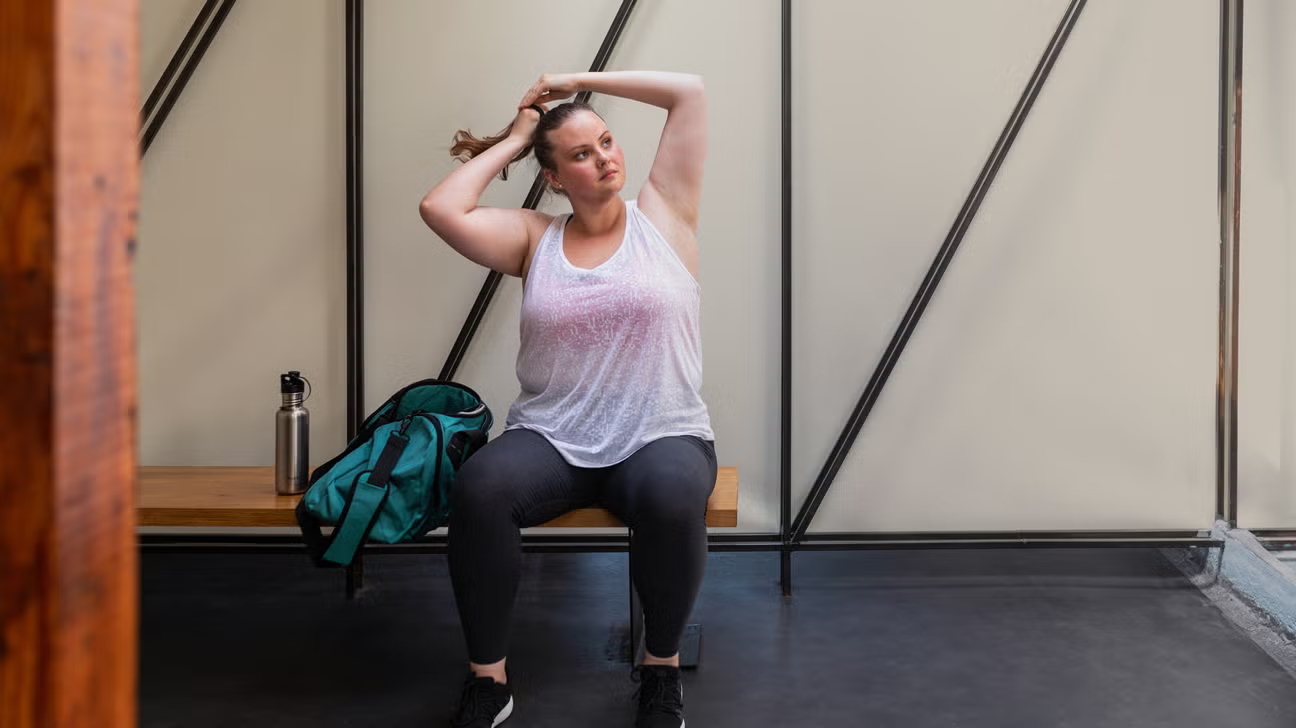
While the gym claims it’s meant to “better cater to younger female members,” critics are calling it discriminatory, ageist, and “ridiculous.”
So, does the gym’s policy stand on firm ground—or break it? Let’s unpack the full story and its implications for fitness, business, and inclusion.
Jump to:
What Happened: The Age-Based Access Rule
The controversy started when a 36-year-old woman shared her experience on the U.K.-based community forum Mumsnet. She claimed her gym sent an email stating a major policy shift: women between the ages of 12 and 24 would be given exclusive access to the gym from 4 p.m. to 7 p.m., Monday through Friday.

This new policy effectively excluded older women—like the original poster—from attending during these peak workout hours. The woman mentioned she had specifically joined the gym because of its welcoming “ladies’ hours,” which previously ran from 9 a.m. to 7 p.m. on weekdays. Feeling excluded and frustrated, she shared her story and asked, “[Am I being unreasonable] to think this is unfair?”
The Gym’s Justification: A ‘Safe Space’ for Young Women
According to the email the woman posted, the decision was made “in response to feedback and to better cater to our younger female members.” It emphasized the goal of creating a “dedicated, comfortable space” for young women, especially during after-school and early evening hours when teenage girls were most likely to attend.
Some online commenters sympathized with this point, noting the unique social and psychological barriers young women—especially adolescents—face when starting a fitness routine. Gym intimidation, male-dominated weightlifting zones, and hypersexualized spaces can pose real challenges for young females entering the gym world.
“Teenage girls collectively are a group highly at risk of stopping exercise. There’s a purpose in providing a space just for them,” said one forum user.
Backlash: “This Is Ridiculous, Right?”
The majority of responses, however, were anything but supportive. People across age groups called out the gym’s policy as discriminatory, illogical, and ageist. Many pointed out that all women deserve safe and respectful workout spaces—regardless of their age.
“That’s absolutely ridiculous! Why women of a certain age!? I’d feel furious, OP,” one commenter posted.
Another said, “Once a week, fine. One hour a day outside of peak times, fine. Three hours every weekday is mental. I’d cancel, too.”
Critics questioned why the policy targeted only older women, rather than offering separate spaces for younger members or adding youth-only classes. Others noted that moms and professionals often rely on those peak hours after work for their own fitness time, making the exclusion particularly harmful.
Is It Legal—or Ethical?
The legality of the move depends on the country and how age discrimination is regulated in private businesses. In the U.K., where this incident occurred, the Equality Act 2010 protects individuals from discrimination based on age, among other protected characteristics. If a policy disproportionately affects one group without solid justification, it may be challengeable.
Ethically, fitness experts say inclusiveness should be the guiding principle.
“Fitness isn’t just for the young—it’s a lifelong commitment to health. Policies like these send the wrong message and risk alienating large segments of the population,” says certified personal trainer and wellness coach Katie Dawson.
Dawson adds that while it’s admirable to support younger gym-goers, it should never come at the direct expense of others. “There are countless ways to do both—like creating classes, modifying layouts, or extending youth-only hours on weekends.”
Why This Story Strikes a Collective Nerve
The viral attention this story received is telling. It’s not just about one gym or one woman—it reflects ongoing struggles in the fitness world when it comes to inclusion, accessibility, and generational respect.
Increasingly, older millennials and Gen X women are prioritizing their physical health and wellness. Many juggle jobs, caregiving roles, and community duties—leaving limited windows for self-care. Removing access during those rare hours they can use leaves them behind.
What’s more, this move seems to contradict the wider fitness industry’s push to empower all women—of all ages, abilities, body sizes, and backgrounds—to prioritize health on their own terms.
Empowering Every Age to Show Up
If a gym wants to truly be inclusive, it needs to rethink the idea of one group being prioritized over another. Health and fitness spaces should be designed with empathy, not exclusion.
Here are a few inclusive alternatives that gyms can implement instead of age-restricted hours:
- Offer Youth Designated Classes: Host exclusive group sessions for ages 12-24 with supervision and mentoring.
- Dedicated Spaces: Create a separate area within the gym during peak hours to give young members the space they need—without displacement.
- Staggered Access: Use reservation systems or limit crowd sizes based on capacity, not age.
- Inclusive Programming: Provide specialized support for various age groups and life stages, from postnatal training to senior wellness.
The Final Word: Community-Driven Fitness Beats Age-Based Barriers
Creating a gym environment that feels welcoming and empowering isn’t about restricting opportunities—it’s about expanding them thoughtfully. If the backlash to this story reveals anything, it’s that people don’t want fewer options when it comes to staying healthy—they want more ways to show up, feel safe, and be seen.
Women deserve to feel welcome at every age, and every hour.