Victoria Thomas thought she was just pushing through another intense boot camp session at her local gym in Gloucester, UK.
But within moments, the then-35-year-old accountant would experience something most people never live to describe.
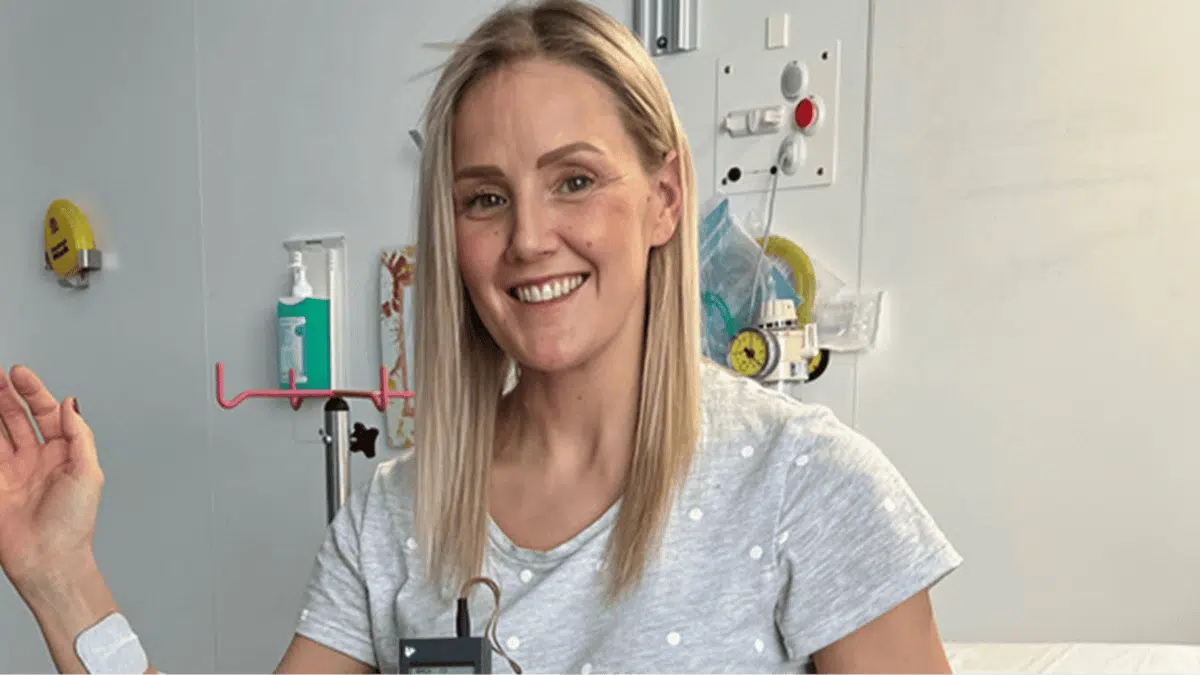
Her heart stopped beating for 17 agonizing minutes, and what she witnessed during that time has left medical professionals and listeners alike utterly stunned.
Now 41 and a mother, Victoria is sharing her harrowing journey from cardiac arrest to heart transplant—and revealing exactly what happens when life slips away.
Jump to:
The Moment Everything Changed
Victoria recalls the weightlifting session felt normal at first. She was fit, healthy, and had no family history of heart problems.
Then, without warning, everything shifted.
I was also feeling slightly dizzy. I felt like all my energy just drained from my body.
She managed to tell her friend she felt unwell. Those were her last words before collapsing onto the gym floor.
Victoria had gone into sudden cardiac arrest. Paramedics rushed to the scene and immediately began performing CPR, fighting desperately to restart her heart.
What She Saw When Her Heart Stopped
For 17 minutes, Victoria’s heart refused to beat. During that time, she experienced something she’ll never forget.
My world went black and there was nothing. Then I became aware of looking down on my body. I was floating near the roof and was looking down at myself on the gym floor.
Unlike many near-death experiences reported in popular culture, Victoria didn’t see a tunnel of light or feel overwhelming peace.
Instead, she observed the scene below with eerie clarity.
I didn’t see a light, or feel peaceful, I was just watching myself, and I could see some yellow machines around me.
Seventeen Minutes of Life-Saving Efforts
While Victoria floated above her body, paramedics below refused to give up. Minute after agonizing minute ticked by as they performed continuous chest compressions and used defibrillation equipment.
Most cardiac arrest victims who don’t respond within the first few minutes face slim chances of survival. Brain damage typically begins after just four to six minutes without oxygen.
But Victoria’s medical team persisted.
They never gave up on me. The minutes ticked by, but they refused to stop trying. I was so young, fit and healthy and it had come completely out of the blue.
Finally, after what seemed like an eternity, Victoria’s heart began beating again. She had been brought back from the brink.
The Road to Recovery Begins
Victoria spent three days in a medically induced coma following her resuscitation. When she woke, doctors fitted her with an implantable cardioverter-defibrillator (ICD)—a device designed to detect irregular heartbeats and deliver electric shocks to restore normal rhythm.
It proved to be a life-saving decision. In the months that followed, Victoria’s heart stopped multiple times.
Each time, her defibrillator kicked in, jolting her heart back to life and allowing her to continue her daily activities.
I went back to playing netball three weeks after it happened, with my defibrillator. It was a shock whenever it went off, but it allowed me to carry on living my normal life, which I was so grateful for.
A Devastating Diagnosis
For years, doctors struggled to understand why Victoria—someone with no family history of heart disease—kept experiencing cardiac arrest.
The answer finally came in 2021 when she was 24 weeks pregnant. Victoria was diagnosed with Danon disease, an extremely rare genetic disorder.
According to the Cleveland Clinic, Danon disease is inherited and progressively damages multiple organs, including:
- Heart muscle (causing cardiomyopathy)
- Skeletal muscles (leading to weakness)
- Retina (affecting vision)
- Brain function
Remarkably, Victoria was the first person in her family ever diagnosed with this condition.
Fighting for Her Baby
Pregnancy placed enormous additional strain on Victoria’s already compromised heart. She went into cardiac arrest regularly throughout her pregnancy.
At 30 weeks, doctors determined they couldn’t wait any longer. Victoria underwent an emergency caesarean section to deliver her son, Tommy.
Thankfully, baby Tommy was born healthy despite the early delivery. But Victoria’s health continued to deteriorate rapidly.
Months to Live
In 2022, a routine check-up revealed devastating news. Victoria’s heart was functioning at just 11 percent capacity—a level typically associated with end-stage heart failure.
When she asked doctors how long she had left, their answer was crushing.
I asked the doctors how long I had left and they told me I had just another couple of months. It was devastating. All I could think of was Tommy. I vowed I wouldn’t leave him.
Most mothers would crumble under such a prognosis. Victoria decided to fight.
A Second Chance at Life
In April 2023, Victoria received what she calls “the greatest gift”—a successful heart transplant.
The surgery gave her failing body a new lease on life. With her donor heart beating strong, Victoria didn’t just survive—she thrived.
Now, just over two years post-transplant, she’s preparing to compete in both volleyball and basketball at the World Transplant Games in Germany.
It’s a remarkable testament to her resilience and the miracle of modern transplant medicine.
Breaking the Cycle
Perhaps the most relieving news for Victoria came from genetic testing performed on three-year-old Tommy.
Results showed he’s completely “in the clear”—no signs of Danon disease. The devastating genetic condition that nearly claimed his mother’s life won’t haunt his future.
Living with Gratitude
Today, Victoria approaches each day with profound appreciation. She’s witnessed the other side and returned to tell about it—not once, but multiple times.
I feel like I’ve been given a second chance at life, and to be a mum. It’s the greatest gift I could ever have asked for.
Her story serves as a powerful reminder of several critical health lessons:
- Cardiac arrest can strike anyone—even young, fit individuals with no family history
- CPR saves lives—those paramedics’ refusal to quit made all the difference
- Genetic testing matters—early diagnosis of rare conditions like Danon disease can inform treatment decisions
- Organ donation is transformative—someone’s generous decision gave Victoria years she wouldn’t have had otherwise
Victoria’s journey from that gym floor in Gloucester to competing internationally as a transplant athlete represents one of medicine’s most inspiring success stories.
She died for 17 minutes, floated above her own body, received a terminal diagnosis, and defied every odd stacked against her.
Now she’s not just surviving—she’s showing the world what true resilience looks like.