A new scientific hypothesis is drawing connections between sunlight, mitochondrial function, and human health that could reshape how we think about light exposure.
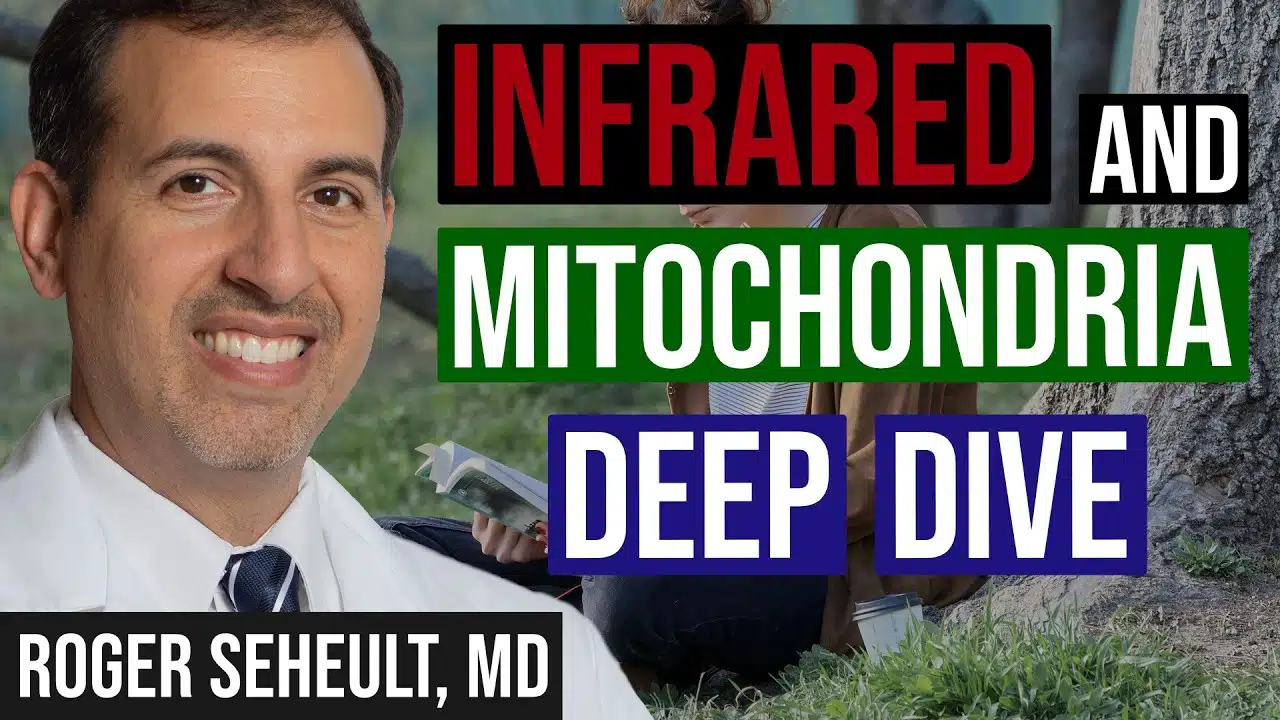
Dr. Roger Seheult, co-founder of MedCram, has spent a year developing a preprint paper titled “Metabolism in the Solar Photon Field” that proposes a novel mechanism for how infrared light from the sun interacts with our cellular powerhouses.
The implications stretch far beyond basic biology—they touch on hospital design, workplace lighting, seasonal disease patterns, and why spending time outdoors might be more critical than previously understood.
What makes this hypothesis particularly intriguing is how it weaves together astrophysics, molecular biology, and clinical medicine into a unified theory of “photometabolism.”
Jump to:
- The Core Hypothesis: How Sunlight Talks to Mitochondria
- The Sun’s Hidden Gift: A Peak at 0.754 Electron Volts
- Marcus Theory Meets Mitochondria
- How Infrared Light Changes the Game
- Broad Spectrum Versus Monochromatic Light
- Deep Sea Yeast: An Unexpected Confirmation
- Metabolic Scaling and Solar Power
- The Indoor Light Problem
- Hospitals Are Taking Notice
- Seasonal Disease Patterns and Latitude
- What’s Actually Novel Here?
- Reconciling Contradictory Findings
- Implications for Human Health and Design
- The Bigger Picture
- Sources
The Core Hypothesis: How Sunlight Talks to Mitochondria
Seheult’s team—including astronomer Dr. Robert Fosbury, lighting engineer Scott Zimmerman, and neuroscientist Professor Glenn Jeffrey—proposes that infrared light doesn’t simply heat tissue or trigger specific receptors.
Instead, it causes molecules surrounding electron transfer sites in mitochondria to vibrate in specific ways.

If you want something simple that actually works, this is one of the most effective tools I’ve used to build strength, conditioning, and endurance without needing a full gym setup.
- Full-body training with one weight using swings, squats, and presses
- Solid cast iron build that feels stable and lasts for years
- Comfortable grip that makes high-rep workouts easier to handle
Electrons move best when the surrounding molecules are arranged just right. Infrared light causes those molecules to vibrate changing how often the mitochondria reach those favorable arrangements.
The mechanism centers on something called Marcus electron transfer theory, developed by Nobel laureate Rudolph Marcus in the 1960s and 70s.
This framework describes how electrons hop between molecules during energy production—a process that requires precise molecular arrangements to occur efficiently.
Why Infrared Light Penetrates Deep
Research published in 2025 by Glenn Jeffrey’s lab demonstrated that longer wavelengths of sunlight can pass through human tissue remarkably well.
An image from that study showed 850-nanometer light passing completely through a human hand, with measurable amounts detected on the other side.
This wavelength range—particularly between 750 and 1,000 nanometers—can also penetrate through clothing easily. That means infrared radiation from the sun could potentially reach mitochondria deep within tissues, even when we’re dressed.
The Sun’s Hidden Gift: A Peak at 0.754 Electron Volts
One of the more fascinating astrophysical details involves why sunlight contains such abundant infrared photons in the first place.
If you want something simple that actually works, this is one of the most effective tools I’ve used to build strength, conditioning, and endurance without needing a full gym setup.
- Full-body training with one weight using swings, squats, and presses
- Solid cast iron build that feels stable and lasts for years
- Comfortable grip that makes high-rep workouts easier to handle
The sun’s photosphere—its outer atmospheric layer—contains hydride ions (hydrogen atoms with an extra electron). These ions create what’s called an “opacity minimum” at approximately 0.754 electron volts, or around 1,600 nanometers.
Photons at this energy level pass through the sun’s atmosphere most easily, resulting in far more infrared photons reaching Earth than would be expected from a simple blackbody radiator of the sun’s temperature.
This gives a window into a hotter sun and that’s the reason why we see this increase in photons in that area.
Seheult describes this using a currency analogy: if photons were dollar bills, visible light would represent the most total money (energy). But infrared photons would represent the most individual bills—the highest photon count.
Marcus Theory Meets Mitochondria
Understanding how this infrared light affects metabolism requires grasping Marcus electron transfer theory.
When electrons move through the mitochondrial electron transport chain, they don’t simply slide from one molecule to another. The surrounding environment must arrange itself precisely first.
Protein side chains must twist. Water molecules must reorient. The donor and acceptor molecules must shift into exact configurations.
If you want something simple that actually works, this is one of the most effective tools I’ve used to build strength, conditioning, and endurance without needing a full gym setup.
- Full-body training with one weight using swings, squats, and presses
- Solid cast iron build that feels stable and lasts for years
- Comfortable grip that makes high-rep workouts easier to handle
This rearrangement requires energy—called “reorganization energy” or lambda (λ). Marcus described this using parabolic curves representing the energy states of reactants and products.
The Sweet Spot: Activationless Transfer
The most efficient electron transfer occurs when the energy released by the reaction exactly equals the reorganization energy required. This creates what’s called “activationless transfer”—the crossing point sits right at the minimum energy state of the reactants.
No additional energy barrier needs to be overcome. Electrons flow freely.
Marcus predicted something counterintuitive: if you make a reaction too energetically favorable, it actually slows down again. This “inverted region” was experimentally confirmed in 1988, earning Marcus the Nobel Prize in 1992.
Remarkably, Seheult and Fosbury spoke with Marcus via Zoom just months before his death at age 102 in 2025, discussing this very hypothesis.
How Infrared Light Changes the Game
The key insight: infrared light causes vibrations that shift the probability distribution along Marcus parabolic curves.
If you want something simple that actually works, this is one of the most effective tools I’ve used to build strength, conditioning, and endurance without needing a full gym setup.
- Full-body training with one weight using swings, squats, and presses
- Solid cast iron build that feels stable and lasts for years
- Comfortable grip that makes high-rep workouts easier to handle
Instead of molecules spending most of their time at the lowest energy configuration, infrared excitation pushes more of them up the curve into higher-energy arrangements.
Depending on where the Marcus crossing point is, this can either speed up or slow down electron transfer:
- Speed up: If the crossing point requires climbing an energy barrier, infrared vibration helps more molecules reach that crossing point
- Slow down: If molecules already sit at the optimal crossing point, infrared can push them away from it
This explains why different infrared wavelengths can have opposite effects on mitochondrial function.
Experimental Evidence Supporting the Mechanism
A 2018 study by Ma and colleagues provided direct evidence for this mechanism, though not in mitochondria.
They built a synthetic molecule and used pulses of mid-infrared light to cause “bridge vibrations” during electron transfer. The results exactly matched Marcus theory predictions.
We find that IR excitation of hydrogen bond bridging modes accelerates charge recombination and slows charge separation we pinpointed the origins of the observed IR induced rate changes as being perturbations to the density of states in the reaction coordinate right at the curve crossing.
The forward reaction slowed because infrared pushed nuclear arrangements away from the crossing point. The reverse reaction accelerated because infrared pushed arrangements toward its crossing point.
If you want something simple that actually works, this is one of the most effective tools I’ve used to build strength, conditioning, and endurance without needing a full gym setup.
- Full-body training with one weight using swings, squats, and presses
- Solid cast iron build that feels stable and lasts for years
- Comfortable grip that makes high-rep workouts easier to handle
Broad Spectrum Versus Monochromatic Light
One critical distinction in Seheult’s hypothesis: sunlight’s broad infrared spectrum may be more effective than single-wavelength treatments.
Mitochondrial respiration involves dozens of distinct electron transfer steps. Each has its own Marcus crossing point and responds to different vibrational modes.
A continuous spectrum can simultaneously modulate multiple rate-limiting steps, whereas monochromatic light targets only one narrow pathway.
Jeffrey’s 2025 research on color blindness supports this. Study participants showed 9% improvement with 850nm monochromatic light applied to head and body. But using a 60-watt incandescent bulb—which emits broad-spectrum light—produced 28% improvement.
Similar patterns appeared for tritan color blindness: 16% improvement with monochromatic versus 24-28% with broad spectrum.
Deep Sea Yeast: An Unexpected Confirmation
Perhaps the most striking evidence comes from an unlikely source: yeast living near deep-sea hydrothermal vents.
If you want something simple that actually works, this is one of the most effective tools I’ve used to build strength, conditioning, and endurance without needing a full gym setup.
- Full-body training with one weight using swings, squats, and presses
- Solid cast iron build that feels stable and lasts for years
- Comfortable grip that makes high-rep workouts easier to handle
A 2026 study by Dai and colleagues isolated Rhodotorula mucilaginosa from sediments just half a meter from a black smoker chimney in the central Indian Ocean, where temperatures reached 378°C.
When exposed to near-infrared wavelengths (810-1050nm) in carefully temperature-controlled conditions, the yeast showed dose-dependent growth stimulation compared to dark controls.
The effect couldn’t be attributed to warming—temperatures were matched precisely. Instead, researchers concluded that near-infrared light allowed growth “to bypass or mitigate a major thermal rate-limiting step.”
Infrared Outperformed Glucose
Under carbon-limited conditions, adding glucose produced only a 1.3-fold increase in biomass. Near-infrared light at 880nm produced a threefold increase.
Adding glucose plus infrared didn’t significantly exceed infrared alone, suggesting light wasn’t acting as conventional metabolic fuel but rather improving utilization of existing substrate.
Photons aren’t supplying free energy of metabolism. They may be modifying the kinetics by which existing chemical energy is processed.
When researchers inhibited cytochrome c oxidase (Complex IV) with azide, dark growth fell only 11%, but near-infrared stimulated growth dropped 44%—pointing directly to mitochondrial involvement.
If you want something simple that actually works, this is one of the most effective tools I’ve used to build strength, conditioning, and endurance without needing a full gym setup.
- Full-body training with one weight using swings, squats, and presses
- Solid cast iron build that feels stable and lasts for years
- Comfortable grip that makes high-rep workouts easier to handle
Metabolic Scaling and Solar Power
One of the hypothesis’s more intriguing aspects involves biological scaling laws.
Metabolic rate scales with body mass to the 3/4 power across species—from flies to elephants. This relationship, known as Kleiber’s law, has puzzled biologists for decades.
Seheult’s team calculated that incident solar power in the infrared range (0.31 to 1.31 electron volts) also scales at approximately mass to the 3/4 power.
For organisms ranging from tiny flies to massive elephants, the amount of infrared radiation intercepted by the body matches metabolic scaling remarkably well.
This doesn’t prove causation, but it suggests sunlight could be a modulating factor in metabolic activity across the entire biosphere—not just in humans.
The Indoor Light Problem
Modern built environments present a potentially serious mismatch with evolutionary light exposure.
If you want something simple that actually works, this is one of the most effective tools I’ve used to build strength, conditioning, and endurance without needing a full gym setup.
- Full-body training with one weight using swings, squats, and presses
- Solid cast iron build that feels stable and lasts for years
- Comfortable grip that makes high-rep workouts easier to handle
LED bulbs emit virtually no infrared radiation. Low-E glass windows, designed to improve energy efficiency, block infrared wavelengths almost completely.
Seheult measured infrared levels in his dining room with windows open: just 0.810 watts per square meter. Outside under a shade tree with grass reflecting infrared light: 41.9 watts per square meter—orders of magnitude higher.
Office workers spending eight-plus hours daily under LED lighting, behind Low-E glass, may be experiencing chronic infrared deficiency compared to our evolutionary environment.
Clinical Applications Already Emerging
Despite being monochromatic, near-infrared photobiomodulation has shown clinical benefits in randomized controlled trials.
One study using 940nm light at 29 watts per square meter for just 15 minutes daily reduced COVID-19 patient hospital length of stay from approximately 12 days to 8 days.
Another triple-blinded, sham-controlled trial using 850nm light reduced ICU length of stay by 30% and improved muscle strength across nearly all measures.
If you want something simple that actually works, this is one of the most effective tools I’ve used to build strength, conditioning, and endurance without needing a full gym setup.
- Full-body training with one weight using swings, squats, and presses
- Solid cast iron build that feels stable and lasts for years
- Comfortable grip that makes high-rep workouts easier to handle
If monochromatic infrared produces these effects, the hypothesis suggests broad-spectrum natural sunlight might be even more effective.
Hospitals Are Taking Notice
Some medical centers are already redesigning spaces to maximize natural light exposure.
Footscray, Australia built a $1.5 billion hospital with ICU beds that can move outside. King’s College Hospital in London invested £2 million transforming their rooftop into a critical care space accommodating up to six beds with full sunlight exposure.
St. George Hospital across London created a neurointensive care rooftop unit, even drawing a visit from Queen Camilla in 2026.
These institutions aren’t just creating pleasant environments—they’re betting on measurable clinical outcomes, particularly reduced length of stay.
Seasonal Disease Patterns and Latitude
Multiple large-scale epidemiological patterns align with the photometabolism hypothesis.
If you want something simple that actually works, this is one of the most effective tools I’ve used to build strength, conditioning, and endurance without needing a full gym setup.
- Full-body training with one weight using swings, squats, and presses
- Solid cast iron build that feels stable and lasts for years
- Comfortable grip that makes high-rep workouts easier to handle
In the United States, mortality from both infectious and non-infectious causes peaks 1-3 weeks after the winter solstice (shortest day) and reaches minimum levels 1-3 weeks after the summer solstice (longest day).
This includes:
- Heart disease
- Cancer
- Stroke
- Chronic respiratory disease
- Alzheimer’s disease
- Diabetes
- Influenza and pneumonia
The seasonal difference in heart disease mortality alone exceeds total influenza deaths during flu season.
The Australian Flu Season Proves It’s Not About Holidays
Some attribute winter disease spikes to holiday gatherings. But Australia celebrates Christmas and New Year’s in summer—between their July flu peaks.
Australian influenza spikes occur in July, 1-3 weeks after their winter solstice, exactly paralleling Northern Hemisphere patterns shifted six months.
Singapore, just 80 miles from the equator with minimal seasonal variation in sunlight, shows no distinguishable seasonal flu pattern.
If you want something simple that actually works, this is one of the most effective tools I’ve used to build strength, conditioning, and endurance without needing a full gym setup.
- Full-body training with one weight using swings, squats, and presses
- Solid cast iron build that feels stable and lasts for years
- Comfortable grip that makes high-rep workouts easier to handle
Studies have also linked COVID-19 mortality to latitude, independent of vitamin D levels, with ultraviolet light serving as a surrogate marker for total sun exposure.
What’s Actually Novel Here?
Seheult emphasizes that his team’s preprint primarily integrates existing knowledge from separate scientific silos rather than discovering entirely new phenomena.
Already established in scientific literature:
- Mitochondrial electron transfer obeys Marcus-type physics
- Red and near-infrared light can alter mitochondrial function
- Water and protein structures affect electron transfer kinetics
- Infrared radiation can change molecular electron transfer rates
What’s distinctive is the mechanistic integration: proposing that infrared light modulates mitochondrial function specifically by perturbing protein-solvent-nuclear dynamics along Marcus activation landscapes.
Our claim is that infrared light excites changes mitochondrial electron transfer kinetics by perturbing protein solvent and nuclear reorganization and thereby changing access to Marcus crossing configurations.
Previous explanations focused on cytochrome c oxidase acting as a photoreceptor or structured water reducing viscous drag on ATP synthase’s rotary motor.
The Marcus framework explains something those theories couldn’t: why different infrared wavelengths can have opposite effects on the same mitochondrial complex.
If you want something simple that actually works, this is one of the most effective tools I’ve used to build strength, conditioning, and endurance without needing a full gym setup.
- Full-body training with one weight using swings, squats, and presses
- Solid cast iron build that feels stable and lasts for years
- Comfortable grip that makes high-rep workouts easier to handle
Reconciling Contradictory Findings
A 2018 study by Sanderson created a puzzle: 810nm light increased cytochrome c oxidase activity and oxygen consumption. But 750nm and 950nm decreased Complex IV activity by 5-6% each.
In intact mitochondria, 750nm and 950nm together reduced oxygen consumption by 34%.
Researchers even proposed using these inhibitory wavelengths therapeutically for cerebral reperfusion injury—situations where reducing metabolism might be beneficial.
The Marcus framework explains this: different wavelengths affect different vibrational modes and crossing points. Some push nuclear arrangements toward optimal transfer configurations; others push them away.
The research on infrared light and mitochondrial function is more nuanced than sometimes portrayed. While multiple studies show near-infrared wavelengths can stimulate ATP production and cellular metabolism, the effects are highly wavelength-specific and not universally beneficial. A 2018 review in Photobiomodulation, Photomedicine, and Laser Surgery found that certain near-infrared wavelengths (750nm and 950nm) actually inhibit cytochrome c oxidase activity rather than enhance it, supporting the hypothesis that different wavelengths interact with electron transfer in mechanistically distinct ways. The proposed Marcus electron transfer mechanism, while theoretically plausible, represents an integration of existing frameworks rather than experimentally verified causation in living mitochondria—most direct evidence comes from synthetic molecular systems, not intact cellular respiration.
Implications for Human Health and Design
If this hypothesis withstands experimental testing, implications extend across multiple domains.
If you want something simple that actually works, this is one of the most effective tools I’ve used to build strength, conditioning, and endurance without needing a full gym setup.
- Full-body training with one weight using swings, squats, and presses
- Solid cast iron build that feels stable and lasts for years
- Comfortable grip that makes high-rep workouts easier to handle
Clinical medicine: Outdoor exposure might become a prescribed intervention, not just a wellness recommendation. Hospital design would need to prioritize natural light access.
Workplace health: Office buildings blocking infrared while providing only LED lighting could be creating metabolic stress. Infrared-supplemented lighting systems might become standard.
Seasonal health: Understanding photometabolism could inform targeted interventions during winter months when disease burden peaks.
Evolutionary biology: The mechanism could explain metabolic scaling laws and offer insights into how life adapted to Earth’s specific solar spectrum.
Testing the Hypothesis
Seheult believes the hypothesis is testable through carefully designed experiments.
Researchers could measure electron transfer rates at specific mitochondrial complexes under different infrared wavelengths while monitoring reorganization energy changes using spectroscopic techniques.
If you want something simple that actually works, this is one of the most effective tools I’ve used to build strength, conditioning, and endurance without needing a full gym setup.
- Full-body training with one weight using swings, squats, and presses
- Solid cast iron build that feels stable and lasts for years
- Comfortable grip that makes high-rep workouts easier to handle
Comparing monochromatic versus broad-spectrum infrared on identical mitochondrial preparations could directly test whether spectral diversity improves overall electron transport chain flux.
Clinical trials comparing natural sunlight exposure, broad-spectrum infrared supplementation, and monochromatic photobiomodulation could establish relative effectiveness.
The Bigger Picture
What makes this collaboration particularly compelling is its interdisciplinary nature.
An astronomer brought understanding of solar photon physics. A physician contributed clinical and physiological perspective. A lighting engineer provided technical expertise on spectral characteristics. A neuroscientist offered experimental validation through mitochondrial research.
Breaking down knowledge silos revealed connections invisible from within any single discipline.
I think that’s going to be very interesting here as we go through first of all our proposal the hypothesis and then when we start to show you the data and the research that has gone before and why this is something that’s novel.
The team proposes the term “photometabolism” for this phenomenon—solar-driven, non-photosynthetic modulation of core metabolic processes.
If you want something simple that actually works, this is one of the most effective tools I’ve used to build strength, conditioning, and endurance without needing a full gym setup.
- Full-body training with one weight using swings, squats, and presses
- Solid cast iron build that feels stable and lasts for years
- Comfortable grip that makes high-rep workouts easier to handle
If validated, photometabolism would represent a fundamental biological principle operating across the entire biosphere, from deep-sea yeast to humans, wherever mitochondria power life.
The hypothesis doesn’t claim infrared light is a cure-all or that existing photobiomodulation explanations are wrong. Rather, it offers a more comprehensive framework explaining a wider range of observations—including contradictory findings—through well-established physics.
As indoor lifestyles increasingly diverge from evolutionary light exposure patterns, understanding whether and how this matters for metabolic health becomes more critical.
The preprint invites scientific scrutiny and experimental testing. Whether it proves correct in all details or sparks refinements and alternative explanations, it’s asking questions with potentially profound implications for how we design spaces, treat disease, and understand the relationship between light and life.
Sources
- Seheult R, Fosbury RA, Zimmerman S, Jeffrey G. “Metabolism in the Solar Photon Field” (2025 preprint)
- Jeffrey G, et al. “Longer wavelengths in sunlight can pass through the human body” (2025)
- Karu T, et al. “Photobiomodulation and cellular ATP” Photochemistry and Photobiology (2005)
- Sanderson TH, et al. “Inhibitory modulation of cytochrome c oxidase with near-infrared light” Biochemistry (2018)
- Ma J, et al. “Vibrational control of electron transfer reactions” Nature Chemistry (2018)
- Dai L, et al. “Infrared stimulation of mitochondrial metabolism in deep-sea yeast” Environmental Microbiology (2026)
- Jeffrey G, et al. “Color blindness improvement with near-infrared light” (2025)
- Marcus RA, Sutin N. “Electron transfers in chemistry and biology” Biochimica et Biophysica Acta (1985)
- Photobiomodulation, Photomedicine, and Laser Surgery review on wavelength-specific effects (2018)