A nightly glass of wine feels harmless, but Harvard addiction specialist Dr. Sarah Wakeman says the numbers tell a different story.
In a recent podcast interview, she explained how little alcohol it takes to nudge health risks upward.
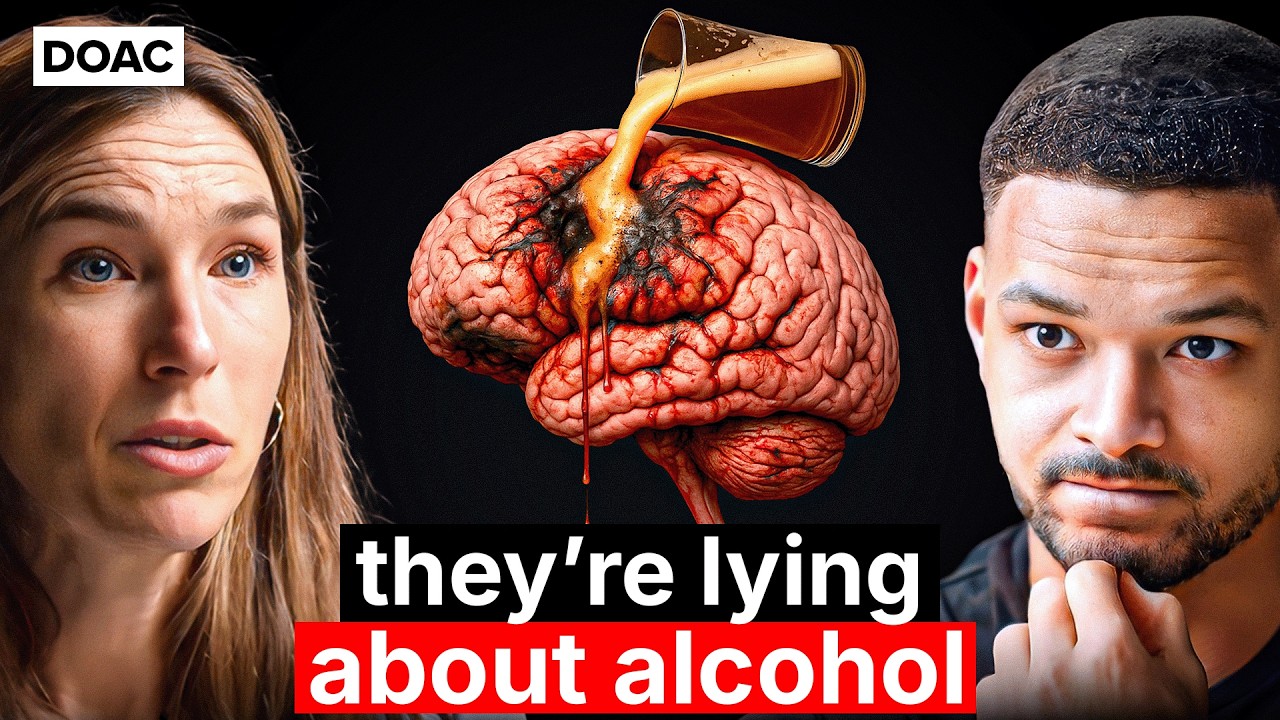
Her definition of “one drink” shocked even the host.
She also displayed a brain scan that looked decades older than its owner.
Keep reading to learn what actually helps people cut back, including a medication taken just before a party.
Jump to:
Why One Glass Is Rarely Just One Drink
Portion size fools most people. Wakeman compares it to reading a food label, where a real serving of ice cream is about half a scoop, not a giant sundae.
If you want something simple that actually works, this is one of the most effective tools I’ve used to build strength, conditioning, and endurance without needing a full gym setup.
- Full-body training with one weight using swings, squats, and presses
- Solid cast iron build that feels stable and lasts for years
- Comfortable grip that makes high-rep workouts easier to handle
- UK low-risk limit: 14 units weekly, with one unit equal to 8 grams of alcohol
- Typical generous pour of wine: roughly 3 units
- One glass daily: about 21 units, well past that limit
- Two glasses daily: the heavy drinking category
You’d be in what we call moderate risk, which is associated with pretty much every form of cancer, which I think people don’t know.
Weekly patterns matter too. Two glasses one night, three at a social event, one the next day pushes totals far beyond expectations.
What the Cancer Numbers Look Like
Breast and esophageal cancers are the two where risk climbs even under low-risk limits. For most other cancers, increases appear once drinking reaches the moderate category.
There’s really sort of no safe amount of alcohol when it comes to breast cancer.
Sounds terrifying, so perspective helps. A 5% relative increase would lift the average US woman’s lifetime breast cancer risk from about 13% to roughly 13.6%, by Wakeman’s math.
Heavier drinking changes the picture. She estimates roughly a 40% increase for two glasses daily, depending on cancer type, while stressing that population studies cannot predict any single person’s fate.
How Alcohol Damages Cells
Your body treats ethanol as an abnormality and converts it into acetate, then clears it through urine and breath. Along the way, a toxic byproduct circulates and damages cells, while inflammation changes DNA over time.
Smoking compounds everything. Wakeman says drinkers who smoke face a multiplied risk rather than a simple additive one.
If you want something simple that actually works, this is one of the most effective tools I’ve used to build strength, conditioning, and endurance without needing a full gym setup.
- Full-body training with one weight using swings, squats, and presses
- Solid cast iron build that feels stable and lasts for years
- Comfortable grip that makes high-rep workouts easier to handle
Is Red Wine Actually Healthy?
Older studies produced a famous J-shaped curve, suggesting moderate drinkers outlived abstainers. Flawed comparison groups explain it.
Many non-drinkers in those datasets were already unhealthy, with heart failure or a history of alcohol problems and recovery. Swap in very light drinkers as the comparison, and the apparent benefits fade across all conditions.
I would never say drinking alcohol is good for your health.
Wakeman doesn’t demand abstinence. She likens alcohol to dessert, bacon, or sunbathing: real risks, personal choice.
Don’t fool yourself into thinking that drinking that glass of wine is like going to exercise for 30 minutes.
Liver, Brain, and Heart Take the Hit
The Liver’s Point of No Return
The liver can regrow after losing 80% of its tissue. Scarring (cirrhosis) ends that superpower.
Wakeman uses a baking analogy: forget the eggs before the oven, and you can still whisk them in. Once muffins are baked, no fix exists.
She now sees patients in their 20s arriving in liver failure, often unaware alcohol was harming them. Massive binge episodes likely do more damage than steady moderate drinking, because toxic byproducts surge.
If you want something simple that actually works, this is one of the most effective tools I’ve used to build strength, conditioning, and endurance without needing a full gym setup.
- Full-body training with one weight using swings, squats, and presses
- Solid cast iron build that feels stable and lasts for years
- Comfortable grip that makes high-rep workouts easier to handle
A 43-Year-Old Brain That Looks 90
MRI scans reveal shrinking tissue and expanding fluid space with heavy drinking. One image showed a 43-year-old with severe alcohol addiction whose brain resembled a 90-year-old with dementia.
Nutritional deficiencies accelerate damage and can even trigger sudden amnesia.
Heartburn and “Holiday Heart”
- Heart: moderate-to-high intake raises risk of atrial fibrillation, an irregular rhythm sometimes called holiday heart after binges
- Long-term: weakened, floppy heart muscle can lead to heart failure
- Esophagus: constant heartburn might signal drinking too much
Handling your liquor well? Alcohol diffuses into body water, not fat, so leaner people often show lower blood alcohol. Feeling less drunk or skipping hangovers does not shield organs from damage.
Why People Drink: Trauma, Genetics, and Isolation
Risk splits roughly between 40 to 60% genetics and life experiences. Wakeman calls adverse childhood experiences a major driver, with risk climbing in a linear pattern as such experiences accumulate.
You often hear things like cannabis is a gateway drug. I would say trauma is the gateway drug.
Brain chemistry explains alcohol’s pull. Beyond dopamine, it acts on the calming GABA system and triggers release of natural opioids.
It’s an anti-anxiety and a pain medication sort of all-in-one.
Connection matters enormously. Citing the Rat Park experiments, where isolated rats chased drugs but social, stimulated rats lost interest, Wakeman cautions the model is probably oversimplified, yet the lesson holds.
If you want something simple that actually works, this is one of the most effective tools I’ve used to build strength, conditioning, and endurance without needing a full gym setup.
- Full-body training with one weight using swings, squats, and presses
- Solid cast iron build that feels stable and lasts for years
- Comfortable grip that makes high-rep workouts easier to handle
We often talk about the opposite of addiction is not sobriety, it’s actually connection.
What Actually Works for Alcohol Problems
Wakeman is generally not a fan of traditional rehab. Addiction behaves like a chronic illness, not an infection fixed by two weeks of antibiotics.
Her team ran a secret shopper study of rehab programs nationwide. Many offered horse therapy or dolphin-assisted therapy instead of trained clinicians delivering evidence-based care or medication.
Options She Highlights
- Opioid-blocking medication: drinking stops delivering the same reward. Researcher Sinclair tested taking it about 30 minutes before events, and people stopped after one drink.
- Psilocybin-assisted therapy: a trial compared a large dose against Benadryl, with an eight-hour guided session. Participants drank much less afterward.
- GLP-1 weight-loss drugs: early placebo-controlled studies suggest reduced drinking, possibly by resetting craving.
- Evidence-based therapy: cognitive behavioral therapy and motivational enhancement therapy, with an empathetic therapist.
Therapist warmth matters surprisingly much. Studies show less empathetic therapists see clients drinking more after treatment.
How to Support Someone You Love
Wakeman rejects “tough love” and waiting for rock bottom. She notes 130 times higher overdose death risk after release from prison, as proof that punishment isn’t treatment.
Her alternative is CRAFT (community reinforcement and family training). Families learn addiction science, get their own support, and apply graduated consequences without cutting ties.
Language matters, too. Responding to a story about a friend’s repeated rehab stays, she offered a reframe.
If you want something simple that actually works, this is one of the most effective tools I’ve used to build strength, conditioning, and endurance without needing a full gym setup.
- Full-body training with one weight using swings, squats, and presses
- Solid cast iron build that feels stable and lasts for years
- Comfortable grip that makes high-rep workouts easier to handle
You didn’t say he failed treatment. You said the treatment failed him.
Practical Takeaways
- Measure pours and count units across a full week.
- Cut three or four drinking days and keep social evenings, which lowers risk substantially.
- Skip nightly happy hours when trying to cut back.
- Ask a doctor about blood tests or ultrasound, since early liver changes are reversible.
- Build connection through volunteering, sports, or community groups.
- Offer compassion first when someone struggles.
When you know better, you do better.