Mark Sisson, a 50-year-old athlete who trains up to four hours daily, recently ran out of his favorite electrolyte drink and discovered something surprising on the brand’s website.
Element, the popular electrolyte supplement company, openly shares their complete recipe online for anyone wanting to make it at home.
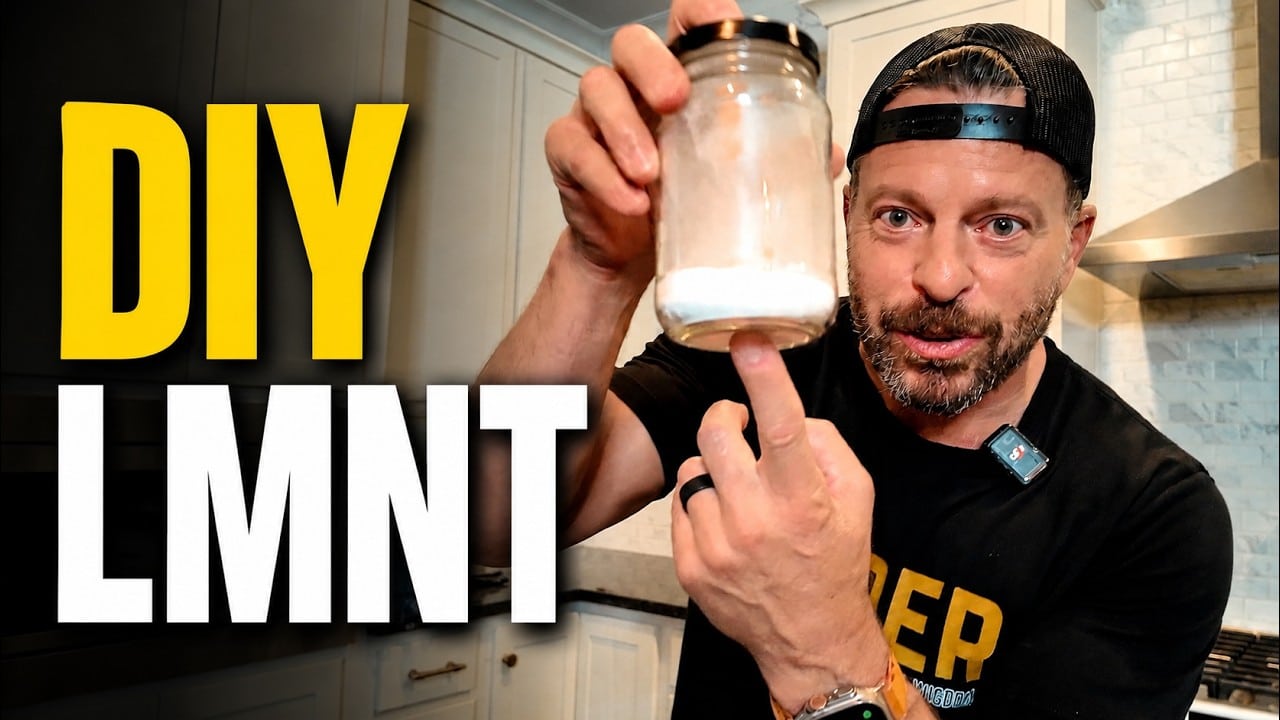
Armed with ingredients from Amazon and measuring tools, Sisson decided to recreate his go-to hydration drink in his kitchen—and document the entire process.
What he found might change how athletes and fitness enthusiasts think about expensive electrolyte supplements.
Jump to:
- The Surprisingly Simple Recipe Element Shares Publicly
- The Precise Measurements That Matter
- Flavoring Without Artificial Additives
- The Taste Test Results
- Why Would a Company Share This Information?
- Practical Applications for Different Athletes
- Travel-Friendly Modifications
- The Science Behind Electrolyte Supplementation
- Storage and Shelf Life Considerations
- The Transparency Trend in Supplements
Most supplement companies guard their formulas like state secrets. Element takes the opposite approach—they actually publish instructions for making their product at home.
The recipe contains just three core ingredients: sodium, potassium, and magnesium in specific ratios. Everything else is simply flavoring.

If you want something simple that actually works, this is one of the most effective tools I’ve used to build strength, conditioning, and endurance without needing a full gym setup.
- Full-body training with one weight using swings, squats, and presses
- Solid cast iron build that feels stable and lasts for years
- Comfortable grip that makes high-rep workouts easier to handle
Breaking Down the Ingredient List
Sisson purchased everything needed to make a 30-day supply. The shopping list was remarkably straightforward:
- Morton’s canning salt – $10 (enough for approximately four years)
- Magnesium malate – $21
- Potassium chloride – $9.65
- Precision scale – $34 (for accurate measurements down to milligrams)
- Flavoring options – Sweet leaf water drops ($12.49), True Lime packets ($25 for 500), or simple lime juice
- Silica gel packets – $6 for 100 (keeps mixture dry)
Total investment? Just under $100—for ingredients that could last years.
The Precise Measurements That Matter
Creating 30 servings requires exact proportions. Sisson used two different scales to ensure accuracy—a standard food scale for larger amounts and a precision scale for smaller ingredients.
For a complete 30-serving batch, he measured:
- 75 grams of salt
- 11.5 grams of potassium chloride
- 9 grams of magnesium malate
When I made a batch of 10 servings, I did need to get down to the absolute milligrams. And when it comes down to it, there’s just not a ton of these other ingredients besides salt.
Each individual serving requires approximately 3.2 grams of the mixed powder—roughly half a teaspoon. Sisson found that precise measurement wasn’t absolutely critical once the base mixture was properly combined.
The Mixing Process
After combining all ingredients in a glass jar, thorough mixing is essential. Sisson shook his mixture for about two minutes, using silica gel packets as mixing balls to help distribute ingredients evenly.
If you want something simple that actually works, this is one of the most effective tools I’ve used to build strength, conditioning, and endurance without needing a full gym setup.
- Full-body training with one weight using swings, squats, and presses
- Solid cast iron build that feels stable and lasts for years
- Comfortable grip that makes high-rep workouts easier to handle
The result? A homemade version that’s functionally identical to commercially-purchased Element.
Flavoring Without Artificial Additives
The base mixture creates what Element calls their “unflavored” version—technically drinkable but extremely unpalatable. Sisson learned this the hard way during his first sponsored video shoot.
The very first video that I recorded for Element, we were out training for a half iron man and I went swimming in a lake. I got out of the lake and I poured it in and I chugged it and I realized that it was the unflavored. That was brutal.
For home preparation, flavoring options include:
- Fresh lime or lemon juice – Natural, readily available, inexpensive
- True Lime packets – Portable, shelf-stable, convenient for travel
- Sweet leaf water drops – Concentrated flavor with stevia
- Tart cherry juice – Adds natural sweetness and potential recovery benefits
Unlike commercial versions, the homemade approach contains no dextrose or artificial ingredients—just minerals and natural flavoring.
The Taste Test Results
After mixing half a teaspoon of his homemade powder with water, lime juice, and a splash of tart cherry juice, Sisson’s verdict was immediate and enthusiastic.
That’s element. And in my world, that’s essentially free.
The homemade version matched the hydration benefits and mineral ratios of purchased Element. While it might not perfectly replicate specialty flavors like watermelon, the cost savings are undeniable.
If you want something simple that actually works, this is one of the most effective tools I’ve used to build strength, conditioning, and endurance without needing a full gym setup.
- Full-body training with one weight using swings, squats, and presses
- Solid cast iron build that feels stable and lasts for years
- Comfortable grip that makes high-rep workouts easier to handle
Element’s transparency seems counterintuitive from a business perspective. Why encourage customers to make your product themselves?
The strategy actually demonstrates confidence in their value proposition. Most consumers prioritize convenience over cost savings. Pre-measured packets, consistent flavoring, and zero preparation time justify the premium for busy athletes.
However, for budget-conscious individuals or those who enjoy DIY projects, having the option to create electrolyte drinks at home for pennies per serving is valuable information.
The Real Cost Comparison
Sisson’s $100 ingredient investment could produce years worth of electrolyte drinks—potentially hundreds of servings. Commercial Element packets typically cost between $1-2 per serving.
For someone consuming two to three servings daily like Sisson, the savings become substantial over time.
Practical Applications for Different Athletes
The homemade approach isn’t necessarily ideal for everyone. Sisson acknowledges he might still purchase commercial products when traveling or seeking specific convenience.
If you want something simple that actually works, this is one of the most effective tools I’ve used to build strength, conditioning, and endurance without needing a full gym setup.
- Full-body training with one weight using swings, squats, and presses
- Solid cast iron build that feels stable and lasts for years
- Comfortable grip that makes high-rep workouts easier to handle
Best for DIY electrolytes:
- Budget-conscious athletes training at home
- Those who consume multiple servings daily
- People with sensitivity to artificial flavors or additives
- Endurance athletes preparing for long events
Commercial products still make sense for:
- Frequent travelers needing portability
- Those prioritizing convenience and consistency
- Athletes wanting specific flavor profiles
- People consuming occasional rather than daily servings
Travel-Friendly Modifications
Sisson purchased small ziplock packets specifically for creating single-serve portions. At just $3 for 100 packets, this allows the convenience of pre-measured servings while maintaining cost savings.
Paired with True Lime packets or small bottles of natural juice, homemade electrolyte drinks become nearly as portable as commercial options.
The Science Behind Electrolyte Supplementation
Understanding why these specific minerals matter helps explain Element’s formulation. Sodium, potassium, and magnesium all play critical roles in athletic performance and recovery.
Sodium maintains fluid balance and supports nerve function. Athletes lose significant amounts through sweat, especially during intense or prolonged training.
If you want something simple that actually works, this is one of the most effective tools I’ve used to build strength, conditioning, and endurance without needing a full gym setup.
- Full-body training with one weight using swings, squats, and presses
- Solid cast iron build that feels stable and lasts for years
- Comfortable grip that makes high-rep workouts easier to handle
Potassium regulates muscle contractions and cardiovascular function. Deficiency can lead to cramping and fatigue.
Magnesium supports energy production, protein synthesis, and muscle recovery. Many athletes are chronically deficient without realizing it.
The specific ratios Element uses—and that Sisson replicates—are designed to match what bodies lose and need during training.
Storage and Shelf Life Considerations
Proper storage extends the life of homemade electrolyte mixes. Sisson uses silica gel packets to prevent moisture absorption, which could cause clumping or degradation.
Glass jars provide better moisture barriers than plastic containers. Stored in cool, dry conditions, the mineral mixture should remain stable for months or longer.
Flavored versions have shorter shelf lives depending on the flavoring agent used. Natural juices require refrigeration and immediate use, while dried flavor packets extend storage time.
If you want something simple that actually works, this is one of the most effective tools I’ve used to build strength, conditioning, and endurance without needing a full gym setup.
- Full-body training with one weight using swings, squats, and presses
- Solid cast iron build that feels stable and lasts for years
- Comfortable grip that makes high-rep workouts easier to handle
The Transparency Trend in Supplements
Element’s open-source approach represents a growing trend toward transparency in the supplement industry. Consumers increasingly demand to know exactly what they’re consuming and why.
Companies that embrace this transparency often build stronger customer loyalty, even when providing information that could theoretically reduce sales.
I can’t believe Element discloses this to us. Just like, hey, here’s how you do it yourself.
This confidence suggests Element believes their value extends beyond just the formula—it includes convenience, consistency, quality control, and brand trust.
For athletes willing to invest a small amount of time and effort, homemade electrolyte drinks offer identical benefits at a fraction of the cost. The recipe isn’t complicated, the ingredients are readily available, and the results speak for themselves.
Whether choosing commercial convenience or DIY savings, the most important factor remains consistent: proper electrolyte supplementation supports training, performance, and recovery for serious athletes at any age.